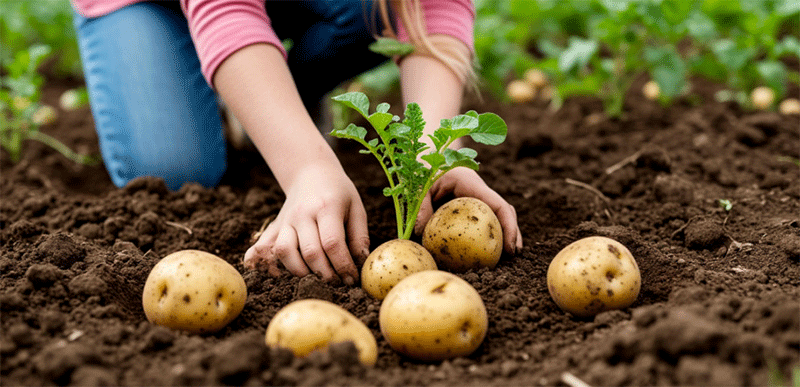
Gardening on heavy clay soil or in a low-lying area that turns into a swamp every spring can feel like a losing battle. Traditional deep planting, as passed down through generations, often fails in these conditions: the cold, waterlogged earth lacks oxygen, causing seed potatoes to rot or producing a harvest of pathetic, marble-sized tubers. However, a clever solution has emerged from Belarus, a region known for its challenging, heavy soils. Belarusian gardeners have perfected a “near-surface” planting method that flips conventional wisdom on its head and delivers surprising results.
The core principle is simple: instead of burying tubers deep, they are placed in shallow furrows only 5–7 cm deep and covered with a light, nutrient-rich mix of compost, humus, and ash rather than heavy native soil. As the plants grow, they are repeatedly earthed up to form high ridges. This keeps the developing potatoes in the warm, aerated top layer, far from the cold, suffocating clay below. The method is a game-changer for cold, wet sites, as the shallow soil warms up 1-2 weeks faster, the loose covering provides perfect oxygenation for root development, and the elevated ridges prevent waterlogging.
Why Context Matters for This Technique
This method is not a universal miracle but a targeted solution for specific conditions. It works wonders on heavy clay soils, in regions with high water tables, and in areas with cold, prolonged springs (similar to many parts of the northern United States, Canada, or the UK). By keeping the tubers in the “goldilocks” zone—warm, moist but not wet, and with plenty of air—it promotes rapid growth, resulting in larger, cleaner potatoes. However, it is entirely unsuitable for light, sandy soils that drain too quickly, arid regions where the surface layer would dry out completely, or hot southern climates where shallow tubers could literally bake in the ground.