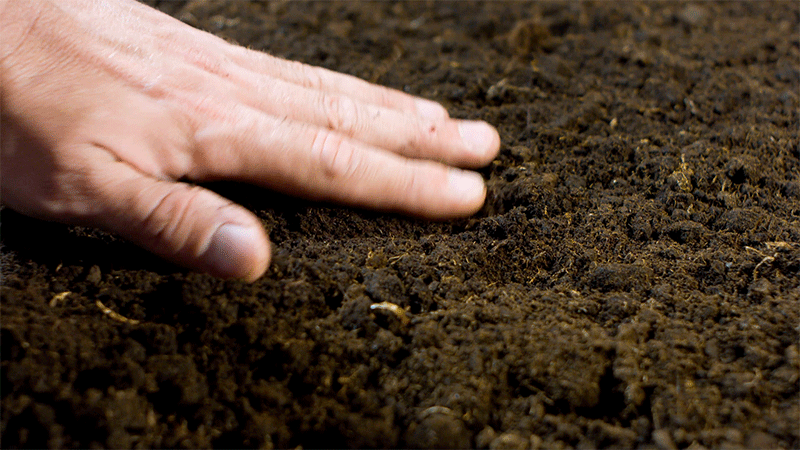
Conventional potato farming has taken a heavy toll on global soils. Decades of synthetic fertilizers, pesticides, and intensive tillage have led to:
- 1-2% annual loss of soil organic matter (SOM) (FAO, 2023)
- Reduced microbial activity, harming nutrient cycling (Nature, 2022)
- Increased erosion, with some regions losing 5-10 tons of topsoil per hectare yearly (USDA, 2023)
Organic farming reverses this degradation by:
- Boosting SOM to 4-6% through cover crops like rye and vetch
- Improving water retention by 15-20%, critical in drought-prone regions (Rodale Institute, 2023)
- Sequestering 0.5-1 ton of carbon per hectare annually (IPCC, 2022)
Pest & Disease Management Without Synthetics
Conventional potato farming relies heavily on chemical pesticides, but organic systems use smarter strategies:
- Biological controls (e.g., Bacillus thuringiensis for Colorado potato beetles)
- Resistant varieties (e.g., ‘Sarpo Mira’ for late blight in Europe, ‘Kufri Jyoti’ in India)
- Trap crops & companion planting to disrupt pest cycles
Studies show organic farms support 30-50% more beneficial insects, like ladybugs and ground beetles, which naturally suppress pests (Journal of Applied Ecology, 2023).
Climate Resilience: Organic Outperforms in Stress Conditions
With increasing droughts and erratic rainfall, organic systems prove more resilient:
- Organic yields surpass conventional by up to 40% in drought years (University of Bonn, 2023)
- Reduced nitrogen leaching (80-90%) protects groundwater (European Environment Agency, 2023)
- Mulching & cover crops buffer against extreme weather
Regional Challenges & Solutions
- North America (Idaho, Ontario)
- Low SOM (<2%) due to conventional tillage
- Solution: Cover crops + compost to boost SOM to 4-6%
- Europe (UK, Netherlands)
- High late blight pressure
- Solution: Resistant varieties + wider row spacing
- Africa (South Africa’s Sandveld)
- Sandy soils, low rainfall (300-500 mm)
- Solution: Drought-tolerant varieties + drip irrigation
- Asia (India, China)
- Monsoon-driven diseases
- Solution: Copper-based treatments (within organic limits)
- Latin America (Peru, Argentina)
- Nematode pressure in loamy soils
- Solution: Bio-fumigation with mustard cover crops
The Transition Challenge: Short-Term Pain, Long-Term Gain
The 3-year organic transition period often sees 20-40% yield dips as soils adjust. However, long-term benefits include:
- Lower input costs (no synthetic fertilizers/pesticides)
- Premium market prices (organic potatoes fetch 20-50% higher prices)
- Climate-proof farming systems
Agronomy Must Lead the Shift
The move to organic potato farming isn’t just a market trend—it’s an agronomic imperative. With healthier soils, natural pest control, and climate resilience, organic systems offer a sustainable path forward. Farmers, agronomists, and policymakers must prioritize region-specific strategies to ensure a smooth transition.