

As part of the International Potato Tour, our delegation visited a unique scientific institution — the Kamchatka Agricultural Research Institute, a branch of the Federal Research Center “N.I. Vavilov All-Russian Institute of Plant Genetic Resources.” Here, under the conditions of a harsh climate, a short summer, and remoteness from the Russian mainland, local scientists are doing everything possible to provide the region with its own high-quality varieties of potatoes, forage, and berry crops.
Kamchatka is a territory of contrasts and difficult weather conditions. As the institute’s staff themselves note, agriculture here is associated with constant stress for plants: droughts can abruptly be replaced by prolonged downpours causing crop lodging, and the winter snow cover exceeds one and a half meters. That is precisely why the main task of the Kamchatka Agricultural Research Institute is the creation and selection of varieties that possess high plasticity and adaptability to the local climate.
Forage Base: In Search of Kamchatka Oats and Barley
Our excursion began at the laboratory of perennial grasses and forage crops. A researcher, Candidate of Agricultural Sciences Alexandra Alekseevna Zhdanova, spoke about the importance of local grain breeding. Importing fodder to the peninsula is expensive and not always possible within the required timeframes. Therefore, the institute actively tests samples of barley and oats (including those from the VIR collection) to recommend the most suitable ones to farmers.
“Our dream is for Kamchatka to have its own variety of barley and oats. Barley ripens better here and yields results faster,” shares Alexandra Alekseevna. The scientists’ work is complicated not only by the climate but also by wildlife. A specific Kamchatka problem is bears, which come out to the experimental plots and destroy crops. Once the animals have fed there, they return for generations, so scientists have to increase the number of replications in their experiments to minimize the risks of losing scientific data.
Agrochemical Laboratory: From Vitamin C to Garden Strawberries
The next point on our route was the agrochemical laboratory, where researcher Olga Gennadievna Murzina works. The laboratory serves three areas simultaneously: potato farming, berry crops, and forage crops. Thanks to new equipment — a capillary electrophoresis system and infrared analyzers — the range of research has significantly expanded. Here, they study the component composition of products, the influence of vitamin C on the keeping quality and sprouting of potatoes, as well as sugars and dry matter.
A separate source of pride and the subject of Olga Gennadievna’s candidate dissertation is garden strawberries. The demand for fresh berries in Kamchatka is enormous. Over four years of studying the collection, scientists have managed to identify varieties that are not only perfectly adapted to local conditions but can also serve as a basis for further breeding work. Despite a shortage of personnel (one employee for three areas) and modest funding, the laboratory continues its painstaking work, sometimes using old but proven GOST titration methods for maximum accuracy.
Kamchatka Potatoes: Impenetrable Skin and Unique Varieties
Of particular interest to the participants of the International Potato Tour was the laboratory of field crop biotechnology and potato breeding. We were met by Anna Dmitrievna Ivashchenko — a senior researcher, breeder, and co-author of famous Kamchatka varieties. The institute’s collection holds over 4,000 potato samples. Material is brought here from Moscow (Lorkh Institute), the Urals, Magadan, and Primorye. However, practice shows that many imported varieties quickly accumulate viral diseases in Kamchatka. That is exactly why local breeding is so important.
How do Kamchatka varieties differ?
- Ultra-high keeping quality: The preservation rate of local breeding varieties exceeds 95%.
- Resistance to mechanical harvesting: Kamchatka potatoes are distinguished by a denser, rougher skin. If the tubers are left in the ground for 10-14 days after mowing the tops, the skin “sets” so tightly that the potatoes are practically undamaged during digging, which means they do not get sick during storage.
- Short growing season: The varieties manage to form a yield and accumulate dry matter under the conditions of the short Kamchatka summer.
Anna Dmitrievna proudly demonstrated her favorite varieties — “Geyser” and “Volcano”. They are notable for their excellent marketable appearance and ideal preservation. The “Solnyshko” (“Sun”) variety was also noted (accumulates more than 14% starch, which is an excellent indicator for the north), as well as the record holder for starch content — the “Lazar” variety (over 18%).
Scientists do not stand still. A new red-skinned variety with yellow flesh is currently in development, which should become an ideal replacement for the popular but poorly storing “Raya” variety. The goal is a yield of at least 30 tons per hectare under the conditions of the peninsula. We were also shown a real exotic — the first Kamchatka variety with colored (pink) flesh under the working name “Karymsky”. Its unique feature is that the pigment is not destroyed even after thermal processing.
A “Kindergarten” for Potatoes and Plans for the Future
The institute conducts original seed production (from in vitro plants to super-elite). Test-tube plants are purchased in Ussuriysk (Primorsky Krai), brought to Kamchatka, and planted in greenhouses in pots with a volume of 5–8 liters. Under such conditions, a single plant can produce up to 19-20 first-class mini-tubers. In addition to its own varieties, the institute propagates those in demand by farmers, such as “Red Scarlett,” “Latona,” “Romano,” and “Artemis.”
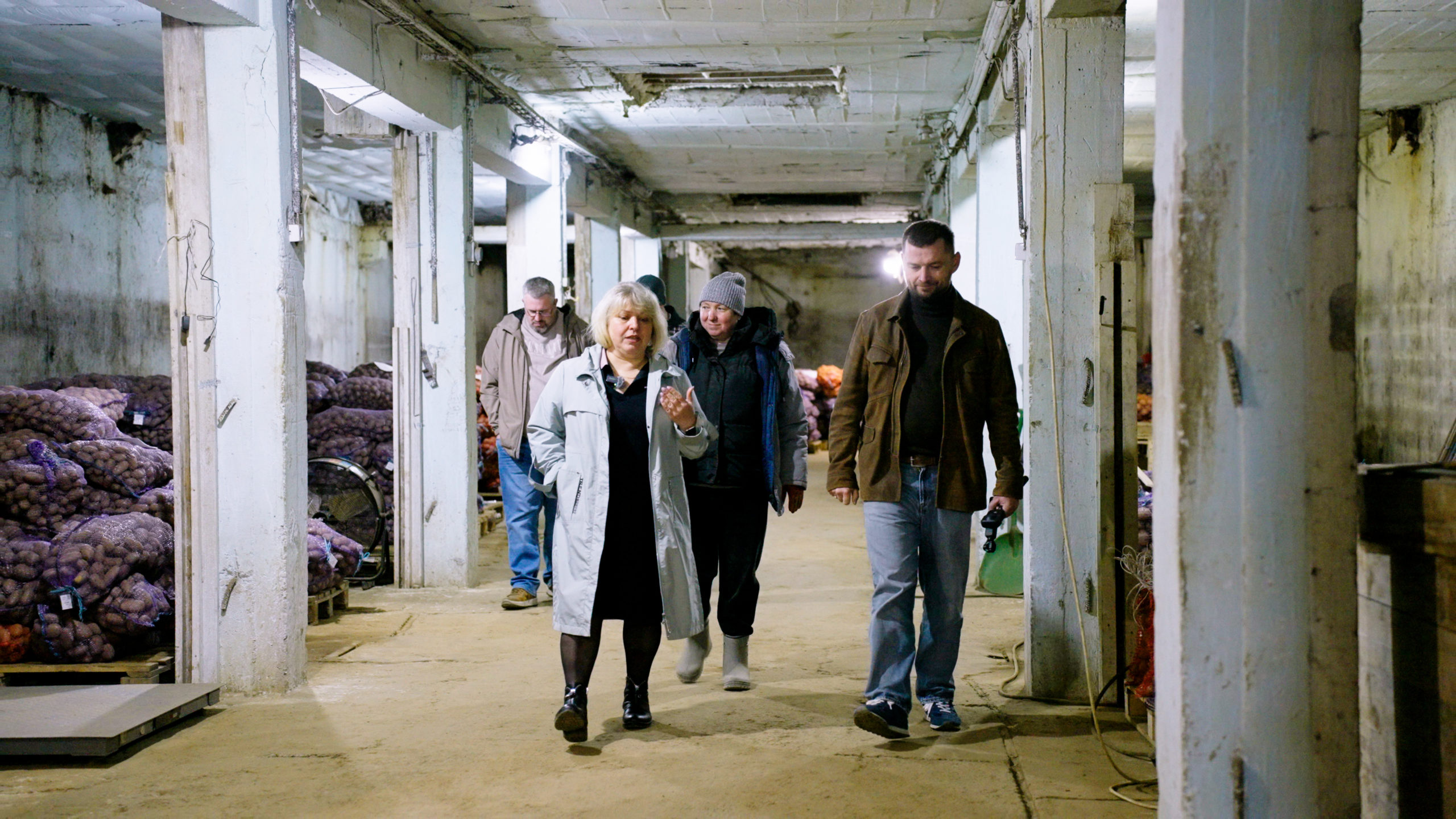
Infrastructure remains the main problem hindering development. The potato storage facility, built in 1969, perfectly maintains the temperature underground but requires urgent reconstruction of its above-ground part. The institute vitally needs a new, modern storage facility with a capacity of about 600 tons to preserve valuable genetic material.
Visit Results
The Kamchatka Agricultural Research Institute is a vivid example of how devotion to science and love for one’s work help to overcome any difficulties. Researchers at the edge of the earth fight every day against a harsh climate, aging infrastructure, and even bears so that the tables of Kamchatka residents always have fresh, delicious, and healthy local potatoes.