Russian Consumers Shift to Budget Vegetables as Prices Rise
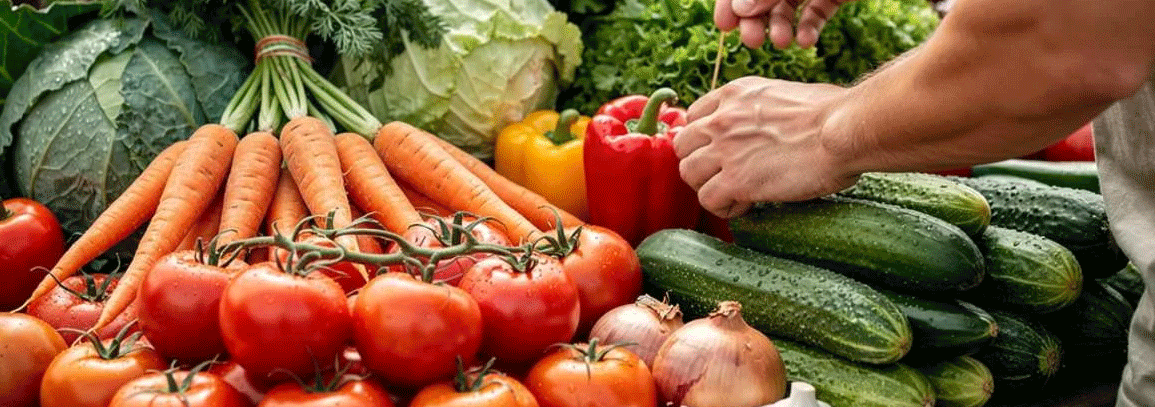
In the first quarter of 2026, Russian consumers began turning away from expensive vegetables in favor of more affordable options due to rising prices and slowing real income growth, according to Kommersant. Retail sales of sweet peppers dropped by 11%, cucumbers by 9.1%, and tomatoes by 3%, while demand for potatoes and cabbage increased by 4.6% and 3.3%, respectively. Data from Russia’s statistical agency Rosstat shows that tomato prices reached 303.8 rubles per kilogram in April 2026, an 8% year-on-year increase, while sweet peppers climbed to 333.1 rubles per kilogram. In contrast, potatoes and cabbage became more than 35% cheaper, falling to 54.73 rubles and 44.3 rubles per kilogram. Experts note that buyers are choosing basic, long-shelf-life products and avoiding greenhouse-grown and import-dependent categories.
Despite this trend toward economizing, major retail chains report sustained interest in vegetables as a staple part of the Russian diet. X5 Group, which operates the Perekrestok chain, stated that it observed no decline in vegetable sales during the first three months of 2026. On the contrary, potato sales rose by 16.8%, cabbage sales by 12%, and even demand for cucumbers, peppers, and tomatoes showed positive dynamics within their network. This suggests that while overall market patterns reflect cost-cutting behavior, some retail segments continue to see growth across both budget and premium vegetable categories.
Global Potato Brief
Top five stories, prices, disease alerts and events. Weekday mornings, no advertising.
Linked in this material
Related stories
Poland: Wholesale Potato Prices Rise 62% Year on Year as the Harvest Heads for About 6 Million Tonnes
Spain: Heatwaves Cut Potato Yields in Castilla y León by 15–20% as Growers Plant About 15% Less Area