Operation Spray Less: Monitoring Late Blight in P.E.I. Potato Fields

In Prince Edward Island, watershed groups are actively monitoring potato fields for signs of late blight, conducting weekly checks at twelve locations across the island to detect the spores responsible for the disease.
- Watershed groups in Prince Edward Island are diligently monitoring potato fields for signs of late blight.
- Weekly checks are conducted at twelve locations across the island to detect the spores responsible for late blight.
Initiative Overview
- The monitoring program, now in its second year, is supported by the P.E.I. AgriWatershed Partnership.
- The primary objective is to foster collaboration between the farming and watershed communities while mitigating the impact of agricultural runoff on local rivers and streams.
Collaborative Efforts
Weekdays. Unsubscribe in one click.
- The program emphasizes the importance of collaboration between the farming and watershed communities.
- Six watershed groups and the East Prince Agri-Environment Association are actively involved in the late blight spore detection project.
- The Winter River–Tracadie Bay Watershed Association is one of the key participants.
Understanding Late Blight
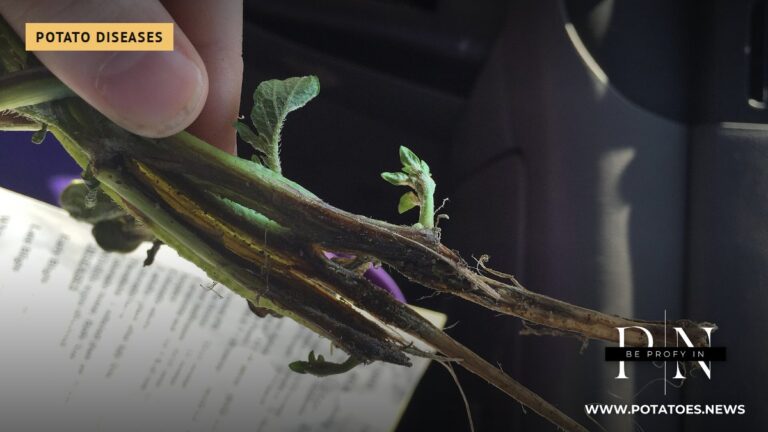
- Late blight is a destructive disease affecting solanaceous crops like potatoes, tomatoes, peppers, and eggplants.
- Caused by Phytophthora infestans, this fungus-like micro-organism causes brown spots on leaves and fruits, eventually leading to rot.
- Historically, late blight was a significant factor in the Irish Potato Famine, causing widespread crop failure and famine.
Importance of Early Detection
- Early-warning systems like the monitoring program help reduce the need for excessive sprays in potato fields.
- By providing growers with crucial information on late blight presence, they can optimize their spray schedules based on weather conditions and spore activity.
Monitoring Process
- The monitoring activity involves the use of Spornado samplers equipped with detachable cartridges.
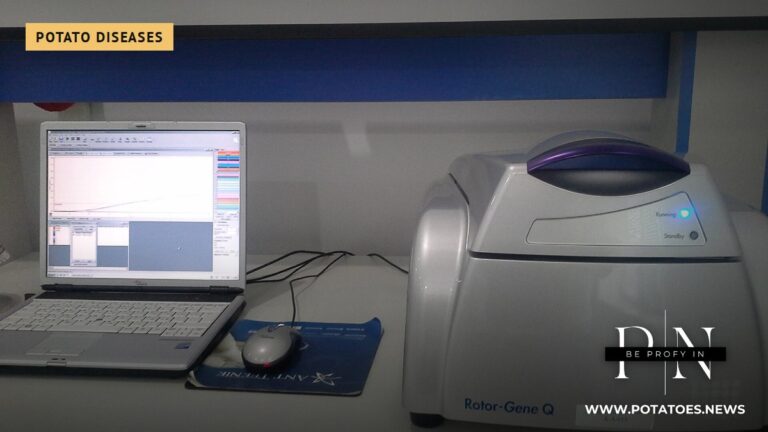
- These samplers collect spores from the air, which are then analyzed in the lab to determine the presence of late blight.
- This data aids farmers in making informed decisions about when to apply sprays, thus minimizing unnecessary chemical usage.
Защита в РФ · справка редакции
Фитофтороз (Phytophthora infestans): что зарегистрировано на картофеле в России
- Флуазинам (FRAC 29, контактный): Ширлан, СК — № 041-02-1705-1, до 30.01.2028; Батлер, КС — № 178-02-3836-1, до 24.10.2032.
- Мандипропамид (FRAC 40): Ревус, КС — № 041-02-3558-1, до 21.03.2032.
- Циазофамид (FRAC 21): Ранман Топ, КС — № 066-02-9725-1, до 10.12.2035.
- Пропамокарб + флуопиколид (FRAC 28 + 43): Инфинито, КС — № 019-02-2311-1, до 14.07.2029.
- Фамоксадон + цимоксанил (FRAC 11 + 27): Тонус, ВДГ — № 010-02-3212-1, до 12.07.2031.
- Фамоксадон + оксатиапипролин (FRAC 11 + 49): Зорвек Энкантия, СЭ — № 029-02-2859-1, до 27.10.2030.
- Манкоцеб + диметоморф (FRAC M3 + 40): Акробат МЦ, ВДГ — № 015-02-2310-1, до 09.07.2029.
- Резистентность: чередуйте группы FRAC, не повторяйте одну группу подряд; системные препараты применяйте профилактически или в смеси с контактным партнёром. Фениламиды (FRAC 4: металаксил, мефеноксам) — только в смеси и не там, где подтверждены устойчивые популяции.
Справка редакции potatoes.news по Реестру пестицидов и агрохимикатов, разрешённых к применению на территории РФ (Минсельхоз России, версия от 29.09.2026). Перечень не исчерпывающий, приведён в информационных целях и не является рекомендацией конкретных препаратов или производителей. Нормы расхода, сроки ожидания и кратность обработок — строго по регламенту в Реестре и на этикетке; перед применением убедитесь, что регистрация действует.