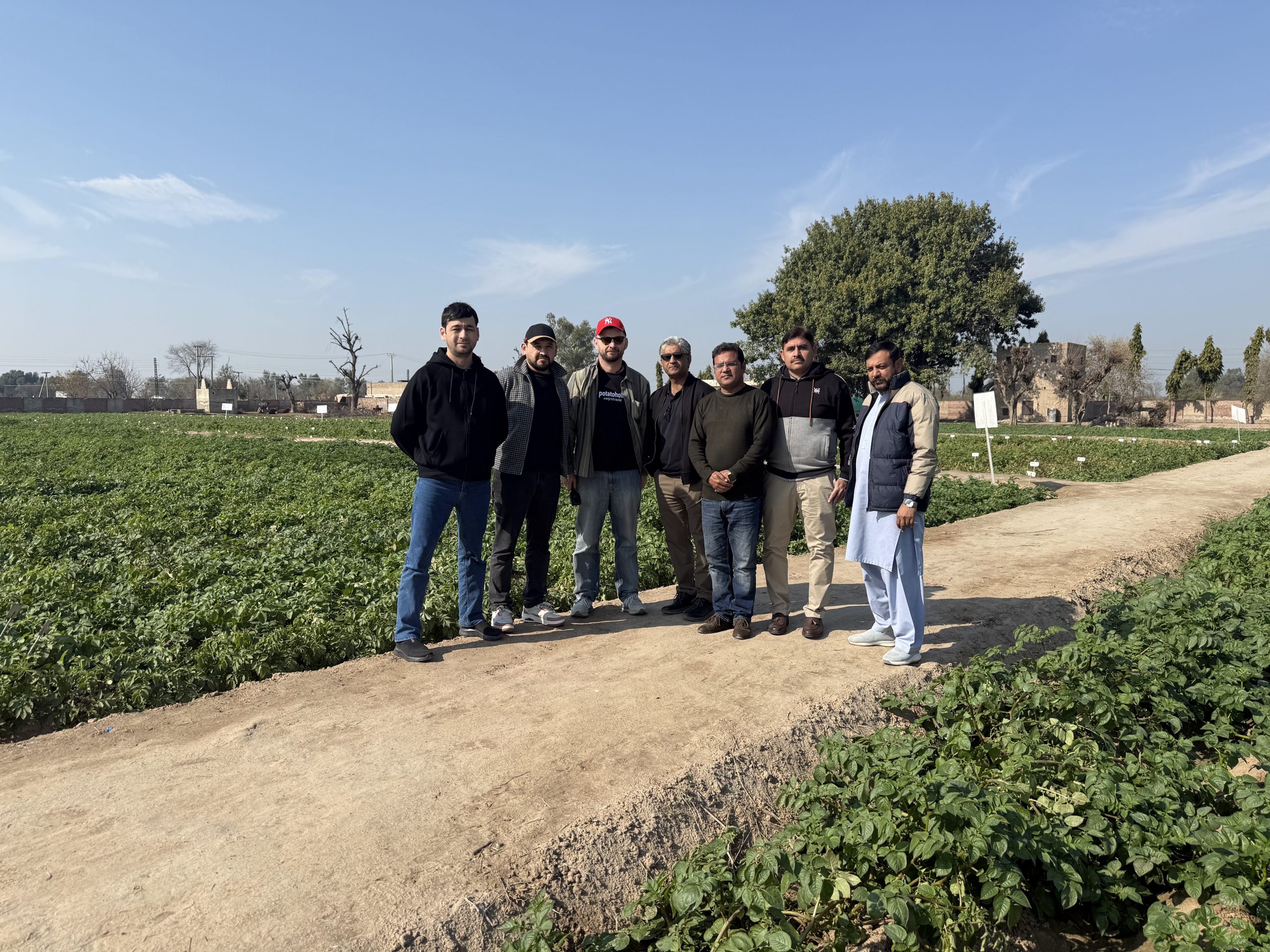
As part of the International Potato Tour, our team visited the Potato Research Institute, Sahiwal — one of Pakistan’s key scientific centers dedicated exclusively to potato research. Located in the core potato-growing region of Punjab, this institute plays a strategic role in improving productivity, quality, and export potential of Pakistani potatoes.
Pakistan has become a significant player in the global potato market, ranking among the top exporting countries worldwide. The country is largely self-sufficient in potato production and continues to expand its export capacity to regional and international markets. However, experts emphasize that the future of the potato industry lies not only in higher yields, but in higher quality and energy value per hectare.
Quality Over Quantity: Rethinking Yield Metrics
One of the key messages from the tour was the need to shift farmers’ mindset from “tons per hectare” to “energy per hectare.” Processors and international buyers are more interested in potatoes with high dry matter content, which directly affects processing quality, frying performance, and sugar levels.
In many cases, excessive irrigation and fertilization before harvest can increase total yield but reduce storability and processing quality. This leads to significant post-harvest losses, higher storage costs, and lower market prices. In contrast, moderate yields with high dry matter content provide better economic returns and longer storage life.
Seed Plot Technology: Building Healthy Seed Systems
Another critical topic discussed was Seed Plot Technology, a method that allows farmers to maintain healthy seed potatoes over multiple generations. Instead of using oversized or undersized tubers and cutting seed potatoes — a practice that increases the risk of soil-borne diseases — researchers recommend using seed tubers in the optimal size range and growing them in separate seed plots.
By planting seed potatoes in isolated plots with closer spacing and practicing regular roguing (removal of diseased plants), farmers can reduce virus transmission and maintain seed quality for 3–6 seasons. This approach improves field performance, reduces disease pressure, and increases long-term farm profitability.
Local and Exotic Varieties: Field Comparison
During field trials, local Pakistani varieties such as Sahiwal White and Punjab were compared with imported commercial varieties used by processing companies like PepsiCo Pakistan. All varieties were grown under the same fertilizer and plant protection regimes, allowing researchers to objectively evaluate yield, quality, dormancy period, and resistance to diseases and environmental stress.
Long dormancy was highlighted as a particularly important trait for local farmers, who often store potatoes in heaps after harvest. Varieties with longer dormancy help reduce sprouting losses and maintain quality during storage.
Preserving Genetic Diversity: 350+ Potato Genotypes
One of the most impressive parts of the visit was the institute’s living gene bank. More than 350 potato genotypes are conserved in situ, including both local lines and exotic varieties from different breeding programs. Each genotype represents a potential source of valuable traits such as frost tolerance, disease resistance, storability, and processing quality.
This genetic pool forms the foundation for future breeding programs aimed at developing climate-resilient and market-oriented potato varieties for Pakistan and neighboring regions.
International Collaboration and the Road Ahead
Researchers at the institute maintain active links with international potato research networks and global forums, supporting knowledge exchange and access to improved germplasm. As climate change increases pressure from frost, heat stress, and emerging diseases, such collaboration becomes increasingly important.
The International Potato Tour in Pakistan clearly demonstrated that the future of the potato sector lies in science-driven farming: better seed systems, smarter variety selection, improved post-harvest practices, and a strategic focus on quality rather than sheer volume. With continued research and farmer education, Pakistan has strong potential to further strengthen its position in the global potato export market.