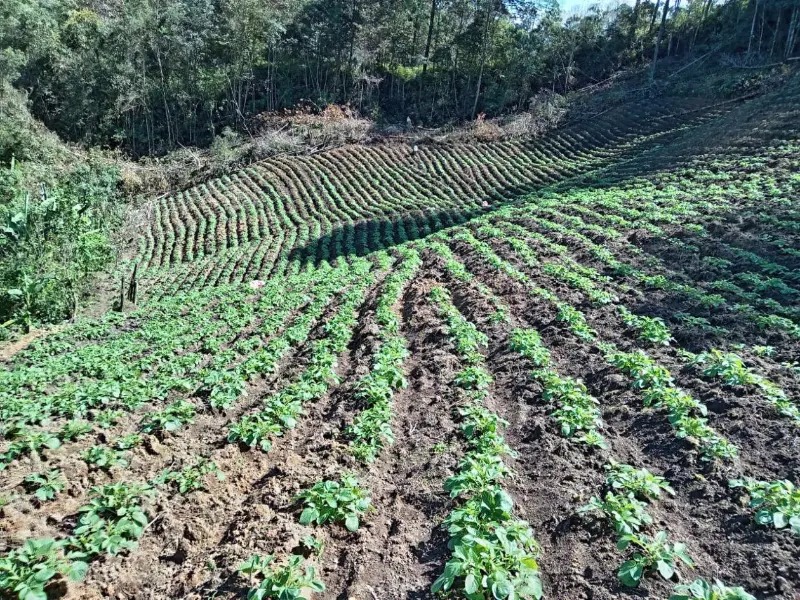
The department of Intibucá—celebrated as the premier agricultural engine of Honduras’s potato sector—is grappling with an escalating operational crisis. Local potato growers are facing a complex web of environmental and commercial pressures. A combination of massive market imports, unpredictable weather patterns, devastating pest outbreaks, and soaring input costs is rapidly undermining the competitiveness of domestic crops and discouraging smallholder farming.
Below is an analytical overview of the primary bottlenecks threatening the potato farming communities of Intibucá.
Unregulated Imports and Market Saturation
For local farmers, one of the most frustrating obstacles is not found in the soil, but in the marketplace.
- The Import Pressure: An influx of massive potato imports—including both legally authorized shipments and black-market contraband—has flooded the Honduran market.
- Undercutting Local Prices: These cheap foreign alternatives depress the market value of domestic potatoes, making it highly difficult for local growers to sell their harvests at a profit.
- Loss of Competitiveness: Due to the scale of these imports, Honduran growers are losing market share in their own urban centers, threatening their primary source of household income.
Unpredictable Weather and Climatic Disruptions
Intibucá’s high altitude has historically provided the ideal cool climate for potato cultivation, but climate change has introduced high volatility into the agricultural calendar.
- Erratic Weather Events: Farmers are dealing with increasingly erratic weather, ranging from unexpected droughts to intense, unseasonal rainfall.
- Devastating Hailstorms: Mountainous growing communities have suffered from sudden, violent hailstorms that completely destroy entire hectares of potato plants in a matter of hours, freezing the foliage and rotting the roots.
- Widespread Crop Loss: These sudden climate events not only destroy immediate yields but also deplete the community’s reserves of seed potatoes, leaving farmers without resources for subsequent planting cycles.
Proliferation of Agricultural Pests
The alteration of local temperature regimes and moisture cycles has exacerbated phytosanitary risks. Producers in Intibucá report a surge in destructive pests and fungal diseases. These biological threats attack the structural and aesthetic quality of the tubers, causing significant field losses and rendering much of the remaining harvest unmarketable.
Skyrocketing Production Costs and Policy Gaps
Compounding the environmental and trade pressures is the sheer cost of keeping farms operational.
- High Input Expenses: The price of essential agricultural inputs—most notably imported certified seeds, specialized fertilizers, and eco-friendly pesticides—remains prohibitively high.
- Ineffective Support Networks: While regional authorities and national bodies frequently announce economic incentive programs and agricultural subsidies, local farmers report a stark disconnect. In practice, these relief initiatives rarely reach the smallholders who are experiencing the most severe climate-induced and financial damages.
Information Sources
This article was prepared using specialized regional agricultural data from the portal Argenpapa (argenpapa.com.ar, news item # $17346$), compiling field reports and investigative reporting published by the leading Honduran national newspaper La Prensa (laprensa.hn) in articles authored by agricultural journalist Juan Carlos Rivera.