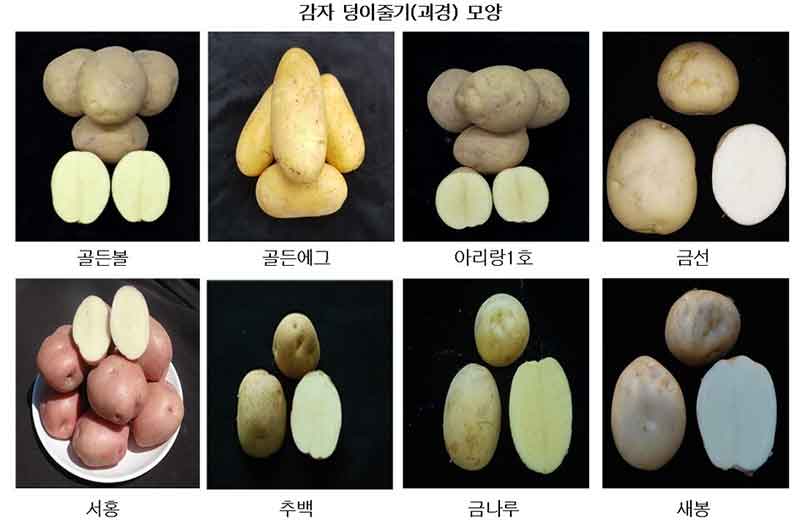
The city of Gwangju is taking significant steps to bolster its agricultural self-sufficiency by launching field trials for eight newly developed domestic potato varieties. In a move to decrease dependence on foreign seeds, the city has distributed 460 kg of seed potatoes, bred by the National Institute of Crop Science, to local farms for adaptation testing. The initiative features a diverse range of varieties including ‘Golden Ball’, known for its yellow flesh and resistance to browning; ‘Golden Egg’, with its distinctive elongated shape; ‘Arirang 1’, prized for its stability in high-temperature and dry conditions; and ‘Chubaek’, which offers excellent storage properties. Other varieties like the red-skinned ‘Seohong’ are also being introduced to provide farmers with a wider selection tailored to different uses and quality preferences.
This project goes beyond simple seed distribution by actively involving farmers in the verification process. In collaboration with the Gwangju Agricultural Technology Center, growers will monitor the growth, yield, and overall quality of these new breeds under real local conditions. Preliminary observations suggest that some of these Korean-developed varieties not only offer a richer taste compared to imported counterparts but also demonstrate greater resilience to climate change. An official from the center emphasized that they will provide on-site technical guidance throughout the trial period, helping farmers understand the specific growth characteristics and management techniques for each new variety to ensure a successful transition towards more locally adapted crops.