CAIRO, EGYPT – In a recent deep-dive interview conducted as part of the International Potato Tour, industry experts discussed the rapid evolution of Egypt’s potato landscape. From a historic export milestone in 2025 to a dramatic shift in variety dominance, the Egyptian potato sector is positioning itself as a high-tech global player while grappling with significant infrastructure challenges.
The New King: Cara Overtakes Spunta
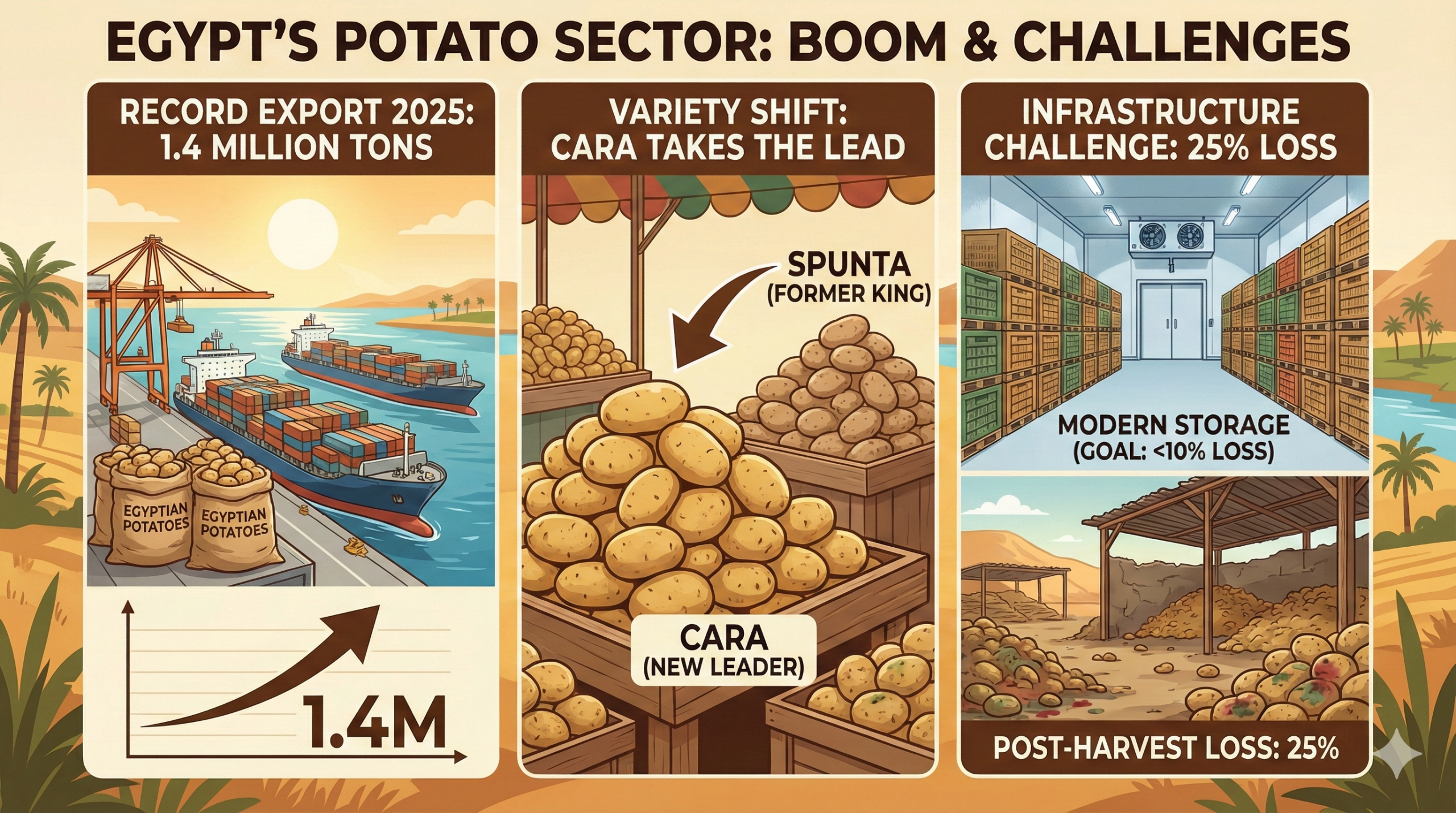
For decades, Spunta was the undisputed “king of varieties” in Egypt, representing over 50% of imported seed quantities. However, the last five years have seen a massive transition.
“In 2009, we imported around 4,000 tons of Cara. Today, that figure has soared to over 55,000 tons,” noted the speaker. While Spunta remains relevant, Cara has officially taken the lead in the table potato market. Meanwhile, the processing sector is seeing increased competition. Although Hermes has dominated for 20 years, newcomers like Karuzu, Hazar, and Lady Rosetta are gaining ground as the demand for chips and French fries grows.
A Record Year for Exports
Despite global market volatility, Egypt achieved a landmark achievement in 2025. Total production reached approximately 7.5 to 8 million tons, with exports hitting a record-breaking 1.4 million tons.
However, this success comes with a caveat. The industry is currently facing a “price collapse” in the fresh market due to a massive supply during the peak of the winter harvest. Experts predict that supply will moderate by April, leading to a price recovery for the summer crop.
The 25% Challenge: Storage and Infrastructure
One of the most critical points raised during the tour was the high rate of post-harvest loss. Currently, Egypt loses between 20% and 25% of its potato crop during handling, harvesting, and storage.
“We still depend on older storage methods,” the speaker explained. “While we have new facilities, we need to increase them significantly to bring our losses down to the global standard of 10% or less.”
Phytosanitary Vigilance: AI and Quarantine
Egypt maintains a rigorous “zero-tolerance” policy to protect its export markets, particularly against Brown Rot (Ralstonia solanacearum). The country has designated specific “pest-free areas” (PFA) solely for export to prevent the spread of disease.
Looking to the future, the Egyptian Agricultural Research Center (ARC) is focusing on two fronts:
- Domestic Breeding: Developing the first truly local Egyptian potato varieties to reduce reliance on imported seeds.
- AI Integration: Implementing Artificial Intelligence in quarantine equipment to enhance pest detection and automate control systems at the borders.
Global Collaboration
Egypt continues to strengthen its ties with the international community. With the annual agricultural conference in Rome approaching this March, Egyptian officials are set to meet with partners from Russia, the EU, and the Gulf countries to synchronize quarantine safety standards and data reporting.
As the industry moves forward, the focus remains clear: modernize storage, embrace AI, and maintain the high quality that allowed Egypt to set its 2025 export record.
Source: International Potato Tour Interview Reported for: Potatoes.news