Potato late blight (Phytophthora infestans) is notorious for causing the Irish Potato Famine in the 1840s, yet it continues to destroy crops today. In Kenya, where potatoes are the second most important staple after maize, smallholder farmers lose up to 60-100% of their yields during severe outbreaks (FAO, 2023). With climate change increasing disease pressure, finding sustainable solutions is more urgent than ever.
The High Cost of Fungicide Dependency
While fungicides can control late blight, their overuse poses serious risks. A 2022 study by the World Health Organization (WHO) linked prolonged fungicide exposure to respiratory illnesses and skin conditions among farmers. Additionally, chemical runoff contaminates soil and water, harming biodiversity—particularly pollinators essential for other crops.
Thiago Mendes, a potato breeder at the International Potato Center (CIP), explains: “Farmers spend up to 30% of their production costs on fungicides, yet resistance is growing. We need a better way.”
Wild Relatives Hold the Key to Resistance
CIP scientists have turned to wild potato relatives, known for their natural disease resistance. Under the Crop Wild Relatives Project, funded by Norway and coordinated by the Crop Trust, researchers in Peru successfully crossed cultivated potatoes with wild species, producing resistant varieties like CIP-Matilde.
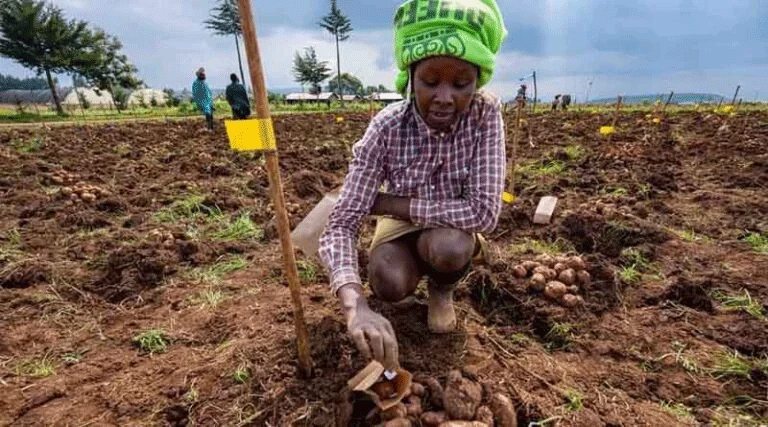
Now, the BOLD Project (Biodiversity for Opportunities, Livelihoods, and Development) is adapting these successes to East Africa. In Kenya’s Nakuru highlands, Thiago’s team planted hundreds of test varieties, allowing late blight to spread naturally—without fungicides.
Farmer-Led Selection: Ensuring Adoption
Scientists aren’t the only ones deciding which potatoes make the cut. Local farmers participated in participatory variety selection (PVS), voting for preferred traits using beans (women) and maize seeds (men). Key findings included:
- Mixed tuber sizes (large for market, small for replanting).
- Strong stems and disease-resistant foliage.
- Good cooking quality (a must for consumer acceptance).
A Regional Approach for Wider Impact
CIP is fostering a regional breeding network across East Africa, ensuring knowledge and resilient varieties reach more farmers. “Collaboration is crucial,” says Thiago. “Climate change doesn’t stop at borders, so neither should our solutions.”
A Sustainable Future for Potato Farming
The quest for ‘wow!’ potatoes—resistant, high-yielding, and farmer-approved—could revolutionize East Africa’s potato industry. By reducing fungicide dependence, these new varieties promise:
✔ Lower production costs
✔ Healthier ecosystems
✔ Improved food security
With continued trials and farmer feedback, Kenya may soon have potatoes that not only survive late blight but thrive—delighting farmers and consumers alike.