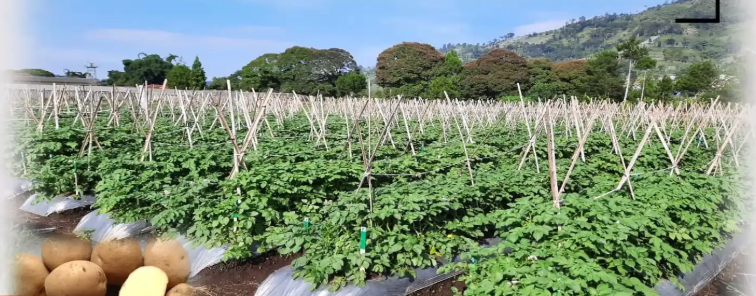
Potato farming faces significant challenges due to bacterial wilt (Ralstonia solanacearum), a devastating disease that causes severe yield losses worldwide. In Indonesia alone, bacterial wilt can reduce potato yields by 30-70%, threatening food security and farmer livelihoods (FAO, 2023). To combat this, researchers at Badan Riset dan Inovasi Nasional (BRIN) are leveraging in vitro mutagenesis—a cutting-edge biotechnological approach—to develop resistant potato varieties.
The Science Behind Mutagenesis for Disease Resistance
Dr. Ika Roostika and her team at BRIN have combined in vitro culture, gamma-ray irradiation, and molecular selection to accelerate the development of wilt-resistant potatoes. Unlike genetically modified organisms (GMOs), mutagenesis avoids complex regulatory hurdles while enhancing genetic diversity.
Key steps in their process include:
- Gamma-ray irradiation (0-90 Gy) to induce mutations.
- In vitro selection using R. solanacearum to identify resistant mutants.
- Field trials to validate performance under real-world conditions.
This method has already produced eight new registered varieties, including Granitas, Grantika, and Medichi, with higher resistance and yield potential.
Why This Matters for Farmers and Agronomists
- Reduced pesticide dependency: Resistant varieties lower chemical inputs, cutting costs and environmental harm.
- Higher productivity: Early trials show 20-30% yield improvements in infected fields (BRIN, 2024).
- Faster varietal development: In vitro mutagenesis shortens breeding cycles compared to conventional methods.
Challenges and Future Prospects
Despite progress, obstacles remain:
- Limited genetic sources: Wild potato species with resistance traits often have different ploidy levels, complicating breeding.
- Market adaptation: Farmers need education on adopting new varieties effectively.
However, BRIN’s innovations could significantly reduce Indonesia’s reliance on imported processed potatoes, saving national revenue while supporting local farmers.
In vitro mutagenesis offers a sustainable, efficient solution to bacterial wilt, aligning with global trends in climate-resilient agriculture. By integrating advanced biotechnology with traditional farming, researchers are paving the way for higher yields, eco-friendly practices, and food security.