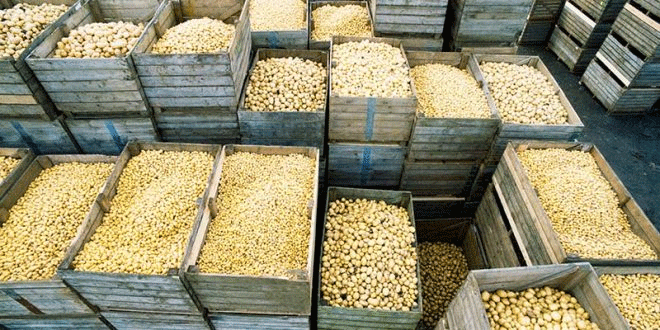
Belgium, a cornerstone of Europe’s potato processing industry, is facing a classic agricultural challenge: a remarkable harvest creating significant market pressure. As of November 15, 2025, total potato stocks in Belgium are estimated at 4.11 million tonnes, a figure that is roughly 800,000 tonnes higher than the same time last year and exceeds the three-year average. This substantial buildup reflects an exceptionally strong growing season, with gross production for 2025 estimated at 5.29 million tonnes—a dramatic 24% increase over 2024 and the highest yield recorded since 2017, driven by a combination of expanded planted area and favorable yields.
The composition of this crop is dominated by processing varieties, underscoring Belgium’s role as a hub for frozen potato products and French fries. The Fontane variety alone represents a commanding 58% of all Belgian storage potato volumes, cementing its status as the industry’s workhorse due to its consistent processing quality. Other key varieties like Innovator and Challenger each contribute approximately 300,000 tonnes to the supply mix. In response to the volume and market uncertainty, a notable shift toward risk management is evident: a record 74% of storage potato volumes are now under contract, the highest level since 2020. This high contracting rate provides crucial supply security for processors but leaves growers with uncontracted “free-buy” volumes vulnerable to price pressure as the market works to absorb the surplus.
This Belgian situation is not isolated. Reports from other key Northwest European producers, including the Netherlands and Germany, also point to robust harvests in 2025, contributing to a regional oversupply. According to recent analyses from European market agencies, this has led to increased competition for export markets and downward pressure on spot prices for free-buy potatoes across the continent. The coming months will be a critical test of supply chain management. The sector’s ability to balance this sizable crop will depend on sustained processing demand, the competitiveness of exports to international markets—particularly with a strong US dollar potentially aiding European exporters—and the logistical efficiency of moving the crop through contracted pipelines before storage quality begins to decline.
Belgium’s 2025 potato season highlights the delicate equilibrium between agricultural success and market stability. While the high yields are a testament to excellent agronomic practice and favorable conditions, they have precipitated a supply-side challenge that will test the resilience of the entire value chain. The industry’s increased reliance on forward contracting (74%) is a rational, strategic response that mitigates risk for both growers and processors, providing a buffer against volatile price swings. However, it also creates a two-tiered market where uncontracted growers bear the brunt of the price risk. For the global agricultural community, this scenario reinforces the importance of diversified market access, strategic crop planning that considers market signals, and robust risk-management tools to navigate the inherent volatility of commodity production.