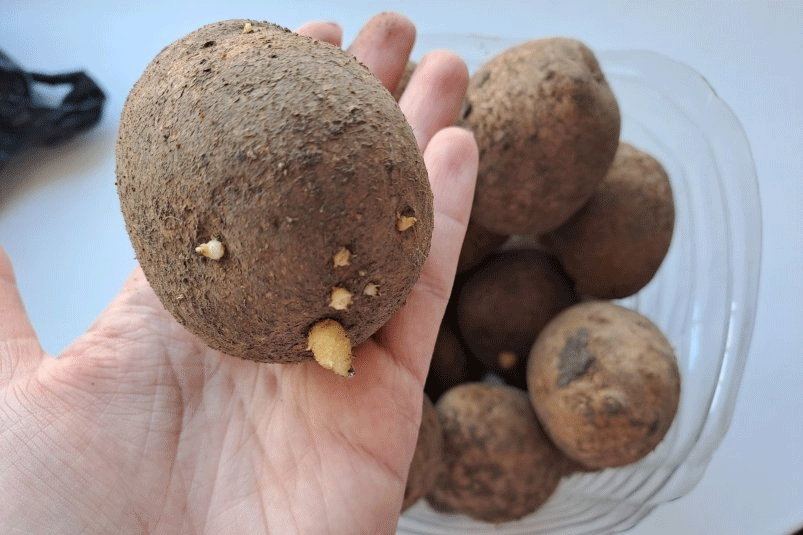
The pursuit of the perfect potato often focuses on yield, disease resistance, and processing quality. However, a recent statement by Vladimir Kosov, an agronomist with the Don branch of Russia’s Federal Center for Agricultural Product Safety and Quality, has shifted the spotlight firmly onto culinary excellence. In a television feature, Kosov declared the “Kundryuchensky” potato, a regional variety from the Don area, to be the “world’s tastiest.” His claim is not based on mere opinion but on a specific textural quality: its optimal consistency after cooking. Kosov referenced a global classification system where potatoes are categorized into four types based on their degree of disintegration during cooking—from waxy (A-type, holding shape) to fully mealy (D-type, for perfect mash). The Kundryuchensky variety, he argues, occupies an ideal middle ground, providing a fluffy yet cohesive texture that maximizes flavor perception.
This emphasis on texture as a primary driver of taste is supported by food science. The ideal “mealiness” Kosov describes correlates with a potato’s dry matter and starch content. Varieties with higher dry matter (often 20% and above) and a favorable starch composition tend to have a fluffier, less watery texture when cooked, which is preferred for baking, mashing, and frying. For growers aiming to replicate such quality, Kosov provides a key agronomic insight: planting in loose or sandy soils. These well-drained soils promote healthier root development, allow for better tuber formation with smoother skins, and can reduce the risk of waterlogging and related diseases. This is particularly relevant as research, such as that published in the Potato Research journal, continues to show a strong link between soil physical properties—like bulk density and aeration—and final tuber quality, including starch accumulation and taste profile. While international data on the specific Kundryuchensky variety is limited, its promotion highlights a growing niche interest in specialty and heritage potatoes that prioritize sensory attributes over sheer volume.
Vladimir Kosov’s endorsement of the Kundryuchensky potato serves as a valuable reminder that market success is multidimensional. While high-yielding, disease-resistant varieties dominate commercial production, a significant opportunity exists for growers to cater to premium and local markets that value exceptional taste and texture. Achieving this requires a deliberate focus on both genetics and agronomics. Selecting varieties known for superior culinary qualities and then cultivating them in optimal, well-drained soils are critical steps. The future of profitable potato farming may increasingly involve segmenting production, dedicating a portion of acreage to these high-quality, specialty varieties that can command a significant price premium from discerning consumers and chefs.