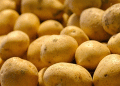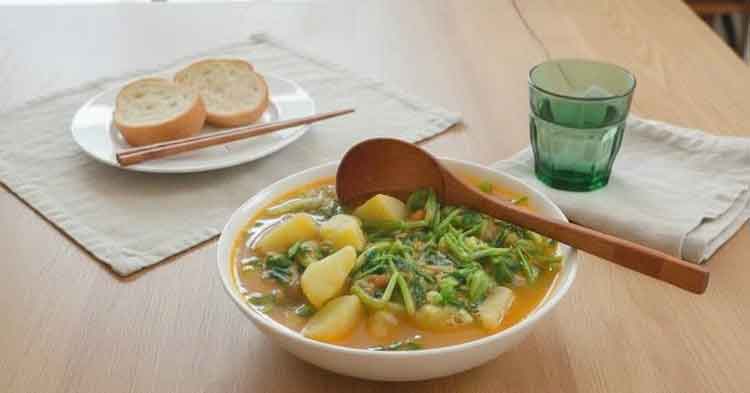
For agricultural scientists and crop specialists, the traditional Vietnamese potato and celery soup (canh khoai tây rau cần) represents far more than a culinary tradition—it exemplifies the strategic pairing of complementary crops with demonstrated nutraceutical properties that align with emerging functional food markets. The potato component provides significant nutritional density, with tubers containing substantial potassium (approximately 421 mg per 100g) that supports electrolyte balance and sodium excretion, resistant starch that modulates glycemic response and gut microbiota composition, and vitamin C content averaging 19.7 mg per 100g that contributes to collagen synthesis and immune function . The celery component (Apium graveolens) complements these attributes through its high water content (approximately 95%), significant vitamin K (29.3 μg per 100g) supporting vascular health, and bioactive compounds including apigenin and luteolin with documented antioxidant and anti-inflammatory properties that protect endothelial function .
From a production agronomy perspective, this culinary combination highlights important crop management considerations for growers supplying fresh markets and processing sectors. The soup’s efficacy depends critically on raw material quality—specifically, the prohibition of sprouted potatoes containing elevated solanine levels (>20 mg per 100g fresh weight) that present food safety risks . This necessitates proper storage protocols: maintaining temperatures of 7-10°C with 85-95% relative humidity in dark conditions to suppress glycoalkaloid accumulation while preventing the cold-induced sweetening that compromises processing quality . For celery producers, the crop’s high water content and sensitivity to moisture stress require irrigation management delivering 25-30 mm weekly, with harvest timing optimized to maximize phytonutrient concentrations while minimizing nitrate accumulation that can exceed 2,500 mg/kg under excessive nitrogen fertilization . The soup’s positioning as a functional food supporting cardiovascular health, digestion, and weight management aligns with market trends documented in Allied Market Research, projecting the global functional foods market to reach $267.9 billion by 2027, with vegetables positioned as key delivery systems for bioactive compounds . For forward-thinking growers, this traditional recipe offers market intelligence: consumers increasingly seek crops positioned for specific health outcomes—potatoes marketed for resistant starch content and low glycemic impact, celery promoted for blood pressure modulation through phthalide content—creating opportunities for value-added production protocols and differentiated marketing strategies that capture premium pricing in health-conscious retail channels.