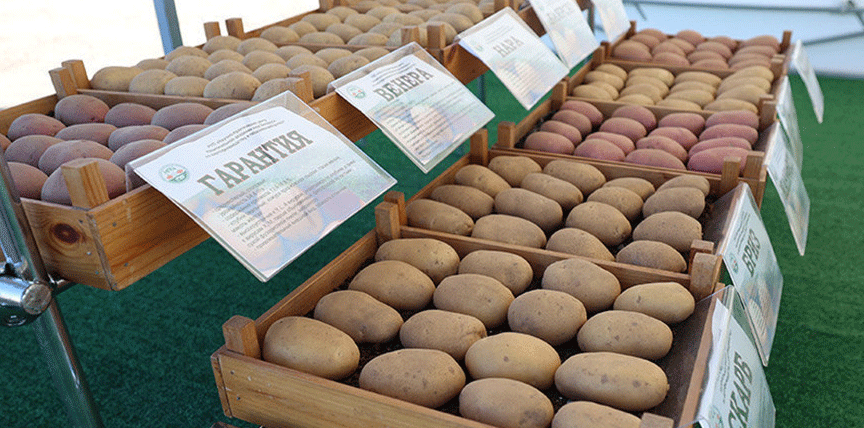
In a recent feature, Vadim Makhanko, General Director of the Scientific and Practical Center of the National Academy of Sciences (NAS) of Belarus for Potato and Horticulture, highlighted an interesting trend: farmers and private plot owners are increasingly requesting the specific potato varieties grown by the national leadership. As noted by President Alexander Lukashenko, his preferred cultivars include ‘Briz’, ‘Pershacvet’ (First Flower), and ‘Garantiya’. This phenomenon underscores a broader truth: the choice of variety is the cornerstone of profitable and sustainable potato production.
While presidential approval certainly drives public interest, the sustained popularity of these domestic varieties is rooted in their robust genetic traits and economic viability, developed through rigorous scientific programs at the NAS. The Center’s bi-annual sale of seed potatoes to the public is a critical channel for disseminating these elite genetic materials directly to the market.
But how do these popular varieties truly perform? Let’s look at the data:
- ‘Skarb’ (Treasure): Although not mentioned in the latest presidential list, ‘Skarb’ remains a cornerstone of Belarusian potato farming due to its excellent storageability and high starch content (often 15-18%), making it ideal for both processing and fresh consumption. Its resistance to key diseases like potato cyst nematode (Globodera rostochiensis) reduces dependency on chemical inputs, aligning with integrated pest management (IPM) strategies.
- ‘Briz’: This mid-early variety is prized for its stable high yield and resistance to the cancer pathogen (Synchytrium endobioticum) and golden nematode. According to research from the NAS, it consistently demonstrates good tolerance to mechanical damage, which is crucial for large-scale mechanized harvesting and storage, reducing post-harvest losses.
- ‘Pershacvet’ (First Flower): As an early- to mid-early variety, ‘Pershacvet’ targets the lucrative early potato market. It offers rapid tuberization and good resistance to late blight (Phytophthora infestans) in foliage, a critical trait for minimizing fungicide applications during the growing season.
- ‘Garantiya’: This variety is noted for its high dry matter content and excellent culinary qualities. Its adaptability to various soil types and stable yield under different growing conditions provide the “guarantee” its name promises, making it a reliable choice for farmers mitigating climate variability.
The broader context is vital. The UN Food and Agriculture Organization (FAO) emphasizes that using high-quality seed potatoes of adapted varieties can increase yields by 30-50% compared to recycled farm-saved seed. The work of the NAS centers directly addresses this, providing certified seed that ensures genetic purity and health, free from viral and bacterial diseases that chronically diminish yield.
The popularity of Belarusian potato varieties is not merely a result of trendsetting but a testament to successful agricultural science. Cultivars like ‘Briz’, ‘Pershacvet’, and ‘Garantiya’ have proven their worth in the field through genetically encoded resistance to major pathogens, high yield potential, and quality traits that meet both consumer and processor demands. For agronomists and farm owners, the key takeaway is to leverage these nationally developed genetic resources—supported by the latest scientific data—to enhance productivity, reduce environmental impact, and secure profitability in a competitive market.