Alternaria, also known as early blight, is a fungal pathogen that primarily affects potato crops. Here’s a summary of key information about Alternaria:
- Pathogen: The main species of Alternaria affecting potatoes is Alternaria solani, with another species, Alternaria alternata, also capable of infecting potatoes later in the season. Distinguishing between the two species usually requires a microscope.
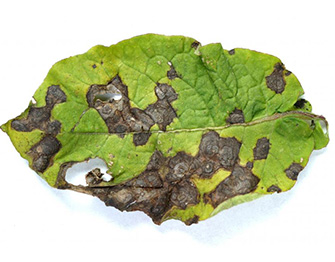
- Symptoms: Alternaria causes lesions on potato leaves, often characterized by concentric rings, giving them a target spot appearance. These lesions start as small black or brown spots on lower leaves and can coalesce, leading to the death of leaf tissue. The appearance of symptoms changes as the disease progresses.
- Distinguishing from Late Blight: Alternaria is distinct from late blight (Phytophthora infestans) because Alternaria spores are not visible on the leaves, and there is no distinctive milky ring of sporulation around the lesion on the underside of the leaf.
- Diagnosis: Diagnosis can be challenging as symptoms can be mistaken for nutrient deficiency or other diseases like Verticillium wilt, magnesium deficiency, or manganese toxicity.
- Conditions: Alternaria does not spread as extensively as late blight. It survives in potato debris or directly in the soil as spores and can infect potato plants as they develop. Spores can also be transferred on seed or via cultivation equipment. Alternaria thrives in conditions with wet and dry periods, making irrigated crops particularly susceptible.
- Control: Cultural methods for controlling Alternaria are limited but include:
- Managing debris in the field.
- Effective weed management to remove potential hosts like nightshade.
- Practicing long crop rotations to limit disease incidence.
- Maintaining good crop management, including appropriate fertilization and irrigation practices to reduce stress on the crop.
7. Fungicide Strategy: Effective control of late blight is crucial, and fungicide strategies should take this into account. Factors to consider include product choice, dose rate, and application intervals to ensure a robust disease management strategy.
Overall, managing Alternaria in potato crops requires a combination of cultural practices, regular crop inspections, and, when necessary, fungicide treatments. Early detection and prevention are essential to minimize yield losses caused by this fungal pathogen.