The Agravia agricultural exhibition in Moscow has quickly become one of the most important events in the region for anyone involved in modern agriculture, animal husbandry, and crop production. In a short span of time, it has evolved from a focused animal husbandry show into a comprehensive platform that brings together technology providers, producers, policymakers, researchers, and international visitors under one roof.
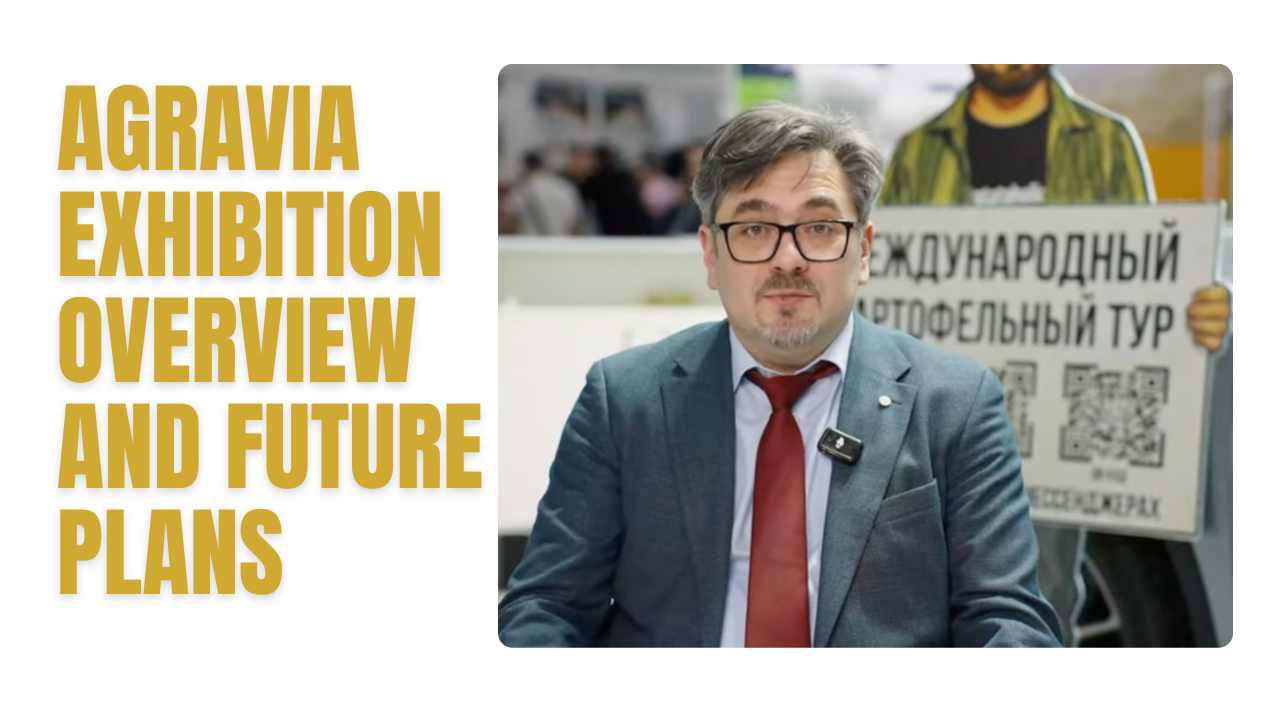
This article is based on the discussion between the the organiser of Agravia with Devendra K Jha at Agravia, Moscow. Devendra was at Agravia for International Potato Tour project visioned by Viktor Kovalev.
Origins and Growth of Agravia
Agravia was launched in 2020 with an initial emphasis on animal husbandry. From the very beginning, the organizers had a clear vision: to build the largest agricultural exhibition in Russia, covering all key sectors of the industry. Today, Agravia is already in its seventh edition and has firmly established itself as the biggest agricultural exhibition not only in Russia but in the wider region.
The scale of the event reflects this ambition:
- Around 1,000 exhibitors spread across five halls
- More than 750 speakers
- Over 150 conferences, seminars, and discussion sessions
- Approximately 13 conference rooms running parallel events
Participants come from all across Russia and neighboring countries, making Agravia a central meeting point for the region’s agricultural community. The timing is also strategic: held in January, the exhibition fits well into the agricultural calendar, when professionals from various climatic zones within Russia and nearby countries can travel, attend conferences, explore technology, and plan for the upcoming season.
Four Core Sectors Under One Roof
Agravia is designed as “four exhibitions in one,” clearly structured around the major pillars of the agricultural value chain. This focused segmentation helps visitors find exactly what is relevant to their business, while still benefiting from the broader ecosystem present at the fair.
- Crop Production
This sector covers technologies and solutions for field crops, including seeds, fertilizers, plant protection products, irrigation, and precision farming tools. It is a space where farmers and agribusinesses can explore how to increase yields, improve soil health, and adopt smarter cultivation practices. - Potato and Horticulture
One of Agravia’s distinctive strengths is its dedicated section for potatoes and vegetables. Exhibitors showcase technologies for seed potatoes, storage, grading, processing, disease management, and post-harvest handling, along with solutions for greenhouse and open-field vegetables. For India—currently the world’s second-largest producer of potatoes—this segment is particularly relevant. The exhibition offers a chance to see how Russian and other international players are addressing storage losses, quality improvement, and mechanization in potato and vegetable value chains. - Livestock and Poultry
Originating as an animal husbandry-focused show, Agravia still retains a very strong livestock and poultry component. This includes genetics, breeding, housing systems, animal welfare solutions, production management, and digital tools for herd and flock monitoring. - Feed and Animal Health
This sector connects nutrition, veterinary solutions, and animal health management. Feed additives, compound feeds, ration balancing tools, veterinary medicines, vaccines, and health monitoring technologies are showcased, reflecting the importance of integrated health and nutrition in achieving sustainable production.
By keeping these four sectors distinct yet interconnected, Agravia enables visitors to deep-dive into their own specialty while seeing firsthand how technologies and practices in one area can influence another.
Conferences, Knowledge Sharing, and Networking
Agravia is not just an exhibition of products and technologies; it is also a major knowledge platform. More than 150 conferences, seminars, and workshops take place during the three-day event, featuring over 750 speakers. Topics span the entire agricultural spectrum—crop production, potato and vegetable innovations, agri-chemicals, livestock production, feeding strategies, genetics, and more.
For visitors, this means they can:
- Attend technical sessions relevant to their crop or livestock focus
- Hear from scientists, industry experts, and policy stakeholders
- Learn about best practices, new regulations, and market trends
- Network with peers, researchers, and technology providers
The density of activity—so many sessions running in parallel over three days—creates an intense but highly productive environment for learning and collaboration.
Internationalization: Toward a Regional and Global Hub
A key area of focus for Agravia’s organizers is international development. In its latest edition, the exhibition took a significant step by launching an international visitor lounge. This space is designed to facilitate cross-border engagement and structured interactions between foreign visitors, embassies, industry associations, and exhibitors.
Some notable international initiatives at Agravia include:
- Embassy hour meetings with representatives of different countries
- Networking without borders events with international associations
- Targeted outreach to delegations from India, ASEAN countries, and other regions
The long-term goal is to position Agravia as a central hub not only for Russia, but for the wider region, including Kazakhstan, Uzbekistan, Belarus, Kyrgyzstan, and other neighboring markets. The exhibition already attracts professionals from these countries, but there is strong potential to deepen and expand this participation.
For international visitors, one of the key advantages is access to a broad range of technologies and solutions that may not be widely represented in their home markets. Agravia becomes a place where they can discover new equipment, inputs, and innovations that can be adapted to their own agricultural contexts.
Why Agravia Matters for India and the Potato Sector
India, as the second-largest potato producer in the world, faces both opportunities and challenges: increasing productivity, reducing post-harvest losses, improving storage infrastructure, and enhancing quality for processing and export markets. The dedicated potato and vegetable segment at Agravia aligns directly with these priorities.
By engaging with Agravia, Indian stakeholders—growers, storage operators, processors, technology providers, and researchers—can:
- Learn from Russian and regional experiences in potato storage, grading, and mechanization
- Explore partnerships with technology suppliers not yet active in India
- Identify solutions for cold chain, controlled atmosphere storage, and quality management
- Exchange insights on varieties, agronomy, and disease management
The practical side is also manageable. There are direct flights from New Delhi to Moscow, with a travel time of around six hours, making short, focused business visits feasible. Additionally, the timing in January offers a chance to step briefly into a different climate and business environment while the agricultural season planning is underway.
Looking Ahead: Future Development Priorities
Over the next five years, Agravia’s organizers have outlined clear priorities for growth and enhancement:
- Strengthening the Crop Production and Machinery Segment
While the potato and vegetable segment is already well-developed, there is a strategic push to further expand agricultural machinery and equipment. This includes tractors, harvesters, planters, storage and handling systems, and precision agriculture tools. The machinery segment has been under active development for the past two years and is expected to grow significantly. - Deepening International Engagement
Agravia aims to become the most important hub in the region for international agricultural cooperation. This means attracting more delegations, exhibitors, and visitors from countries like India, as well as from Central Asia and other regions. The focus is not just on volume, but on high-quality, long-term collaboration. - Showcasing Unique Technologies
A distinctive advantage of Agravia is its concentration of technologies that may not be present in other countries’ exhibitions. The organizers plan to further highlight and communicate this uniqueness so that international visitors understand the value of attending.
Conclusion
Agravia has rapidly grown into a flagship agricultural exhibition for Russia and its neighboring region. With its four well-defined sectors, extensive conference program, and increasing international engagement, it serves as a powerful platform for technology exchange, networking, and strategic cooperation.
For Indian stakeholders, particularly in the potato and horticulture space, Agravia offers a timely opportunity: to learn from global best practices, discover new technologies, and build partnerships that can strengthen India’s own agricultural value chains. As Agravia continues to expand its machinery segment and international presence, its importance as a regional and global hub for agricultural innovation is only set to grow—an insight shared firsthand by the organiser of Agravia in conversation with Devendra K Jha at Agravia, Moscow.