• About Us
  • Partnership & Advertising Opportunities
  • Careers at Potatoes.News
Friday, March 13, 2026
  • Login
  • Register
No Result
View All Result
POTATOES NEWS
  • NEWS
  • IPT
  • AGROTECHNOLOGY
  • IRRIGATION
  • POTATO PROCESSING
  • Contact us
  • NEWS
  • IPT
  • AGROTECHNOLOGY
  • IRRIGATION
  • POTATO PROCESSING
  • Contact us
No Result
View All Result
POTATOES NEWS

Iran’s Potato Revolution: Production Soars to 5.5 Million Tons, but Post-Harvest Losses Hit 45%

by T.G. Lynn
12.03.2026
in Harvesting, News, Storages
A A
Iran’s Potato Revolution: Production Soars to 5.5 Million Tons, but Post-Harvest Losses Hit 45%

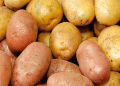
Since the 1970s, the potato—poetically named “sibzamini” (earth apple) in Persian—has become a staple in Iranian cuisine, steadily gaining ground alongside traditional rice and wheat. Today, Iran produces approximately 5.5 million tons of potatoes annually on 160,000 to 170,000 hectares, with 77% destined for fresh consumption and export and 13% for industrial processing. This remarkable growth has been fueled by decades of importing high-quality Dutch seed potatoes, combined with advancing mechanization and knowledge exchange. However, a recent study by Wageningen University & Research reveals that while production volumes are impressive, the Iranian potato value chain remains far from optimal, with post-harvest losses estimated at a staggering 45%.

The primary bottlenecks lie in outdated cultivation practices and primitive storage infrastructure. In key production regions like Hamadan, heavy clay soils and poor tillage lead to damaged tubers and quality loss even before harvest. The storage situation is even more critical: although modern cold stores are gradually being introduced, many potatoes are still kept in traditional underground clamps or non-refrigerated facilities. Even where cold storage exists, potatoes are often piled in plastic bags, preventing proper ventilation and promoting rot. The lack of effective sprout inhibitors forces farmers to store potatoes at excessively low temperatures, causing sugar accumulation that renders the crop unsuitable for processing into fries and chips. Compounding these issues, storage operators are paid by the bag rather than for quality, creating no incentive for improvement. As Iran pursues UPOV membership to strengthen plant variety protection and continues its partnership with Dutch breeders, the urgent challenge remains clear: bridging the gap between high production and the consistent quality required by a modernizing food industry.

Tags: Dutch seed potatoesFood SecurityIran potato productionIranian agriculturepost-harvest lossesPotato processingPotato StoragesibzaminiUPOV IranWageningen University
Next Post
https://www.youtube.com/@POTATOESNEWS

International Potato Tour: Expedition to the Caucasus and Turkey

General Partner

ADS 2VtzqxQ68nP ADS 2VtzqxQ68nP ADS 2VtzqxQ68nP

REGIONAL PARTNER IN PAKISTAN

Recommended

Why Does Local Potatoes Run Out by April? Challenges and Solutions for Sustainable Vegetable Farming in Kuzbass

Why Does Local Potatoes Run Out by April? Challenges and Solutions for Sustainable Vegetable Farming in Kuzbass

9 months ago
CIPC Residue Monitoring Project: Ensuring Industry Compliance in Chlorpropham Residues

CIPC Residue Monitoring Project: Ensuring Industry Compliance in Chlorpropham Residues

2 years ago
REGIONAL PARTNER IN EGYPT REGIONAL PARTNER IN EGYPT REGIONAL PARTNER IN EGYPT
  • About Us
  • Partnership & Advertising Opportunities
  • Careers at Potatoes.News

© 2010-2026 POTATOES NEWS

Welcome Back!

Login to your account below

Forgotten Password? Sign Up

Create New Account!

Fill the forms bellow to register

All fields are required. Log In

Retrieve your password

Please enter your username or email address to reset your password.

Log In
No Result
View All Result
  • NEWS
  • IPT
  • AGROTECHNOLOGY
  • IRRIGATION
  • POTATO PROCESSING
  • Contact us

© 2010-2026 POTATOES NEWS