For agricultural engineers and processing facility managers, the recent modernization at Polish processor MK Agro offers compelling data on the economics of secondary peeling technologies in commercial potato operations. Facing expansion targets that included adding uncooked potato products to their existing pre-cooked portfolio, MK Agro established a production concept requiring three tons of finished product per hour with strict specifications for cost efficiency and minimal raw material loss . The company’s evaluation during summer 2025 led to selection of Forsfood Oy’s peeling solutions, driven by the technology’s combination of industrial-scale capacity with gentle product handling—a critical factor when processing margins depend on maximizing recoverable flesh from each tuber entering the line . The partnership’s structure, incorporating Polish distributor F.H. Najbar for localized support, addresses a persistent challenge in food processing: the need for rapid technical response times that prevent costly downtime in continuous operations .
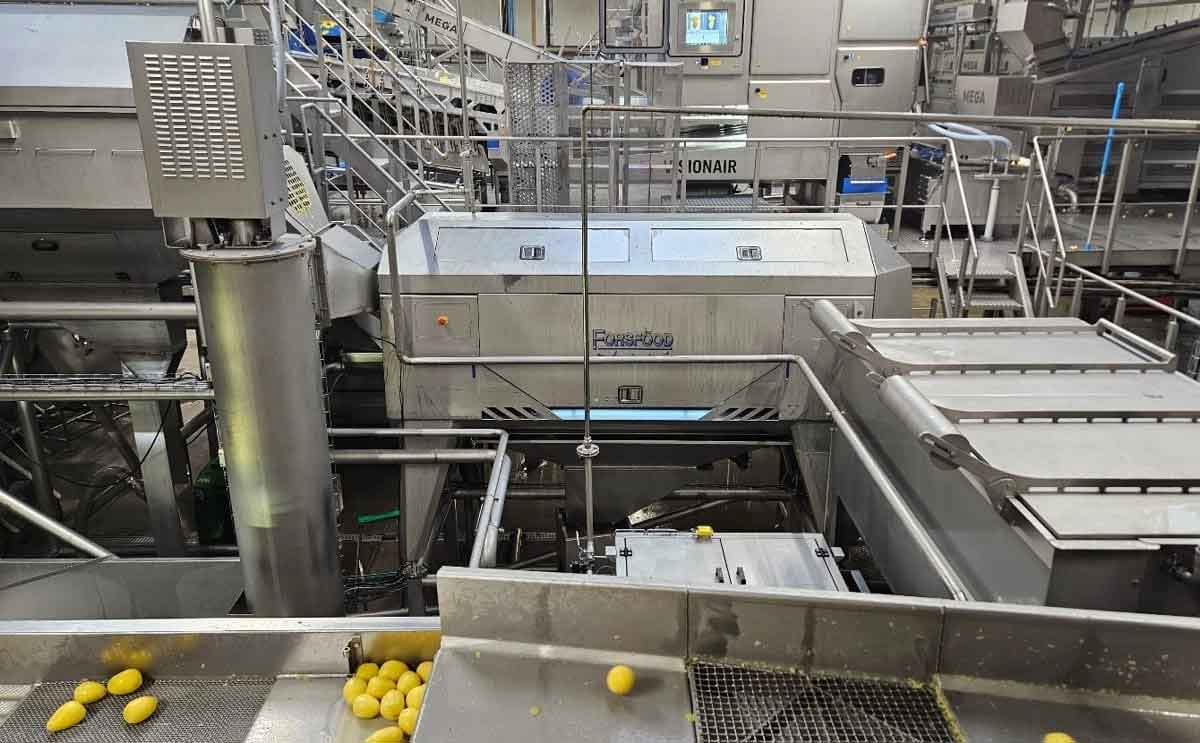
The installation’s most significant technical innovation addresses a fundamental limitation of conventional steam peeling systems. While steam peeling remains industry-standard for its high throughput, inherent variability in raw tuber morphology and processing conditions frequently produces partially peeled product requiring additional treatment . Forsfood’s Aurora Borealis USVA rollerknife re-peeling machine was deployed specifically to address this yield gap, and operational data confirms its effectiveness: MK Agro reports more consistent product quality and improved overall production efficiency since implementation . The technology’s design parameters are particularly relevant for sustainability-conscious operations, featuring low water consumption (reducing both input costs and wastewater treatment burdens), minimal maintenance requirements (maximizing uptime), and efficient raw material utilization that directly impacts profitability . The system’s gentle peeling action preserves maximum flesh while removing residual skin, effectively increasing the percentage of each potato that reaches the finished product stream. Building on this success, Forsfood will deliver components for a complete potato peeling line in January 2026, enabling MK Agro to integrate peeling, cutting, and vacuum packaging for fresh potato distribution to the Polish market . This sequential investment pattern demonstrates how targeted process improvements at critical control points can yield measurable returns, justifying broader capital deployment across the value chain—a lesson applicable to any agricultural processing operation seeking to optimize both sustainability metrics and bottom-line performance.