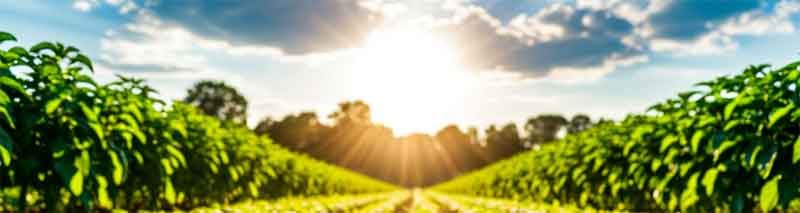
A comprehensive study from the University of Florence, published in Applied Energy, offers one of the most rigorous quantifications to date of the agrivoltaic impact on a staple crop: the potato. Using an 18-year climate dataset and high-resolution shading simulations, researchers modeled a 1 MW system with panels mounted 3 meters high over a potato field. The key finding confirms a primary concern: direct irradiance under panels can drop by up to 55%, leading to an average potato yield reduction of roughly 15% compared to open-field cultivation. This aligns with a 2023 global meta-analysis in Renewable and Sustainable Energy Reviews, which found crop yields under agrivoltaics vary widely (-19% to +6%) but often see a moderate decrease for light-loving crops like potatoes.
However, the study uncovers a critical compensatory mechanism. The moderate shading, particularly in the early season, creates a favorable microclimate that reduces soil and canopy temperature, lowering evaporative demand. This delays soil-moisture depletion, reduces plant water stress, and can extend the growing period. Essentially, the system trades a portion of solar energy for significantly improved water-use efficiency—a trade-off of increasing value in drought-prone regions. From a land-use perspective, the system achieved a Land Equivalent Ratio (LER) of 1.58, meaning the combined food and energy output would require 1.58 hectares of land if produced separately, confirming a substantial overall resource-use efficiency.
The economic viability hinges on specific parameters. The levelized cost of energy for the agrivoltaic system was higher (€0.084/kWh) than a ground-mounted PV benchmark (€0.061/kWh). The internal rate of return (IRR) was also lower: 13% with a 10-year payback for agrivoltaics versus 21% (6-year payback) for standard PV, assuming 70% energy self-consumption on abandoned land. The gap narrows on productive farmland, as the model accounts for continued crop revenue. Crucially, the study identifies high on-farm energy self-consumption as a major driver of profitability, as it avoids selling power at lower wholesale grid rates.
This research moves the agrivoltaic conversation for row crops from speculation to data-driven analysis. For potato growers and agricultural professionals, it presents a clear calculus: agrivoltaics is not a direct replacement for full-sun production aiming for maximum yield, but a strategic adaptation for optimizing total resource productivity. The decision to adopt must be based on local priorities—if water conservation and on-farm energy resilience are paramount, the system offers compelling benefits that can offset a controlled yield reduction. Success requires careful financial planning centered on maximizing self-consumption of the generated power and selecting system designs (panel height, spacing, orientation) that optimize the light-water-yield balance for specific crop varieties and local climates.