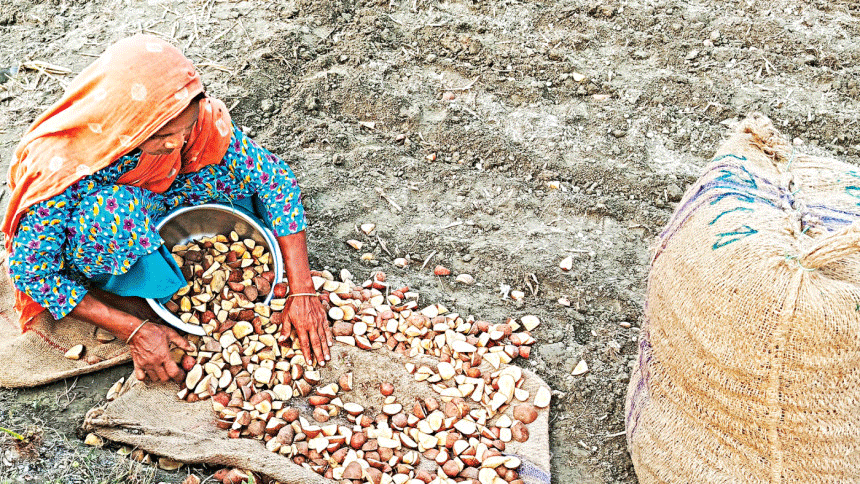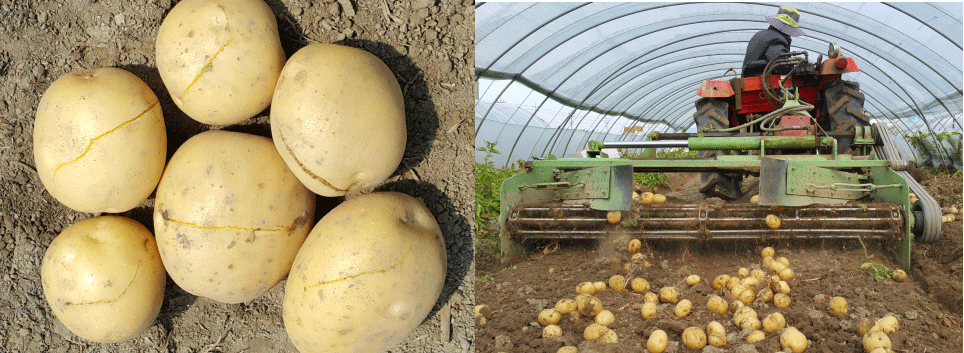
For growers capitalizing on the high-value early spring market by producing potatoes in protected environments like greenhouses or tunnels, tuber quality is paramount. However, a common physiological disorder known as tuber cracking—where the skin and underlying flesh develop shallow splits—can drastically reduce marketable yield and accelerate post-harvest decay. In South Korea, where greenhouse potatoes are cultivated on 1,000–1,500 hectares, the Rural Development Administration (RDA) has quantified both the problem and a practical solution. Their research shows that 5–13% of the average greenhouse potato yield is typically lost to cracking, representing a direct income loss of approximately 230,000 to 610,000 KRW per hectare.
The RDA’s study pinpoints two primary, manageable causes and offers targeted mitigation strategies. First, excessive soil moisture and nutrient uptake late in the season, often indicated by persistent green haulms, lead to rapid internal tuber growth that stresses and ruptures the more slowly maturing skin. The research found that removing plant stalks 12 to 48 hours before harvest, thereby severing water uptake, reduced cracking incidence by 40–60% in susceptible tubers. This practice accelerates skin set and maturity, a principle supported by global potato physiology which links proper skin set to reduced water influx and physical damage. Second, mechanical damage during harvest is a major contributor. By simply reducing the digging chain speed on potato harvesters, the RDA observed a drop in cracking from 9–13% to 6%. This slower speed minimizes the vibration and physical impact on tubers as they are lifted from the soil and conveyed, a finding consistent with engineering best practices for handling delicate produce.
These interventions address a critical nexus of crop physiology and harvest engineering. Globally, post-harvest losses for root and tuber crops are estimated at 15-25% on average, with physical damage being a leading cause. The RDA’s approach is a cost-effective example of “harvest readiness” management, moving beyond purely varietal solutions. While breeding for crack-resistant varieties remains a long-term goal, as noted by RDA’s director, the immediate application of stalk removal and adjusted harvester settings provides growers with actionable tools to protect their investment today.
Tuber cracking in protected potato cultivation is not an inevitable loss but a manageable disorder. The South Korean research provides clear, evidence-based protocols that require minimal investment but deliver substantial economic returns. Implementing pre-harvest stalk removal and reducing harvester operational speed are practical strategies that directly address the physiological and mechanical causes of cracking. For farmers, agronomists, and farm managers, adopting these practices can safeguard a significant portion of the yield (5-13%), turning potential waste into marketable produce and directly boosting farm profitability. This case underscores the importance of integrating simple, informed crop management techniques with harvest operations to maximize both quality and economic return in high-value vegetable production.