
Micronutrients in foliar feeding of potatoes
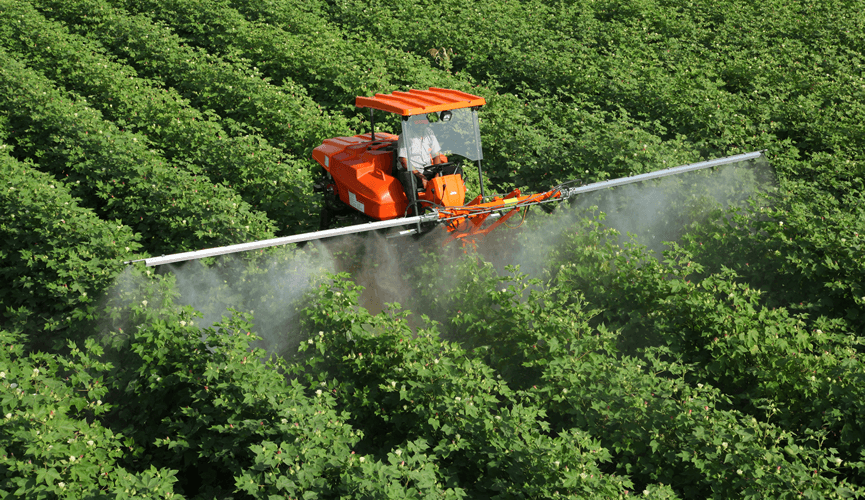
Soil fertilization does not always guarantee full availability of nutrients. Therefore, it is fully justified to supplement it with foliar feeding.
Potato shows a varied (within quite wide limits) demand in relation to the basic micronutrients (iron – 43.0 g; manganese – 7.7 g; zinc – 7.5 g; boron – 2.7 g; copper – 2.2 g molybdenum – 0.1 g per ton of tubers). Among the abovementioned potato plants show high sensitivity to manganese and zinc deficiency, and especially on light soil it may also be boron, while it is less sensitive to copper, iron or molybdenum.
Manganese (Mn)
It is one of the main micronutrients involved in most of the biochemical processes occurring in potato plants. The result of a deficiency of this microelement may delay flowering of plants, reduce the content of protein, vitamin C and starch. Insufficient manganese supply of plants, especially in the tuber formation stage, may contribute to the growth of common scab infection of tubers. Characteristic symptoms of a deficiency on the leaves are the so-called green mesh, i.e. yellow spots between the veins which later turn brown.
Zinc (Zn)
It is a component of respiration-regulating enzymes and is involved in the synthesis of chlorophyll. Insufficient supply of zinc in plants adversely affects the content of proteins and sugars. Potato plants react to zinc deficiency with dwarfism and chlorosis of leaves, which additionally undergo folds, especially at the edges.
Weekdays. Unsubscribe in one click.
Bor (B)
It determines the proper development of the growth cone and regulates the flowering process. The deficiency is manifested in general by shortened stems and a bushy plant habit. The leaves become brittle and turn into a “boat” shape, which may be confused with plant infection by the leaf roll virus. Various kinds of spots may appear on the tuber skin and in the flesh.
Copper (Cu)
Affects nitrogen transformation in the plant, contributes to the increase in protein content and the reduction of nitrates. Copper deficiency is visible in the form of yellowing and whitening of the leaves from the tops. Inflorescences may be distorted.
Iron (Fe)
Participates in photosynthesis and respiration. It plays an important role in nitrogen metabolism, participating in the reduction of nitrates. It is also involved in the metabolism of nucleic acids. The main effect of iron deficiency is inhibition of the synthesis of chlorophyll, carotene and xanthophyll. A symptom of a deficiency of this component is a light green or even yellowish color of the leaves, which may turn white with time. Discoloration occurs in the leaf plate, with the exception of the tissue along the main ethmoid bundles which remain green.
Molybdenum (Mo)
It takes part in nitrogen metabolism, especially in the transformation of nitrates, which is of practical importance at high nitrogen doses. With a deficiency of this microelement, the activity of the enzyme – nitrate reductase, which is responsible for the proper conversion of nitrogen into proteins, is disturbed. In potato plants, a molybdenum deficiency may appear as pale leaves with curled tips.
Deep or foliar
It should be borne in mind that the uptake of micronutrients from soil is quite slow, and under certain soil conditions, resulting from its chemical properties or the course of the weather during the growing season, their uptake may be blocked and insufficient plant supply may occur. The lack of easily digestible forms of micronutrients may be experienced by potato plants from the phase of their closing in the inter-row spaces, when lumps appear on the stolons, which means the beginning of tuber formation. The further development of plants and the increase in tuber mass is a continuation of the critical period, i.e. the high demand for these components.
The best way to deliver specific micronutrients during the growing season is to apply them in a foliar application.
When to feed
Interventional use of specific ingredients, i.e. changes in the plant morphology that are not yet visible, allows to effectively protect them against the occurrence of visual deficiencies, which may unfortunately reduce the yield or quality of tubers to a varying degree. In order to correctly assess the nutritional status of plants during the growing season, treatments are best based on their laboratory analysis or using measuring devices directly on the plantation. If it is not possible to use such methods, foliar treatments can be performed prophylactically, i.e. without finding visible symptoms of deficiency of specific components on the plants, e.g. as a supplement and increasing the efficiency of organic and mineral soil fertilization.
The scale of the yield increase
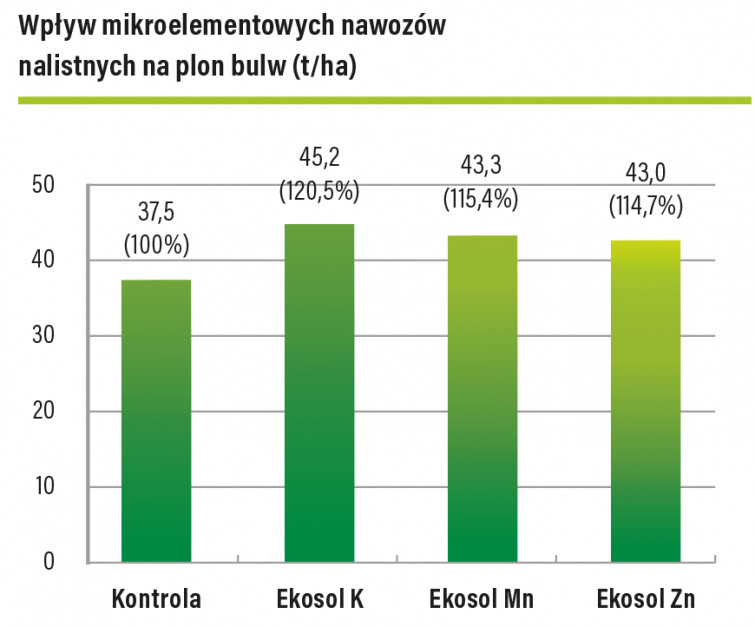
Prophylactic foliar treatments carried out on light soil at IHAR-PIB Department in Jadwisin in the case of multi-component fertilizer with microelements (Ekosol K) showed an increase in the yield of potato tubers by 20.5%, while the use of fertilizers containing single key micronutrients for potatoes (manganese and zinc) contributed to the increase in yield by 15.4 percent, respectively. and 14.7 percent in relation to the control of the object without foliar feeding.