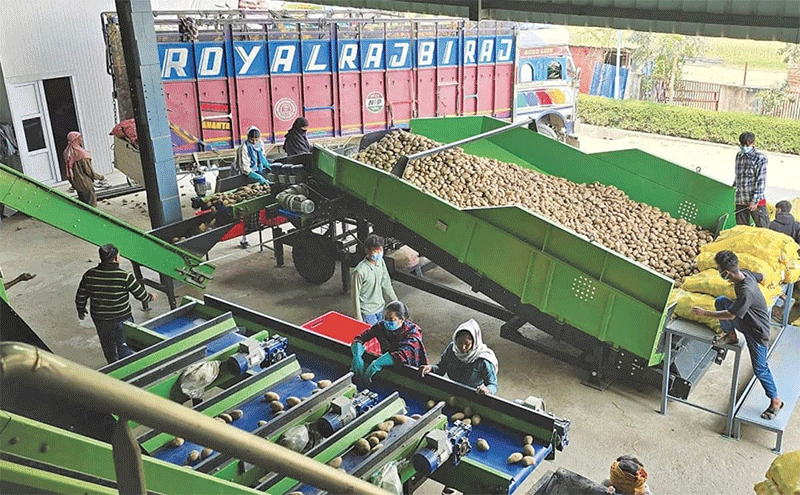
A groundbreaking study provides critical, data-driven insights for the potato processing industry, directly comparing the efficacy of peroxyacetic acid (PAA) and chlorine dioxide against key foodborne pathogens. The research addresses a critical knowledge gap in root vegetable sanitation, offering actionable protocols for operations practicing water reuse—a common scenario aimed at conserving water but one that elevates cross-contamination risk. These findings are essential for developing evidence-based food safety plans that protect consumers and brand integrity.
The study simulated industrial washing conditions, inoculating potatoes with Listeria monocytogenes, E. coli, and murine norovirus. The results revealed a clear hierarchy in disinfectant performance. PAA demonstrated superior versatility and efficiency, effectively reducing E. coli at a low 40 ppm concentration and achieving a 2.59 log reduction of the more resilient L. monocytogenes at 120 ppm. Crucially, it was the only disinfectant tested that significantly reduced norovirus. Chlorine dioxide required higher concentrations (≥80 ppm) for comparable bacterial reduction and was completely ineffective against norovirus. In cross-contamination scenarios, untreated wash water led to massive pathogen transfer (over 3 log CFU/potato). While PAA completely prevented E. coli cross-contamination, both disinfectants failed to fully stop L. monocytogenes transfer, especially in water reuse simulations. This persistence of Listeria is a major concern, corroborating industry reports that identify it as a long-term challenge in frozen potato processing. The CDC data cited, showing over 1,100 illness cases linked to potato products from 2016-2023, underscores the very real public health stakes.
For potato processors, this study delivers a clear message: the choice of sanitizer is not one-size-fits-all and must be tailored to the target pathogen risks. PAA emerges as the more robust option, particularly due to its efficacy against viruses and performance at lower concentrations. However, the stubborn persistence of L. monocytogenes, even in the presence of disinfectants, signals that a silver bullet does not exist. A multi-hurdle approach is necessary, where chemical sanitation is complemented by rigorous water quality monitoring, potential filtration, and robust environmental monitoring programs in the processing facility. Investing in this science-backed, targeted approach to wash water management is no longer optional but a fundamental requirement for a safe, sustainable, and competitive potato industry.