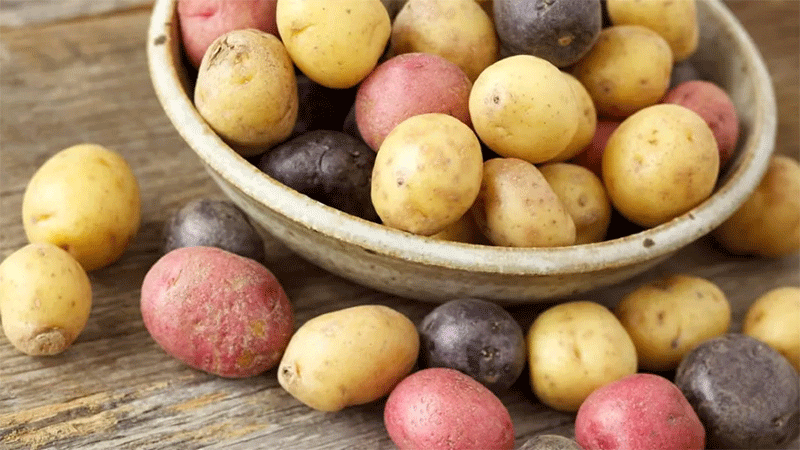
The rise of baby potatoes, or “creamers,” represents one of the most significant value-creating shifts in the modern potato industry. What was once considered undersized waste—tubers that fell through harvesters’ screens—is now a designed product driven by specific small-at-maturity genetics. Pioneered by breeders like Jake Vanderschaaf and his company, Tuberosum Technologies, the modern creamer is defined by a strict ideotype: high tuber count per plant, concentrated set, thin but resilient skin, and a waxy texture that holds up in air fryers and one-pan meals. This genetic shift was the foundational step, enabling reliable production of uniform tubers within tight size bands of 20-38 mm, a specification that is now non-negotiable for major retailers. The global potato market, valued at over $140 billion, is seeing premium segments like creamers grow disproportionately, driven by their perfect alignment with contemporary consumer demands for convenience, visual appeal, and reduced food waste.
However, this premium value comes with premium challenges. Agronomically, creamers are far more demanding than bulk table stock. Success hinges on “tonnes in band”—the percentage of the harvest that meets the strict size and cosmetic specifications. This requires a systems approach: high-quality seed with uniform physiological age, precision irrigation and nitrogen management to prevent late bulking, and meticulously timed desiccation. Post-harvest, the thin skins that consumers love are highly susceptible to bruising, scuffing, and cosmetic diseases like silver scurf, necessitating low-drop handling and padded pack lines. The financial model is one of trading total yield for higher margin per hectare. According to agri-benchmarking data, successful creamer producers can achieve margins 20-50% higher than those in standard table potato production, but this is entirely dependent on achieving a high pack-out percentage. The entire system is now being reinforced by advanced breeding tools, including marker-assisted selection and digital phenotyping using UAVs, to develop lines with inherent resilience to climate stress and handling damage.
The creamer segment is a powerful case study in how agricultural sectors can escape commodity cycles through innovation and discipline. It demonstrates that future profitability lies not in maximizing yield alone, but in optimizing the entire value chain—from breeding for specific consumer and supply chain needs to implementing precision agronomy and gentle handling. For growers, the message is clear: engaging in the creamer market requires a commitment to data-driven management and quality-focused contracts. For the industry at large, the success of this small potato signals a larger trend toward differentiated, consumer-centric products that reward quality and consistency over sheer volume.