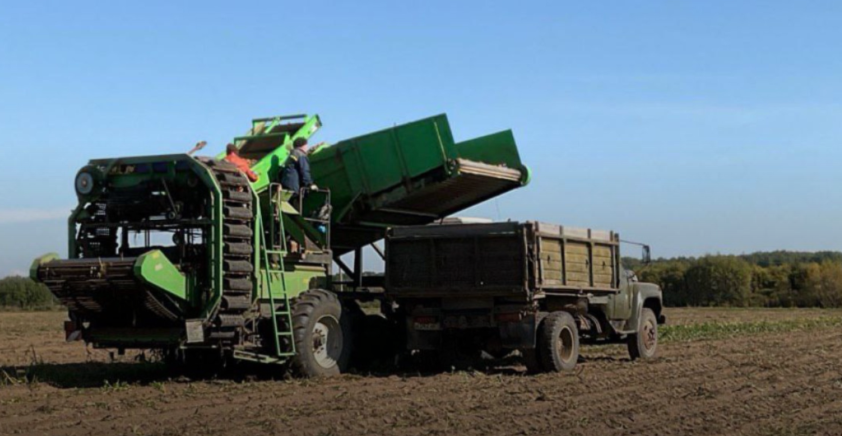
The Arkhangelsk region, a territory more commonly associated with its northern climate than with agricultural output, is making a strategic claim as a vital hub for Russia’s seed potato industry. In 2025, the region’s farmers harvested 3,000 tonnes of elite and super-elite seed potatoes, a remarkable 30% increase over the previous year’s production. This high-quality seed is in high demand, supplying 15 regions across the vast Russian Federation, from the warm Krasnodar Krai to the distant Kamchatka Peninsula. This growth is a direct result of a concerted effort to leverage the region’s natural advantages, particularly its cold climate, which acts as a natural barrier against many soil-borne pests and diseases that plague seed production in warmer areas—a principle of “geographic phytosanitary security” widely recognized in seed science.
This expansion is strategically underpinned by a dual focus on varietal development and targeted state investment. The region is currently cultivating 19 different potato varieties, with two new domestic cultivars—’Arktika’ and ‘Tret’yakovka’—undergoing final trials after showing promising results in 2025. This push for domestic varieties is critical in the context of Russia’s national import substitution policy. Following restrictions on foreign agricultural imports, the country has prioritized achieving self-sufficiency in seed potatoes, a sector once reliant on European imports. The Russian government is actively supporting this transition; as highlighted in the region’s model, state subsidies cover up to 30% of agricultural investment costs, enabling farms to adopt modern technologies and improve quality control. This aligns with federal programs that have seen the area under seed potato cultivation increase nationally by over 15% since 2020, according to the Russian Ministry of Agriculture.
The success of the Arkhangelsk region demonstrates a potent formula for building a resilient agricultural sector: identify and capitalize on a unique geographic competitive advantage, align with national strategic goals, and back it with consistent financial support for innovation. For the global agricultural community, it serves as a compelling case study in how perceived climatic limitations can be transformed into strategic assets, and how focused investment in the foundational level of the supply chain—high-quality seed—is essential for long-term food security and agricultural sovereignty.