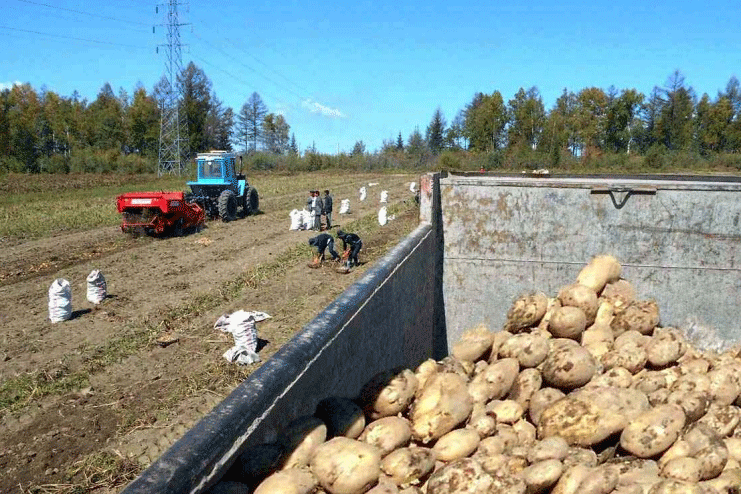
In North Korea’s Ryanggang Province, a major potato-producing region, the autumn harvest from September 10 to October 10 is not just a agricultural event but a state-mandated mobilization. As reported by Daily NK, high school, college, and university students are systematically dispatched to state farms under a formal mobilization order. Schools in cities like Hyesan are assigned specific farms, and students are then responsible for the manual labor of digging, harvesting, and transporting the potato crop. This practice, while framed as a social duty, functions as a critical, yet uncompensated, labor force for the state’s agricultural sector.
The Economic Burden Shifts to Families
The most striking aspect of this mobilization is the complete shifting of operational costs from the state to the students and their families. Despite providing the labor, students do not receive adequate sustenance or compensation. According to sources, schools do not provide proper meals, instructing students to “solve their meals” with potatoes from the farm. This forces students and their parents to self-organize and fund their own support system. Through class-wide coordination, they must bring or collectively purchase essential foodstuffs like rice, corn, cooking oil, seasonings, and meat substitutes.
Furthermore, students are required to cover their own transportation costs to and from the farms. Reports indicate that classes must rent vehicles, with the expense passed directly to the students. This year, the financial burden is particularly acute due to rampant inflation. In one Hyesan high school class, each student was required to provide 5kg of rice, 5kg of corn, cooking oil, seasonings, and 50,000 North Korean won for transport. Another class opted for a cash-only solution, with each student contributing 180,000 won. For families in an economy with widespread poverty, this represents a significant financial strain.
Underlying Causes and Social Discontent
This system exposes two fundamental problems within North Korean agriculture: a critical shortage of mechanization and a struggling state-run farming sector that cannot function without this forced labor. The reliance on manual student labor points to a lack of efficient harvesting machinery and a potentially disenfranchised regular farm workforce. The practice also serves as a stark indicator of the country’s economic woes. The fact that the state cannot or will not fund the basic costs of a harvest it mandates reveals severe resource limitations.
Unsurprisingly, this breeds significant discontent among parents, who bear the ultimate financial and emotional burden. Sources quote parents expressing frustration, with one stating, “I’m not a capitalist who exploits labor… it would be nice if the government would fill in some of the food.” Another criticized the state for “issuing orders and pushing everything onto the students.” The social pressure to participate is immense, as failure to meet these “social tasks” brings shame upon the students and their families, compelling compliance despite the hardship.
The annual student potato harvest in North Korea is more than a cultural tradition; it is a revealing symptom of a deeply strained agricultural and economic system. It underscores a reliance on uncompensated labor to meet production targets, masking inefficiencies and labor shortages. For the international agricultural community, it serves as a sobering case study in how political systems can directly impact agricultural labor practices and place the true cost of production onto the most vulnerable citizens. The burden placed on students and their families highlights the human cost behind the state’s potato yield, a cost not measured in kilograms, but in foregone education and family resources.