The Potato Tour across Russia continues—today we’re in the Tavrichesky District of the Omsk Region, Kharlanga village. We’re meeting a farm that entered vegetable growing from scratch and, in ten years, built a resilient model around potatoes, carrots, and table beets.
Key Facts
- Company: “Tavriysky Ovoshchevod” (not to be confused with “LLC Tavricheskaya”)
- Location: Omsk Region, Tavrichesky District, Kharlanga village
- Start year: established in autumn 2014, first plantings in 2015
- Areas in 2025: 420 ha potatoes, 100 ha carrots, 65 ha table beet
- Sales: primarily federal and regional retail chains under agro-contracts
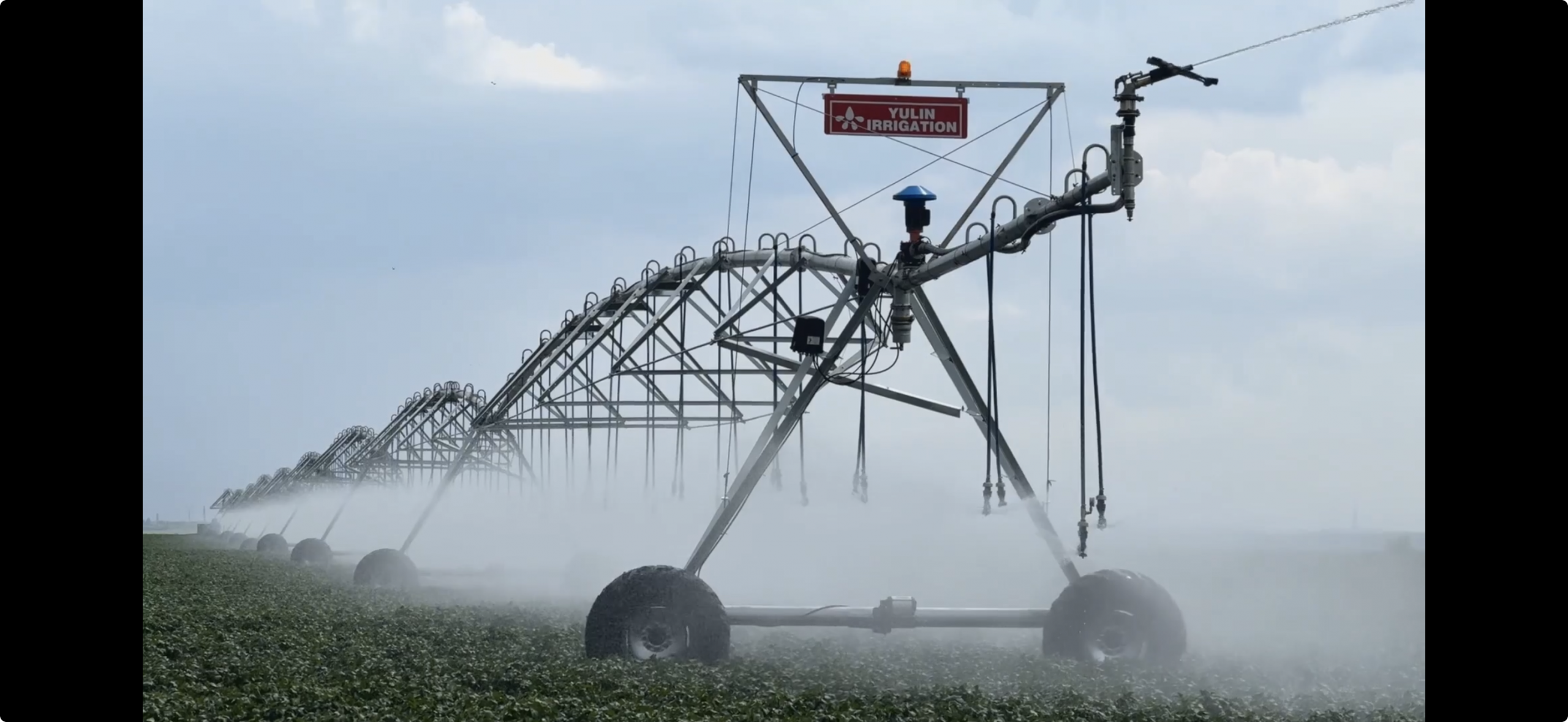
- Irrigation: 100% irrigated with sprinkler machines; water source — the Irtysh River
- Team: owner Mukhtar Umaraliev, chief agronomist Aleksey Krot
How It Started
The founders entered vegetable farming without an agronomy degree. The decision to “set up the work and try vegetables” quickly turned into a full-scale business. “We had to learn everything from scratch—understand, test, adjust,” they recall.
Today, “Tavriysky Ovoshchevod” is a field-scale vegetable operation with a clear focus on consistent quality and predictable sales channels.
Why Retail Chains
The farm deliberately works with retail chains: at the start of the season they sign agro-contracts with monthly delivery schedules and volumes for each crop. This format provides stability and lets them plan fields, storage, and logistics. Spot wholesalers may offer an attractive price “here and now,” but chains require quality and schedule discipline—and that’s the target here.
Irrigation as the Yield Foundation
- 100% of fields under irrigation: emphasis on sprinkler pivots/linears; moving away from hose reels—“they break the ridge and require too much manual labor.”
- Hydraulics & control: if pressure drops, the system trips into safety stop—operators fix the cause promptly.
- Nozzles / droplet: using a ~11 mm orifice for a larger droplet—less drift and dust, more uniform ridge wetting.
- Watering norm: ~30 mm every 4 days (about four circles), speed adjusted to fit field operations.
- Moisture monitoring: simple sampling cups and ridge checks—dig, assess, then speed up/slow down the machine.
- Water source: the Irtysh, with pump stations handling lift and mains.
Planting, Seed Stock, and “Fine Tuning”
- Guidance at planting—precision row placement “by markers” reduces greening and evens the field.
- Seed program: allocate 25–30 ha annually for on-farm seed production, store separately, buy elite seed each year to refresh the stream.
- Year-by-year agronomy: planting depth is highly sensitive. In a cold spring, deeper planting led to later emergence and yield penalty; this season they went shallower and are watching results closely.
Aleksey Krot, Chief Agronomist:
“Potatoes are a sport: delivering a quality yield. The field can be the same, but the nuances change every year. The hardest part is planting—depth, timing, hitting the season just right.”
Rotation and Cover Crops “2× per Season”
On resting fields the farm sows a multi-species cover crop: oats, peas, vetch, sunflower.
The scheme is two waves per season:
- grow biomass (part goes as fresh forage to neighbors),
- chop and incorporate ahead of winter tillage.
Effects: better soil structure and tilth, “healed” sandy patches, fewer compaction signs. “Last year oats emerged three times—disked it in, and it came back again.”
Machinery and People
A mixed fleet: from Belarus tractors and John Deere/Valtra to the Chinese Agropol (Changfa). On irrigation—electric drives, big guns on some plots, hoses that age under the sun.
In season the workday runs from 3:45 a.m. “till late”: a schedule without illusions. “Those who come to potatoes thinking ‘I’ll plant, harvest, and go on vacation’—better don’t start,” the team smiles.
On “Expensive Potatoes” and 2025 Reality
The market is volatile: one year it’s “₽6/kg and no one asks why it’s so cheap,” another year crop failures hit due to heat or flooding and input costs (fuel, crop protection, fertilizers) climb. Prices reflect weather and costs, not anyone’s whim.
The mission stays simple and high-minded: feeding people with quality produce—“a noble, not always thanked job.”
What’s Next
- Strengthen the seed stream and planting discipline.
- Fine-tune irrigation to crop stages and varieties (including Colombo).
- Scale cover crops as a soil-health tool.
- Maintain contract discipline with retail chains as a bedrock of predictability.
The Potato Tour across Russia keeps highlighting those who deliver results in the field every day. “Tavriysky Ovoshchevod” shows how grit, precision, and irrigation turn risk into a system.
If you’d like to become a hero of future episodes or a project partner, write to i@viktorkovalev.ru or WhatsApp +7 961 472-02-02.
Special for the POTATOES NEWS community.