For potato growers, the harvest is not the end of the season; it’s the beginning of the next. The careful selection and storage of seed tubers is one of the most cost-effective yet often overlooked aspects of potato production. Poor seed stock can lead to devastating disease carryover, low germination rates, and reduced yields. Drawing on expert recommendations from Russia’s Rosselkhoznadzor and global best practices, this guide provides a scientific and practical framework for selecting, conditioning, and storing the perfect seed potato. By investing effort now, farmers can secure a significant competitive advantage and a healthier, more profitable crop in the coming year.
The Critical First Step: Strategic Selection and Field Management
The foundation of ideal seed stock is laid in the field, not the storage cellar. Experts emphasize proactive management:
- Dedicated Seed Plots: The recommendation to grow seed potatoes on a separate, densely planted plot is agronomically sound. Higher planting density promotes the development of a larger number of smaller, more uniform tubers that are ideal for seed. More importantly, it allows for targeted regular applications of fungicides and insecticides, protecting the crop from viruses (e.g., PVY, PLRV) and fungal diseases (e.g., late blight) that can be transmitted to the next generation. This isolation minimizes the risk of contamination from a main crop that might be grown for different traits like size.
- Selecting from the Best: The advice to “collect seed material from the most productive bushes” when hand-harvesting is a form of positive selection. This practice, over time, can subtly improve the genetic yield potential of a farm-saved seed stock.
The Art and Science of Post-Harvest Conditioning
Once harvested, the seed tubers undergo a vital conditioning process that determines their storage success.
- Rigorous Culling: The instruction to reject tubers with any damage is non-negotiable. A single tuber with a bruise or hole from a wireworm (Agriotes spp.) can become a point of entry for rot-causing bacteria like Pectobacterium and Dickeya, potentially destroying an entire storage bin. Studies show that proper sorting can reduce post-harvest losses by up to 30%.
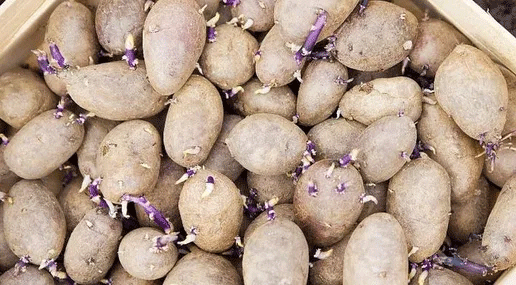
- Greening (Pрозеленение): This is a masterstroke of simple, effective science. Exposing tubers to diffuse light for a week causes them to produce solanine and chlorophyll. Solanine is a natural glycoalkaloid that acts as a potent fungicide and rodent repellent. Research from the International Potato Center (CIP) confirms that greening reduces fungal and bacterial infections during storage. The warning to use only a single layer is crucial to ensure even light exposure and prevent condensation, which could promote disease.
Optimizing Storage Environment for Dormancy and Health
The goal of storage is to maintain tuber dormancy and prevent pathogen development.
- Ventilation is Paramount: The recommendation for mesh bags, crates, or baskets aligns with the core principle of potato storage: constant, gentle air circulation. This prevents the buildup of humidity around the tubers, which is the primary driver of rot. A study in the American Journal of Potato Research found that CO2 accumulation in poorly ventilated stores can break dormancy early and promote sprouting.
- Natural Pest Deterrents: The use of ash or a ash-mustard powder mix is a traditional yet effective organic method to deter storage pests like slugs and rodents by creating a physical and chemical barrier.
- The Need for Vigilance: The advice to periodically sort through the seed potatoes during winter is the final critical step. It allows for the timely removal of any tubers that have succumbed to rot, preventing the spread of disease to healthy neighbors.
An Investment in Next Season’s Profitability
Perfecting seed potato preparation is a systematic process that pays exponential dividends. It transforms a portion of the harvest from a commodity into the most valuable input for the next production cycle. The process integrates agronomic planning (dedicated plots), biological science (greening), and practical engineering (ventilated storage).
For agricultural engineers, this highlights the need for designing better low-cost, ventilated storage solutions. For agronomists and farmers, it underscores that the path to a higher yield begins the moment the previous harvest is dug. By meticulously selecting, greening, and storing seed tubers, growers can break disease cycles, improve plant vigor, and ultimately ensure that their number one input is a source of strength, not weakness.