Agricultural communities in Russia’s Biysk region are facing a perfect storm of challenges as persistent rainfall and unseasonably cool temperatures have created ideal conditions for fungal diseases that are rotting potato crops in the ground. With temperatures hovering around +15°C and exceptionally high humidity, farmers are reporting widespread fusarium infestations that threaten to significantly reduce potato yields for the second consecutive year.
The current situation represents a textbook case of how climate variability can devastate specialized crops. Fusarium, a soil-borne fungal disease, thrives in cool, wet conditions exactly like those experienced in Biysk. The pathogen manifests as rot on tubers and can rapidly destroy entire harvests if not properly managed. According to local agricultural expert Lydia Akimova, “No potato variety can withstand these conditions, even those marketed as moisture-loving.” The problem is compounded by timing issues, as early plantings now urgently need harvesting while later plantings may have already begun rotting underground.
The economic implications are already becoming apparent. Local farmer Mikhail Kraynyansky reports that wholesale prices have reached 25 rubles per kilogram, with retail prices climbing to 35-40 rubles per kilogram—significantly above typical seasonal levels. This represents a continuation of last year’s trend when heat and drought also reduced yields, suggesting increasing volatility in potato production. The current price surge reflects basic supply and demand economics, with concerned consumers already stockpiling potatoes in anticipation of further price increases.
The situation in Biysk reflects broader global challenges in potato production. According to the International Potato Center, extreme weather events associated with climate change are increasingly affecting potato yields worldwide. A 2023 FAO report noted that potato crops are particularly vulnerable to both drought and excessive rainfall, with yield fluctuations of 20-30% becoming more common in traditional growing regions.
Farmers report being unable to access their fields due to standing water, creating a catch-22 situation: they cannot harvest their crops, but leaving them in the ground increases the risk of complete loss to rot. The recommended approach involves carefully testing sample plants—if more than 10% show signs of rot, immediate harvest is necessary despite challenging field conditions.
The crisis has highlighted the importance of proper post-harvest handling. Experts recommend:
- Immediate removal of all rotten tubers
- Thorough washing to remove soil-borne pathogens
- A 10-day drying period
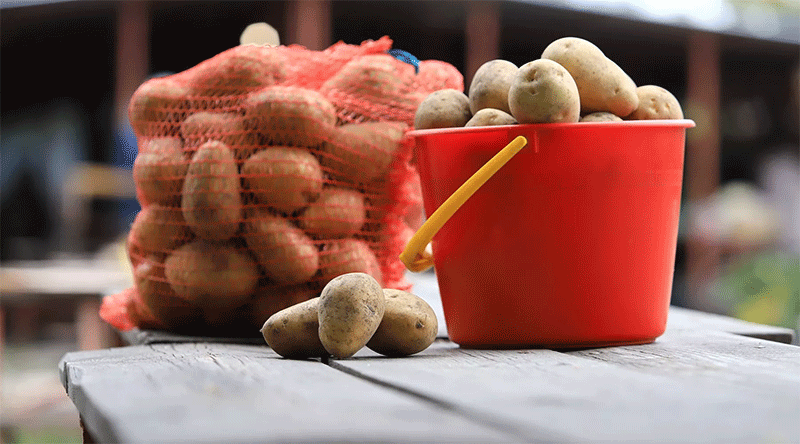
- Storage in boxes rather than nets to ensure proper air circulation
For future seasons, farmers may need to reconsider their planting strategies and invest more heavily in fungicide protection programs, particularly given the increasing frequency of extreme weather events.
The potato crisis in Biysk serves as a stark reminder of agriculture’s vulnerability to climate variability and extreme weather events. The combination of technical challenges in the field and market impacts demonstrates how localized weather problems can ripple through food systems. For farmers worldwide, this situation underscores the importance of both adaptive management strategies—including flexible planting schedules and robust fungicide programs—and improved storage infrastructure to mitigate losses when weather conditions are unfavorable. As climate patterns become increasingly unpredictable, developing resilience against both drought and excessive rainfall will be crucial for maintaining stable potato supplies and prices.