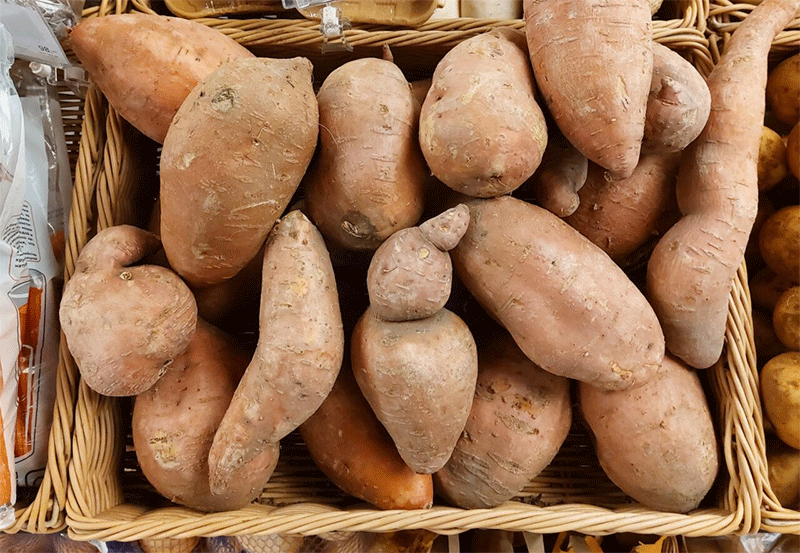
While potatoes dominate Russian fields, a new contender is emerging—sweet potato (batat). According to Zulu Ramazanov, a farmer from the Astrakhan region, this crop could become the next big thing in Russian agriculture. Unlike traditional potatoes, sweet potatoes are larger, sweeter, and lower in starch, making them a healthier alternative.
Current Production and Challenges
Currently, sweet potato cultivation in Russia remains limited. In the Privolzhsky district of Astrakhan, farmers have started growing it, but volumes are far from industrial scale. Ramazanov highlights the lack of government subsidies, which are readily available for potato producers, as a major hurdle.
- Planned Expansion: Ramazanov’s farm aims to plant sweet potatoes on 100 hectares by 2026.
- 2023 Yield Challenges: Due to unfavorable weather, only 6 hectares were harvested out of the planned 20.
- Productivity: On average, 80–110 tons per hectare can be harvested, showcasing its high yield potential.
Why Sweet Potato?
Sweet potatoes are nutrient-dense, containing:
- High levels of vitamins A and C
- Essential minerals like potassium, magnesium, and calcium
- Antioxidants, especially in purple and orange varieties
They can be prepared similarly to potatoes—boiled, fried, baked, or mashed—and even used for sweet potato fries, making them a versatile food option.
The Need for Government Support
The biggest barrier to mass production is cost. Establishing sweet potato cultivation requires around 400,000 RUB per hectare—a significant investment without subsidies. Ramazanov believes that with state support, more farmers would adopt this crop, diversifying Russia’s agricultural output.
Sweet potato has strong potential to become a profitable and sustainable crop in Russia, offering higher nutritional value and market demand compared to traditional potatoes. However, government incentives are crucial to encourage widespread adoption. If supported, sweet potatoes could soon become a staple in both Russian farms and diets.