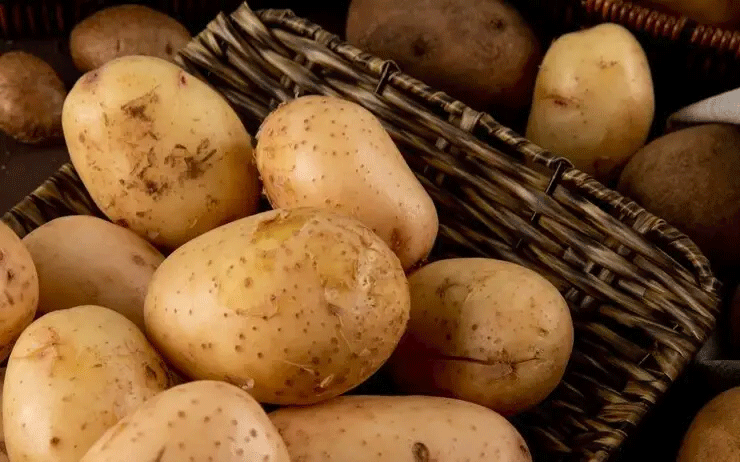
Kazakhstan has experienced severe potato price fluctuations in 2025, with retail prices peaking at 500 KZT/kg in January—a 79% year-on-year increase38. The surge was driven by:
- Increased exports: In 2024, Kazakhstan exported 605,000 tons of potatoes, a 1.5x jump from 2023 (411,000 tons)413.
- Reduced domestic supply: Storage losses and quality deterioration during off-seasons worsened shortages6.
- Shift in import sources: Traditionally reliant on Russia, Kazakhstan now imports 58% from China and 35% from Pakistan due to Russia and Belarus’ crop failures38.
Government Interventions
To stabilize prices, authorities implemented several measures:
- Six-month export ban (since January 28, 2025), except to Eurasian Economic Union members47.
- Massive imports: 52,600 tons in April 2025 alone—8.5x higher than April 2024—totaling 98,200 tons in Q1 202538.
- Direct farmer sales: Over 1,500 local agricultural fairs to cut middlemen margins6.
- Price controls: Penalties for excessive markups beyond 15%14.
Agricultural Adjustments
To reduce future dependency on imports, Kazakhstan is expanding potato cultivation:
- 2025 planting area: 83,400 hectares, up 11,300 hectares from 2024, with plans to reach 125,000 hectares56.
- Crop diversification: Reduced wheat acreage (-18,700 ha) in favor of oilseeds, feed crops, and vegetables5.
Kazakhstan’s potato market instability highlights the risks of over-reliance on exports and insufficient storage infrastructure. While emergency imports from China and Pakistan have eased shortages, long-term solutions require modernized farming practices, better storage, and stricter inventory monitoring. Farmers and policymakers must collaborate to ensure sustainable production and price stability.