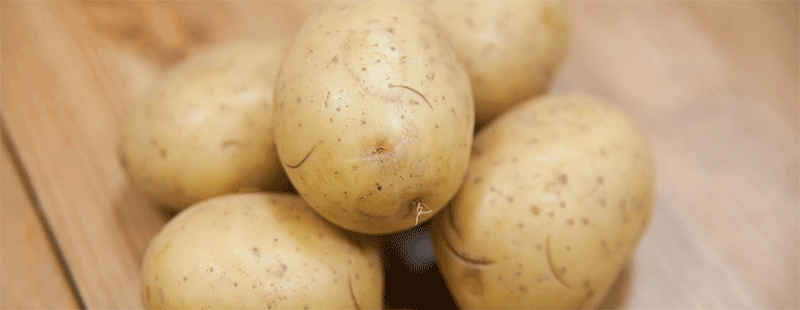
In Pskov Oblast, a unique initiative is underway to bring back old potato varieties, driven by the Velikie Luki State Agricultural Academy. As highlighted by Alexander Nikandrov, Deputy Minister of Agriculture of Pskov Oblast, during a roundtable discussion on import substitution and domestic breeding, this effort aims to preserve genetic diversity while meeting modern market needs.
Why Old Varieties Matter
Heritage potato varieties often possess superior taste, disease resistance, and adaptability to local conditions compared to commercial hybrids. According to the Food and Agriculture Organization (FAO), over 75% of global crop diversity has been lost in the last century due to the dominance of high-yield commercial varieties. Restoring these old cultivars can enhance food security and reduce dependency on imported seeds.
Nikandrov emphasized that local farmers prioritize both appearance and flavor, contrasting with mass-produced potatoes bred for industrial processing (e.g., chips). This aligns with global trends—a 2023 study by the European Seed Association found that 60% of consumers prefer locally adapted, flavorful varieties over bland, high-yield alternatives.
Challenges in Supply Chains
A major hurdle is inefficient distribution. Nikandrov pointed out that farmers often send potatoes to logistics hubs in Novgorod Oblast or St. Petersburg, only for the produce to return to Pskov via retail chains. This not only increases costs but also carbon footprints. The World Bank estimates that 30% of food waste in emerging economies stems from logistical inefficiencies.
The Way Forward
To overcome these challenges, experts suggest:
- Strengthening local seed banks to preserve genetic material.
- Developing regional supply networks to cut unnecessary transportation.
- Promoting agroecological farming to enhance sustainability.
The revival of heritage potatoes in Pskov Oblast represents a crucial step toward sustainable agriculture, food sovereignty, and biodiversity conservation. By combining traditional knowledge with modern science, farmers and researchers can build a resilient food system less dependent on global supply chains.