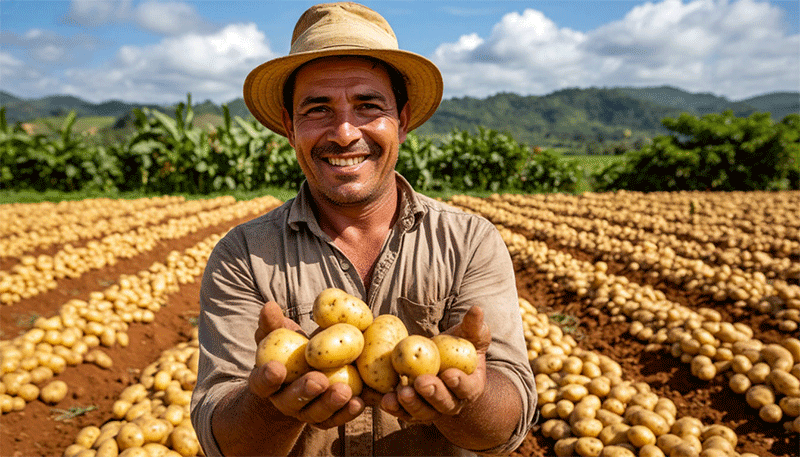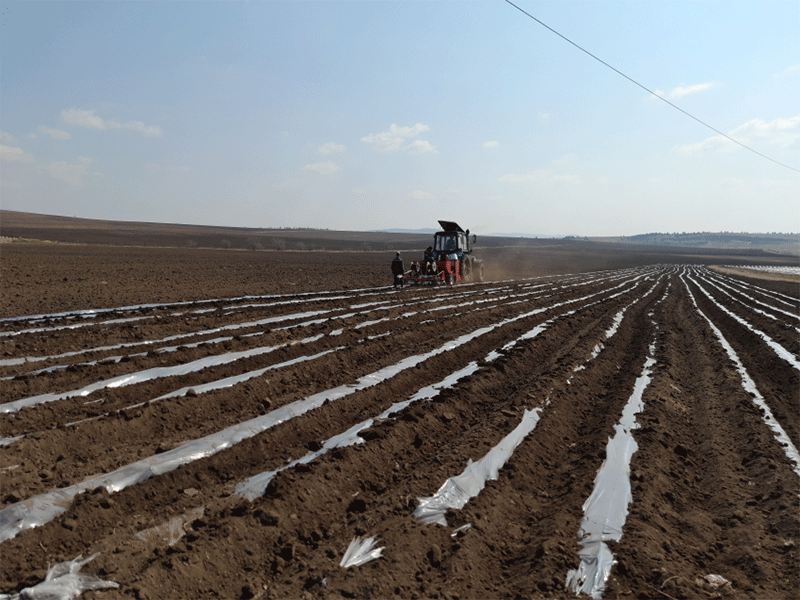
Agricultural organizations in two municipal districts of Transbaikalia—Chita and Uletovsky—have begun planting potatoes ahead of schedule. According to Alexander Tyukavkin, acting head of the regional Ministry of Agriculture, farmers started planting a week earlier than in 2024, with 194 hectares (34% of the planned 564 hectares) already sown.
This acceleration may be linked to warmer spring temperatures or improved field readiness due to drier conditions. Early planting can enhance yields, as potatoes benefit from longer growing seasons, but it also carries risks, such as late frosts—a concern in Siberia’s unpredictable climate.
Expanding Potato Cultivation Across the Region
In 2025, potato planting will extend to nine more districts, including:
- Alexandrovo-Zavodsky
- Baleysky
- Gazimuro-Zavodsky
- Krasnochikoysky
- Mogoytuysky
This expansion reflects a broader push for food security and self-sufficiency in remote regions. Russia’s total potato production reached 22.1 million tons in 2023 (Rosstat), with Siberia contributing ~15%. Early planting could further boost regional output if weather remains favorable.
Upcoming Vegetable Planting: Carrots and Beets Next in Line
From next week, Transbaikalia’s farms will begin sowing open-ground vegetables, starting with carrots and beets—cold-resistant crops ideal for early planting. Efficient crop rotation and soil management will be critical, especially given the region’s short growing season (90–120 days).
Strategic Opportunities for Farmers
The early potato planting in Transbaikalia signals proactive adaptation to climate trends, but success hinges on:
- Weather monitoring (frost risks, rainfall patterns)
- Soil health management (nutrient retention, erosion control)
- Diversification (integrating early vegetables like carrots/beets)
With global potato demand rising (FAO forecasts +1.5% annual growth), Transbaikalia’s farmers could capitalize on early yields—if supported by precision agriculture and resilient seed varieties.