• About Us
  • Partnership & Advertising Opportunities
  • Careers at Potatoes.News
Sunday, January 11, 2026
  • Login
  • Register
No Result
View All Result
POTATOES NEWS
  • NEWS
  • IPT
  • AGROTECHNOLOGY
  • IRRIGATION
  • POTATO PROCESSING
  • Contact us
  • NEWS
  • IPT
  • AGROTECHNOLOGY
  • IRRIGATION
  • POTATO PROCESSING
  • Contact us
No Result
View All Result
POTATOES NEWS

Verticillium Wilt (Verticillium dahliae)

by T.G. Lynn
11.12.2022
in AGROTECHNOLOGY
A A
Verticillium Wilt (Verticillium dahliae)

Pathogen. This fungus persists in the soil for many years as tiny propagules called microsclerotia. Short crop rotations, especially in sandy soils with susceptible varieties, tend to increase the population of Verticillium to damaging levels. The fungus infects many other crops and weed species. High soil temperatures (22–27°C) favour the growth of this fungus.

Disease development. Microsclerotia of Verticillium germinate, and the fungus penetrates the plants through the roots. Once inside the plant, the fungus plugs the vascular tissue.

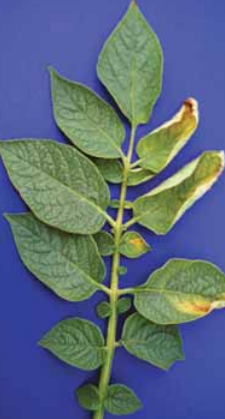
Symptoms. The first symptoms usually appear in early August in the lower portions of the plant. The area between leaf veins begins to yellow. Later, the symptoms move upward to the younger leaves. Leaf yellowing is followed by browning and necrosis. In early stages of the disease, not all the stems from the same plant show symptoms.

Infected plants wilt during the day but recover at night. The crop senesces early, 3–4 weeks before reaching maturity. As a consequence, tubers do not size and serious yield losses occur. The disease is favoured by crop stress induced mainly by heat, drought, nutrient deficiencies and insect damage.

The premature vine death and declining yields caused by Verticillium are called “potato early dying syndrome.” The root lesion nematode has been associated with this syndrome because it enhances the incidence and severity of Verticillium wilt.
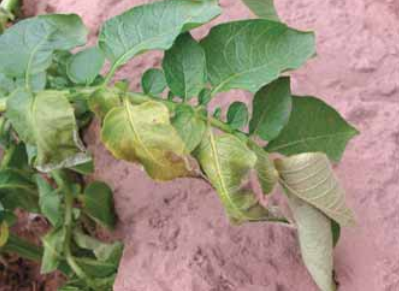
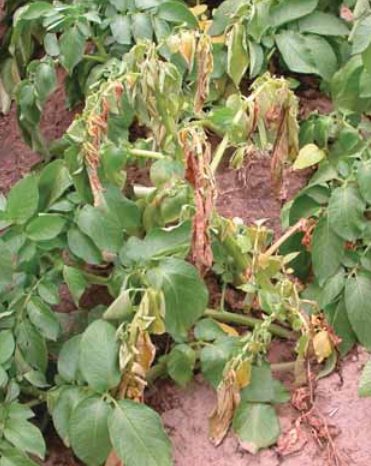
As the disease progresses,
younger leaves also turn yellow.
Infected plant
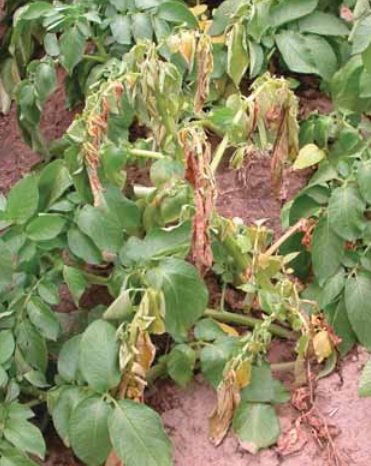
Infected and dead plants stand up higher than the other plants in the field, a condition called flagging.
Lower leaves are affected first. Initially one side
of the leaves turns yellow and wilts.
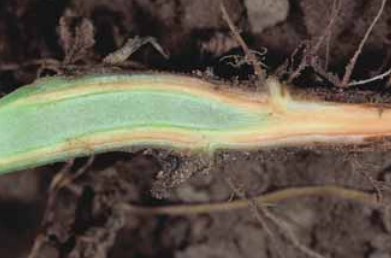
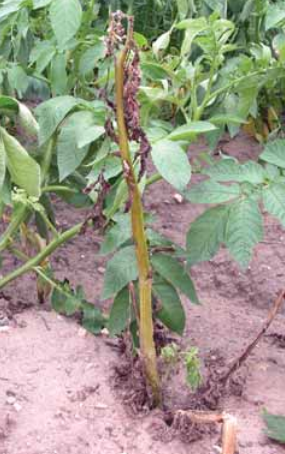
Brown discolouration of the vascular area or
“woody tissue” of the stem. This symptom is
seen easily if the stem is cut close to ground
level with a long, slanting cut.
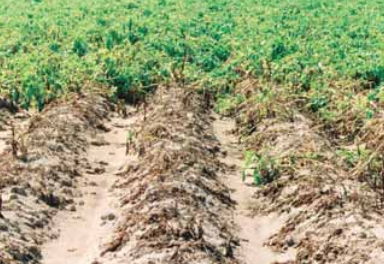
Early dying of an area of a Superior field heavily
infested with Verticillium and the root lesion
nematode.
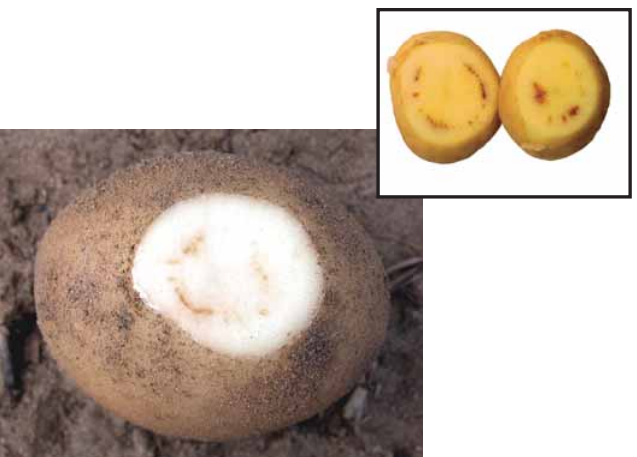
Light-brown vascular discolouration starts at the stem end of the
tuber. The discolouration does not usually extend more than halfway
through the tuber.
Tags: Verticillium
Next Post
Popular Filipino specialty potato fries chain to open in Canada

Popular Filipino specialty potato fries chain to open in Canada

General Partner’s position

Recommended

Countdown to the 12th World Potato Congress: Join the Excitement!

Countdown to the 12th World Potato Congress: Join the Excitement!

2 years ago
Unlocking Potential: IPM Potato Group Explores New Varieties in Collaboration with Domiatec Agri-Group

Unlocking Potential: IPM Potato Group Explores New Varieties in Collaboration with Domiatec Agri-Group

2 years ago
  • About Us
  • Partnership & Advertising Opportunities
  • Careers at Potatoes.News

© 2010-2026 POTATOES NEWS

Welcome Back!

Login to your account below

Forgotten Password? Sign Up

Create New Account!

Fill the forms below to register

All fields are required. Log In

Retrieve your password

Please enter your username or email address to reset your password.

Log In
No Result
View All Result
  • NEWS
  • IPT
  • AGROTECHNOLOGY
  • IRRIGATION
  • POTATO PROCESSING
  • Contact us

© 2010-2026 POTATOES NEWS