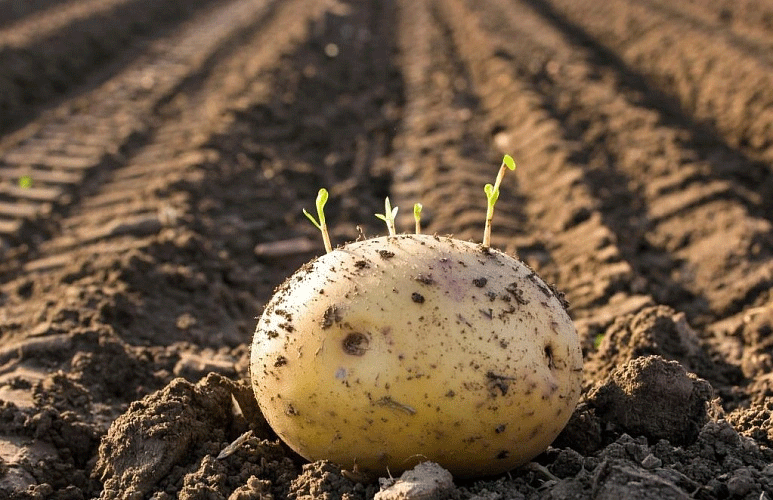
The recent official warning from the Russian Federal Service for Veterinary and Phytosanitary Surveillance (Rosselkhoznadzor) in the Rostov Region is a stark reminder of the persistent danger posed by the Potato Tuber Moth (PTM). This quarantine pest, while small, is a devastating insect that inflicts significant economic damage on potatoes both in the field and post-harvest in storage facilities. The primary damage is caused by the larvae, which burrow into tubers and stems, creating mines and galleries. This internal damage not only ruins the tuber’s marketable appearance and taste but also opens pathways for secondary infections by rot-causing pathogens. The result is a rapid deterioration of the produce, rendering it unfit for sale, consumption, or use as seed, leading to substantial financial losses for farmers and the entire agricultural chain.
The unique challenge of PTM lies in its cryptic nature. Female moths lay eggs on leaves, exposed tubers, or in the soil, and upon hatching, the larvae immediately bore into the plant tissue. This behavior makes early detection exceptionally difficult; often, the infestation is only identified at harvest or in storage when control becomes vastly more complex and costly. The situation in Southern Russia is not an isolated incident. Globally, rising temperatures and changing climatic conditions are expanding the PTM’s geographical range and increasing its reproductive rate. A 2023 study in the Journal of Pest Science indicated that warmer winters and longer growing seasons can facilitate an additional generation of PTM per year in some regions, exponentially increasing the pest pressure. Furthermore, the European and Mediterranean Plant Protection Organization (EPPO) has noted a northward spread of PTM in Europe, highlighting its status as a climate-change-assisted pest.
A robust, Integrated Pest Management (IPM) strategy is the only effective response. As highlighted by the Russian authorities, prevention is the first line of defense. This includes using certified, pest-free seed tubers, implementing strict crop rotation with non-host plants, maintaining field hygiene by destroying crop residues and weeds, and ensuring storage facilities are meticulously cleaned and disinfected. For active control, a multi-pronged approach is critical. This involves:
- Monitoring: Using pheromone traps to track adult moth populations and determine optimal treatment timing.
- Biological Control: The use of natural enemies like the parasitoid wasp Copidosoma koehleri has shown promising results in reducing larval populations in many regions.
- Judicious Insecticide Use: When thresholds are exceeded, the timely application of registered insecticides—including bio-insecticides based on Bacillus thuringiensis (Bt)—is necessary. Strict adherence to pre-harvest intervals is paramount to ensure food safety and residue compliance.
The Potato Tuber Moth is no longer a localized problem but a growing, climate-aggravated threat to global potato production. The warning from Rostov is a critical case study. Relying on a single control method is a recipe for failure. Success hinges on a proactive, season-long IPM program that combines vigilant monitoring, strong cultural practices, the strategic use of biological controls, and targeted chemical interventions. By adopting such a science-based and integrated approach, growers can safeguard their yields, protect their economic returns, and mitigate the spread of this destructive pest.