The Science of Shrivel: Understanding Post-Harvest Potato Degradation and Optimal Storage Protocols
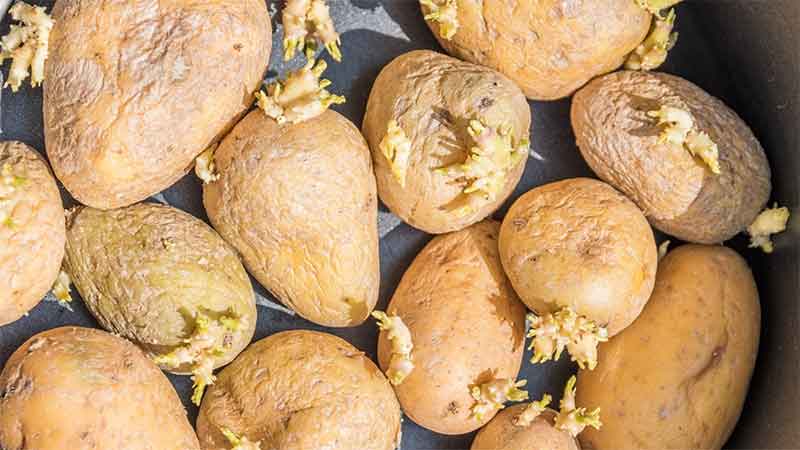
For agricultural professionals, the sight of shriveled, sprouting potatoes represents not just wasted product but a complex biochemical failure in the post-harvest system. When potatoes begin to wrinkle and soften, they are exhibiting visible signs of physiological breakdown accompanied by potentially dangerous chemical changes. Research confirms that as tubers degrade, they accumulate increased levels of steroidal glycoalkaloids, particularly α-solanine and α-chaconine, which can reach concentrations exceeding 25 mg/100 g fresh weight in severely deteriorated tubers . The greening that often accompanies shriveling is particularly instructive—a recent 2025 study in Postharvest Biology and Technology demonstrated that light-exposed potatoes showed chlorophyll increases of approximately 25.4 times and solanine increases of 1.62 times compared to dark-stored controls, with solanine content showing a strong negative correlation (r = -0.93) with indole-3-acetic acid levels during the greening process . These toxic compounds are not eliminated by cooking, baking, frying, or microwaving, and consumption of sufficient quantities can induce nausea, vomiting, and neurological symptoms .
The prevention of quality deterioration hinges on precise environmental control throughout the storage continuum. University of California IPM guidelines specify that after a critical curing period of two weeks at 50-55°F with >95% relative humidity to promote wound suberization, holding temperatures must be tailored to intended use: 38-45°F for fresh market potatoes, 45-50°F for French fry processing, and 50-55°F for chipping stock . Chinese agricultural extension research confirms that optimal storage requires relative humidity维持在85-95% with consistent ventilation to prevent condensation that accelerates pathogen development . Crucially, refrigeration below recommended ranges triggers cold-induced sweetening—the conversion of starch to reducing sugars that compromises processing quality and alters flavor profiles . International research further indicates that ethylene supplementation, while complex in its effects, can inhibit sprout growth when properly managed, though onions must be stored separately as their gases accelerate potato sprouting . For agricultural engineers and storage facility managers, these parameters represent non-negotiable design specifications: systems must maintain uniform airflow, prevent light exposure through dark storage conditions, and provide precise temperature control to preserve both the nutritional integrity and market value of stored potato crops .