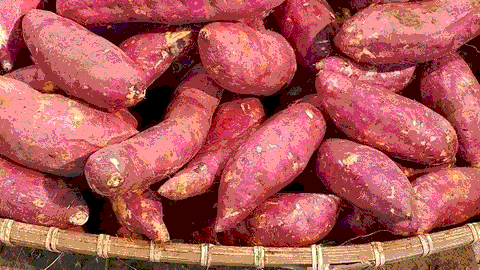
The story of Shinichi Kimura’s ten-ton harvest of satsuma-imo (sweet potato) in Sakai town is more than a local interest piece; it is a concise case study in successful agricultural transition driven by proactive municipal leadership and farmer adaptability. Facing the global decline of tobacco—a sector Japan has been actively reducing, with the government buying out production quotas to decrease domestic output—Mayor Masahiro Hashimoto identified import substitution and specialty crop development as a growth vector. By directly recruiting a seasoned farmer like Kimura, the town catalyzed a shift from a declining commodity to a high-demand specialty crop. This public-private partnership model addresses a critical challenge: bridging the gap between regional economic policy and on-farm execution.
The success of Sakai’s sweet potato initiative hinges on a vertically integrated local value chain. The crop moves from Kimura’s farm to a communal warehouse for washing, steaming, and packaging, creating local jobs and capturing more value within the municipality before export. This aligns with global trends in agricultural economics. According to a 2023 FAO report on value-added for smallholders, post-harvest processing and local branding can increase crop value by 40-100%. Furthermore, the development of derivative products—like coffee and desserts at a town diner—exemplifies agritourism and direct marketing strategies that build a resilient, multi-stream income model around a single primary product. The Japanese sweet potato market itself is robust, with stable domestic prices and growing export interest in premium steamed products, particularly in other Asian markets, driven by the crop’s nutritional profile and culinary versatility.
The Sakai model provides a replicable framework for rural communities globally. Its core lessons are: 1) Strategic Intervention: Municipalities can act as catalysts by identifying market opportunities and directly facilitating farmer transition, especially away from unsustainable commodities. 2) Value Capture: Investing in even basic local processing infrastructure (washing/steaming/packaging) is crucial for retaining regional profits and creating employment. 3) Brand Synergy: Developing both export channels and a local consumer ecosystem (e.g., cafes, agritourism) creates market resilience and fosters community pride in the agricultural product. For farmers and agronomists, the case underscores that diversification into a specialty crop is most sustainable when embedded within a supportive institutional framework that manages risk and adds value close to the farm gate.