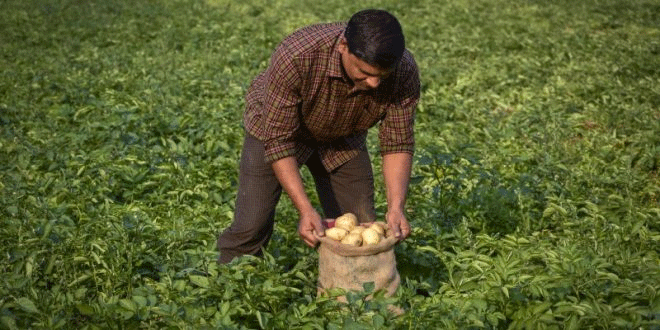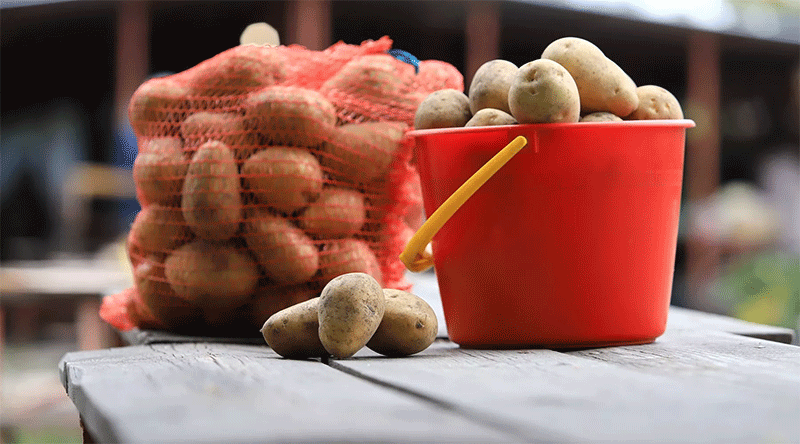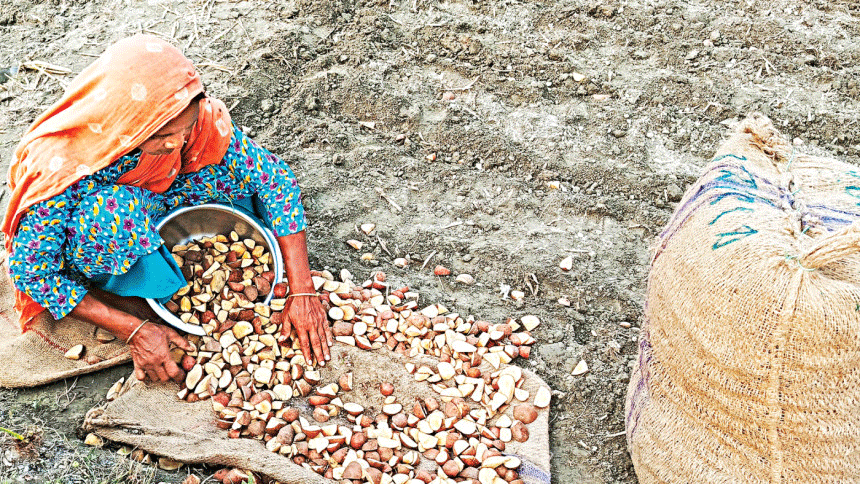
Bangladesh’s potato farmers are navigating a painful economic paradox. After a record harvest of 115 lakh (11.5 million) tonnes in the 2024-25 season, they are facing staggering financial losses instead of celebrating a bumper crop. This glut, which far exceeded domestic demand of approximately 90 lakh tonnes, sent wholesale prices tumbling to as low as Tk 9-11 per kilogram—well below the national average production cost of Tk 14/kg and cripplingly lower than the Tk 20/kg cost in high-production northern regions. This crisis, born from an 8% expansion in cultivated area the previous year, has left farmers deep in debt and is now forcing a dramatic and historic correction in planting strategy for the coming season.
Confronted with these losses, the agricultural community is taking decisive, risk-averse action. Data from the Department of Agricultural Extension (DAE) reveals a stark picture: potato cultivation for the current October-November planting window has been carried out on only 3.77 lakh hectares. This represents a 23.4% reduction from last year’s 4.92 lakh hectares and falls 0.9 lakh hectares short of the government’s target. The personal stories behind this statistic are sobering. Farmer Shahjahan Ali of Kurigram, who doubled his land last year only to suffer a loss of Tk 16/kg, has stopped planting potatoes entirely. Others, like Haraprasad Roy of Lalmonirhat and Mohammad Lutfur Rahman of Gaibandha, are scaling back cultivation to a fraction of their previous acreage, burdened by unpaid loans from NGOs and financial institutions.
This collective retrenchment is a classic, if painful, example of the “cobweb model” in agricultural economics, where farmers base current planting decisions on prices from the previous season. The high prices of 2023 (Tk 40-42/kg) incentivized over-expansion, which led to oversupply and the current price crash. Now, the low prices are causing a severe under-planting. The implications are clear: the first harvest batch from February to April 2026 will come from a significantly reduced area, almost certainly leading to a tighter domestic supply and potential price volatility next year. This cycle threatens both farmer livelihood stability and national food security for a crop that is Bangladesh’s leading vegetable.
The situation in Bangladesh serves as a critical case study in market-driven agricultural planning and its vulnerabilities. For farmers, agronomists, and policymakers worldwide, it underscores the peril of expansion driven solely by retrospective price signals without mechanisms for demand forecasting, storage, or market diversification. The farmers’ rational decision to cut planting is a short-term survival tactic, but it sets the stage for potential supply shortages and price spikes in the next cycle. Breaking this boom-and-bust pattern requires more than individual farmer caution. It demands systemic interventions: strengthening cold storage and processing infrastructure to manage gluts, developing robust export channels, and providing farmers with real-time market intelligence and financial safety nets to mitigate the extreme risks of commodity farming.