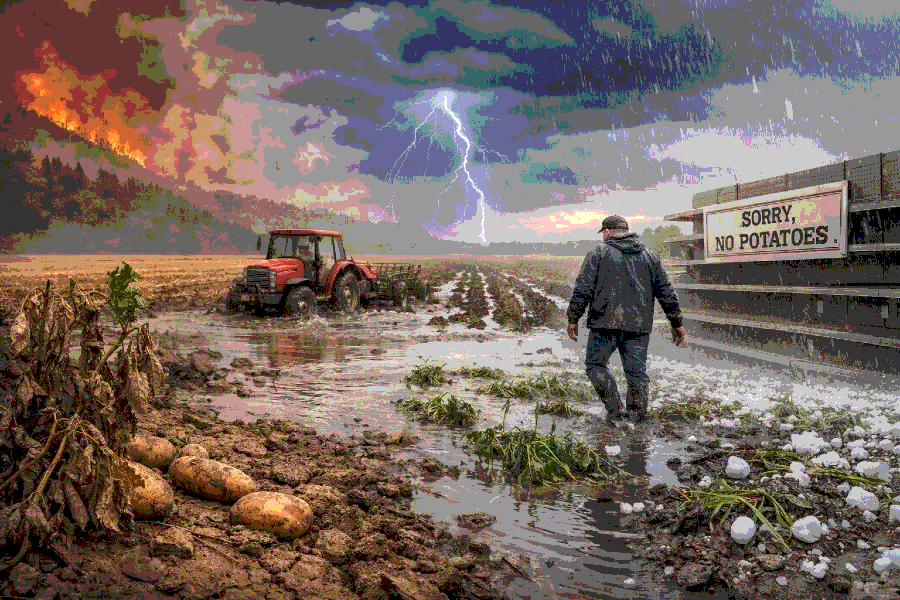
The 2025 growing season served as a brutal, real-time stress test for the global potato industry, demonstrating that climate volatility is no longer a peripheral concern but a central determinant of profitability and supply chain integrity. As chronicled in industry reports, concurrent disasters—from a USDA-declared drought disaster in Maine and a third consecutive emergency drought declaration in Washington’s Yakima Basin to planting delays from Midwestern floods and a significant production drop in Canada’s Eastern provinces—created a perfect storm. The key takeaway is that the primary impact has shifted from simple yield loss to severe quality and timing disruption. Potatoes, with their acute phenological sensitivity, amplify weather shocks. Drought during tuber initiation doesn’t just lower tonnage; it decimates size profiles and pack-out rates. Flooding delays harvest, forcing tubers into storage with compromised maturity and elevated disease risk, a concern validated by recent plant pathology studies linking wet harvest conditions to a 40-60% increase in storage rot potential.
This quality volatility strikes at the heart of modern, contract-driven agriculture. Processors and retailers have minimal tolerance for deviation in fry color, tuber size, or defect rates. The 2025 events proved that our existing financial and contractual infrastructure is ill-equipped for this new reality. Standard fixed-volume contracts transfer all timing and quality risk to the grower, while crop insurance, often based on historical yield averages, fails to indemnify the more costly losses from quality downgrades and delayed harvest operations. This mismatch forces “hard decisions” about irrigation investment, as seen in Prince Edward Island, where growers are now reassessing water infrastructure in a region previously reliant on precipitation.
The data underscores a structural crisis. The drought in the Pacific Northwest, a region accounting for over 60% of U.S. processed potatoes, highlights a transition from weather risk to water allocation risk. When irrigation districts face curtailments, agronomic planning becomes secondary to hydrological policy. Furthermore, research from climate modeling groups indicates an increasing probability of compound extreme events, such as heatwaves coinciding with drought, which can synergistically reduce yields and quality far more than individual stressors.
The lessons of 2025 mandate a strategic pivot from reactive disaster response to proactive systemic resilience. This requires action on three parallel tracks:
-
Agronomic Adaptation: Accelerated adoption of mitigation tools is non-negotiable. This includes investing in precision irrigation and soil moisture monitoring, diversifying varietal portfolios with stress-tolerant cultivars, and adopting practices that build soil health for improved water retention and drainage.
-
Economic and Contractual Innovation: The industry must develop next-generation risk-sharing mechanisms. Contracts need to incorporate quality-based pricing tiers and trigger clauses for declared disasters. Insurance products must evolve to cover revenue loss from quality downgrades and harvest delays, moving beyond simple yield protection.
-
Strategic Water Stewardship: In irrigated regions, producers must engage collectively in long-term water security planning, advocating for agricultural priority in allocation models and investing in on-farm water efficiency and storage to buffer against allocation shocks.
Surviving the future will not be about waiting for a “normal” year to return. It will be about building operations, supply chains, and business models robust enough to deliver consistent quality from an increasingly inconsistent climate. The 2025 season was the warning. The planning for 2026 is the opportunity to respond.