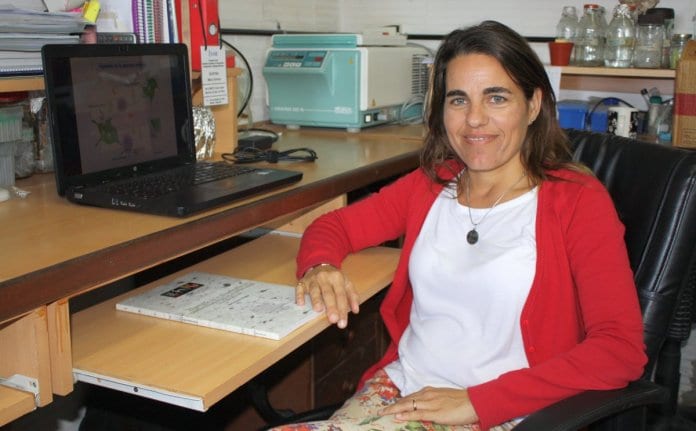
Researcher Ximena Silveyra of the Institute of Biological Research in Mar del Plata, Argentina, carries out the project that studies the protective effect of neurons of molecules present in potato.
Alzheimer’s disease is a progressive neurodegenerative ailment that has no cure yet and whose prevalence increases in the population of older adults.
In countries such as Argentina, where there are a large number of older people, due to the increase in life expectancy, the problem is similar to that of developed countries but without the health resources or economy of the latter, explains the
specialist. In this sense, research such as that carried out by Silveyra, which seeks to prevent such ailments, becomes essential.
In addition to the direct benefit in patients, any action that helps delay the onset of severe stages of Alzheimer’s disease or internalization of patients represents great savings in the direct and indirect costs associated with patient care.
The project also poses an added benefit to the regional and national economy, where the use of bioactive compounds isolated from potato is proposed.
Silveyra’s line of research is to study the neuroprotective effect of antioxidant bioactive compounds obtained from different potato varieties on an in vitro model of Alzheimer’s
disease. That is, generate a supplement that helps prevent a type of Alzehimer from Andean and commercial potatoes.
Graduated from the National University of Mar del Plata as a biologist Ximena later completed a PhD in Neurosciences at the Institute of Neurosciences of Alicante at Miguel Hernández De Elche University and a postdoctoral fellowship in San Diego,
California. He then returned to Mar del Plata with a repatriation call that allowed him to start the line of inquiry, applying everything he learned.
During research Silveyra pre-treats neural cells with different mixtures of these compounds and subsequently subjects them to conditions similar to those experienced in the brain neurons of a patient with Alzheimer’s
disease. Outside of these cells is there a buildup of a substance called amiliode A peptide? and reactive oxygen species, this extracellular environment eventually triggers neuronal death.
Ximena Silveyra, Researcher at the Institute of Biological Research in Mar del Plata, Argentina:
“What we are trying to do with these experiments is to find out if pre-treatment with these bioactive compounds is able to protect and decrease the stress to which cells are subjected in our biological model of Alzheimer’s.”
Currently Silveyra is an assistant researcher at CONICET and leads a project from a multidisciplinary approach, where Valentina Filiberti participates who carries out her doctoral thesis on the subject and collaborates two groups of UNMdP (Group of Composite Materials of Polymer Matrix-INTEMA and Center for Economic Research and GIHON-Laboratorios Químicos S.R.L., of the private sector).
In this project they seek to develop an antioxidant dietary supplement that brings healthy benefits to the elderly population of Mar del Plata. In this case the starting material is a waste of the potato industry containing these bioactive compounds, extracting them at low cost on a pilot scale.
And finally, to ensure that the compound has a half-life that allows it to pass through the digestive system and bloodstream, nano-encapsulated bioactive compounds will be designed to ensure that it withstands that transit and the bioavailability of the compound in the brain.
In order to carry out the research the specialist established a culture of animal cells that it uses as a fundamental tool of work.
The Andean potatoes from which she extracts the bioactive compounds she tests obtain them from a material transfer agreement signed between the group’s director, CONICET researcher Adriana Andreu and the Bank of Germoplasma (INTA), who have preserved the genetic material of a wide variety of native potatoes.
Ximena Silveyra:
“These diseases not only cause the suffering of patients, but also of family members, so for those of us who do science, we know that every contribution, however small, contributes and positively impacts scientific knowledge.”