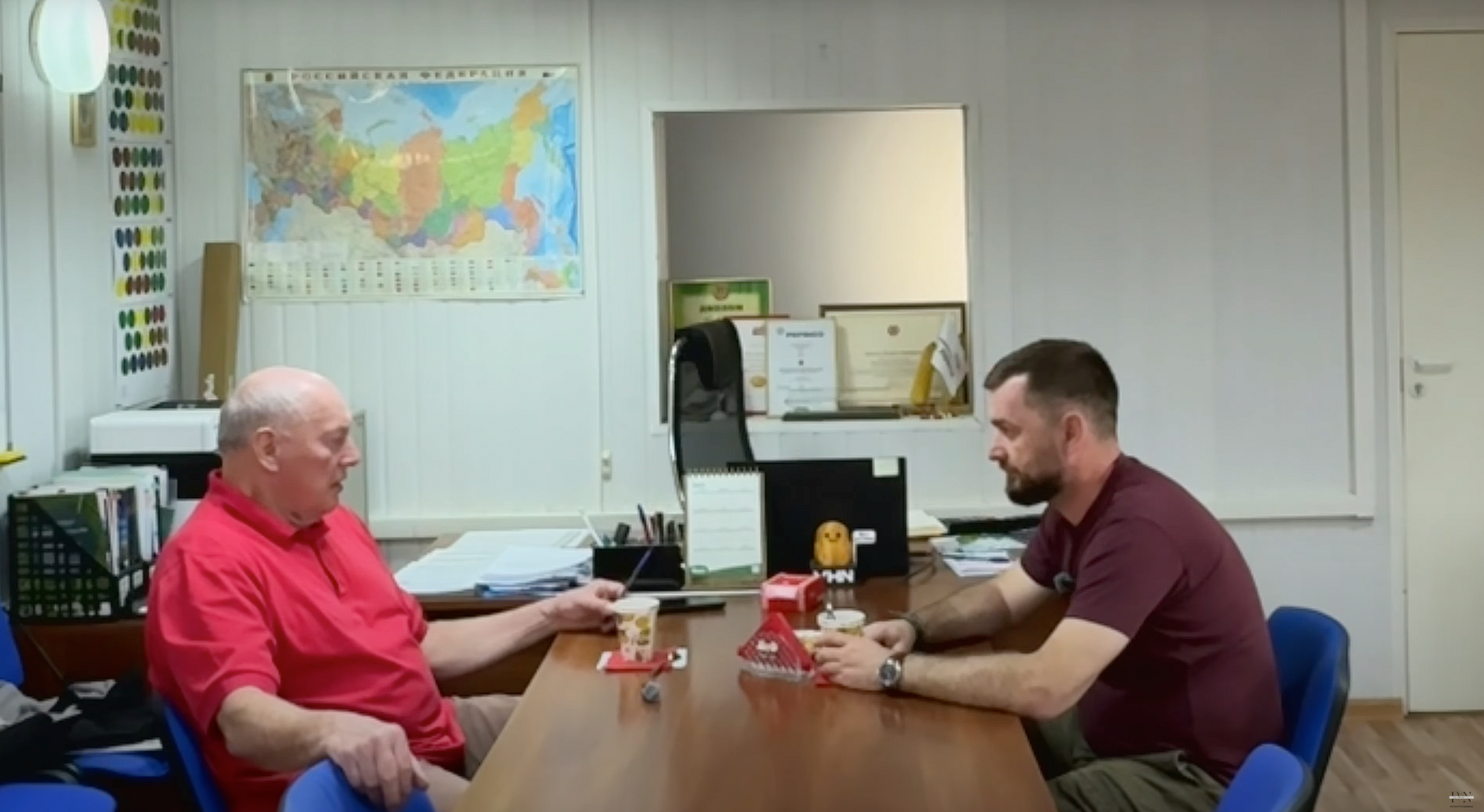
Interview with Alexander Viktorovich Shilin, CEO of APK “Raigorod” (Volgograd Region)
In this episode of the International Potato Tour (Международный картофельный тур) we discuss how regenerative agriculture helps farms recover and grow sustainably—from soil structure and windbreaks to crop diversification and equipment upgrades. Alexander Shilin speaks frankly about real-world challenges—credit access and water tariffs, rising spare-parts costs, labor shortages—and the practical fixes that already work.
Quick profile
- Irrigation project launched: 2011
- Irrigated area: 1,600 ha commissioned in 2 years; a further ~1,300 ha cleared (water secured; 3 MW power capacity allocated)
- Storage: two facilities totaling ~18,000 t one-time capacity
- Focus: chip-grade potatoes under contract + crop rotation (winter wheat, corn, etc.)
- Supply model: harvest in autumn → steady shipments from January to mid-July (reduces processor risk on early potato)
Regenerative agriculture, done pragmatically
Steps already paying off on heavy clay soils:
- Phosphogypsum: a pilot with an agricultural university showed clear structural improvements on fine-textured clays. According to Shilin, 50% of delivery and application costs are currently subsidized—“not much, but it helps.”
- Crop residues (especially corn): shred → apply UAN to speed mineralization → disc/incorporate. With no manure available, residues are the organic backbone.
- Shelterbelts (windbreaks): planting and maintenance (irrigation is essential in this climate). To improve quality, the team plans outsourcing care to a specialist company.
“We did it simply to improve the soil—and only later learned it’s called ‘regenerative practices.’”
Result: soil “becomes different”—less cloddy, improved physical condition, better field workability.
Rotation and technology
- Core sequence: irrigated winter wheat → potato → corn (in different rotation slots). Wheat immediately before potato showed “outstanding” impact.
- Corn is a compaction-buster and residue donor.
- Chip potatoes: emphasis on quality and long storage. In strong seasons the farm earned substantial quality bonuses; in average years it keeps the baseline economics.
Economics: where irrigated veg producers feel the pinch
- Costs rising: in some lines (notably imported spare parts) increases reached 70–80% by the farm’s estimates; official inflation indexing in contracts doesn’t cover it.
- Credit: investment money is expensive and concessional programs are tight; even working-capital loans were hard to obtain this year.
- Water: tariffs for water delivery rose ~73% last year, while state irrigation infrastructure is heavily worn. With water deficits, balancing agriculture, navigation, and ecosystems is getting harder.
- Workforce: proximity to major industrial employers lifts wage benchmarks. The farm retains staff with competitive pay and benefits. A staff housing project is prepared but on hold.
Diversification: from legumes to seed production
- Beans: joint trials with a processor (Bonduelle); attractive both for margin and rotation value.
- Peanuts: three-year tests (~10 ha) proved feasible, but scaling is limited by import-dependent machinery and lack of local post-harvest lines. The farm proposed processor-led localization (like the potato model), but no green light yet.
- Seed production (hybridization plots): mustard, sunflower (~264 ha in 2025, rotation limit 1 in 6–7 years), soy next, then rapeseed (from 2026) and possibly corn (2026–2027). Irrigation plus spatial isolation underpin quality.
Digitalization, storage, and a “Plan B”
- Storage & grading remain investment priorities; expansion is on the radar.
- Equipment: supplier ties remain; if needed, India can be a supply channel (e.g., All-Round plant in India).
- GIS/reporting systems: the concept is useful but implementation is “raw”; farms often hire specialists just to enter cadastral data, field contours, etc.
What matters for tomorrow
- Keep regenerative practices—phosphogypsum, residues, shelterbelts.
- Maintain strict agronomy under irrigation: moisture deficit is the region’s #1 risk.
- Diversify income via seed production and niche crops (legumes, peanuts) with predictable offtake.
- Invest in people: wages, benefits, housing—otherwise expansion stalls on labor.
- Pursue long money and processor partnerships—long contracts smooth volatility.
“Irrigation changes manageability and efficiency. We’re eager to expand—very eager.”
Takeaway for peers
APK “Raigorod” shows that resilience in risky farming zones is built on irrigation, regenerative methods, contracting with processors, disciplined rotations, and diversification (seed/niche crops). This isn’t about quick wins; it’s systematic work where every technology and ruble are tied to real demand and payback.
Prepared as part of the International Potato Tour (Международный картофельный тур)—a series of trips and interviews about the people, technologies, and markets of potatoes.