Key points: 600+ years of history, monastic self-sufficiency, 18 ha of irrigated potatoes, containerized storage, priority on taste and long dormancy of the Skarb variety.
A place of faith on the Molochta River
As part of our “Potato Tour of Russia,” we visited the Nikolo-Shartomsky Monastery—the largest in Ivanovo Oblast—set on the picturesque bank of the Molochta River. Our guide was Hieromonk Andronik, who spoke about the monastery’s history (first mentions date to the 15th century) and how the farm works today.
The monastic principle here is the traditional tandem of prayer and labor. The farm is geared to self-sufficiency: the brotherhood, Sunday visitors, shelters, and subsidiary farmsteads are largely fed by produce from the monastery’s own fields, gardens, and dairy.
Potatoes: taste comes first
Potatoes are a key crop. Area under potatoes: 15–18 ha (depending on the season). Fields are irrigated using a sprinkler system. The main criterion for choosing varieties is taste, followed by yield and storability.
Varieties:
- Skarb (Belarus) — up to 85% of plantings: culinarily versatile and noted for a long dormancy period, letting tubers keep without sprouting well into late summer.
- The balance is made up of table varieties selected for flavor and seasonal goals.
Seed policy: reproduction is kept no lower than 3rd, with regular upgrades to elite/super-elite (and occasionally “super-super-elite”) to reduce disease pressure and stabilize yields.
Yields and the economics of self-sufficiency
- Working target: ~35 t/ha (year-to-year range 33–42 t/ha).
- Highs: up to 52 t/ha on some plots; a historical one-field peak of ~65 t/ha under ideal conditions.
- Economics: commercial profit is secondary—most produce is consumed internally (about 100 residents eat daily; on Sundays another ~100 parishioners are fed after services). Surpluses go to neighboring monasteries or are sold.
Vegetables, feed, and three-field rotation
The vegetable garden (carrot, cabbage, beet) is worked by hand, “like many rural households,” but with careful agronomy. To support the dairy herd (~90 milking cows), the monastery grows grains and forages: wheat, barley, oats, peas, clover, and grasses; corn is mainly for silage.
Crop rotation: three-field on the irrigated blocks (a main line laid for 3×15 ha), with plot “overlaps” as needed.
Storage: container first
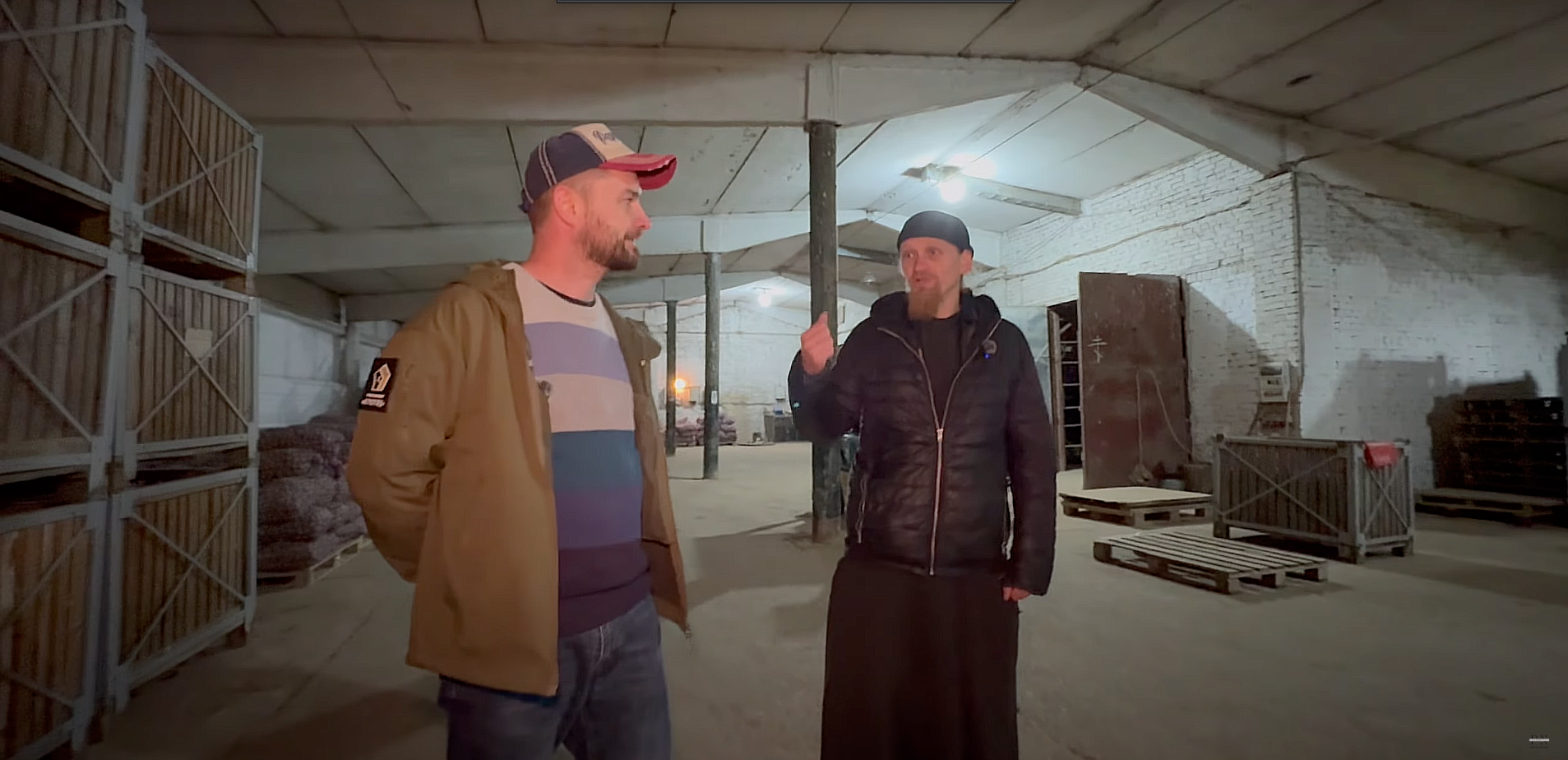
Potatoes are stored in containers (fast sorting, mobility, easy varietal segregation). Vegetables go to a semi-subterranean store; in severe frosts (below −30…−35 °C) supplemental heating is used. To extend the season, part of the volume is moved to a cold room (e.g., ~5 t from May to September). Practice shows that thanks to Skarb’s dormancy, untreated tubers keep marketable quality into late summer—buyers in July–August often mistake last year’s crop for new.
Handling line: receiving bunker → sorting table (removing soil/rot) → container or mesh bag → storage chambers.
People and a “school of the garden”
Much of the garden work is done by the brotherhood. Hieromonk Mikhey oversees the “manual” garden, meticulously testing and selecting varieties (trial beds, selection, his own small “micro-breeding” for site conditions). Hieromonk Andronik leads potatoes and field crops. Skilled hands and disciplined fieldwork are the keys to results with limited resources.
Sacred relics and open doors
The reliquary of Saint Nicholas the Wonderworker in the St. Nicholas Cathedral is among the largest in Russia; daily access is open for prayer. The grounds include the brotherhood’s residence, a kvass room, and a bakery; the Kazan and Transfiguration churches preserve continuity of tradition, including remembrance of miracle-working icons.
Potatoes News takeaway: Nikolo-Shartomsky is a living example of how the tradition of self-sufficiency and modern agronomy reinforce each other. Prioritizing taste and storability, a sound seed strategy, container storage, and disciplined fieldwork let the monastery reliably cover community needs and share harvests with neighbors.