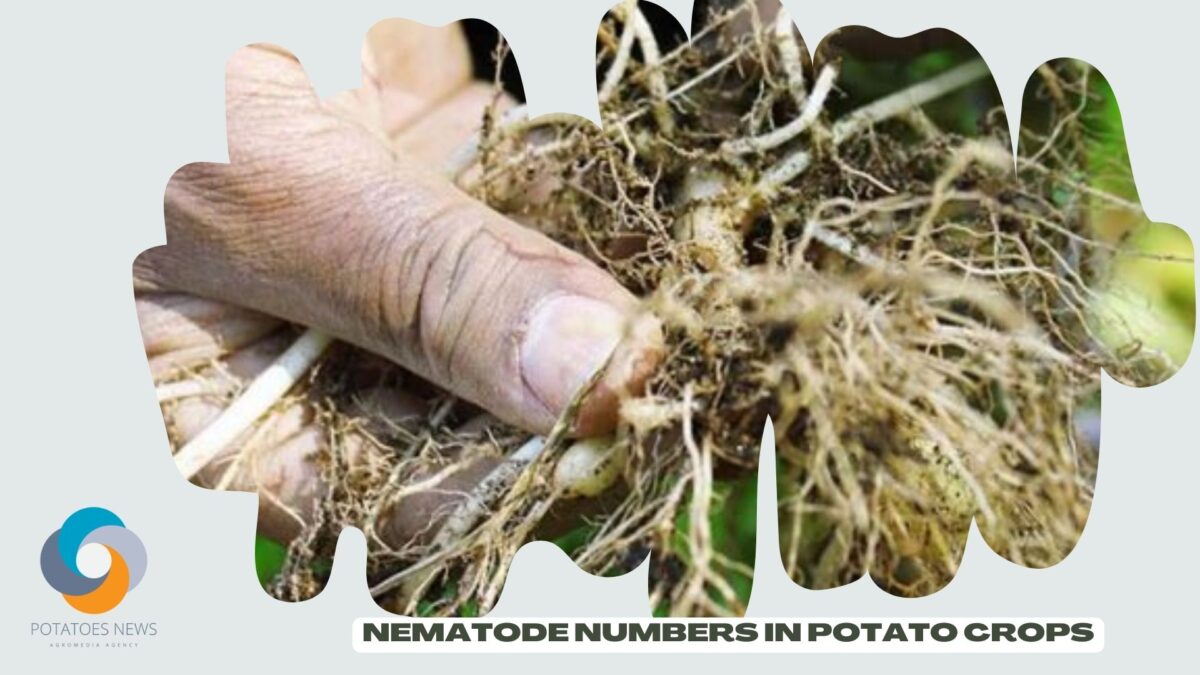
Setting up a potato cyst nematode (PCN) trap crop can naturally diminish nematode numbers by up to two-thirds. As chemical methods that once effectively controlled the pest are dwindling, growers are now looking at alternative biological control techniques.
Effective trap crop establishment could hold the key to a significant drop in PCN numbers and cost around 45% less than the use of a nematicide at GBP550/ha, the economics add up for potato farmers, according to Farmers Weekly.
Trap crops aim to reduce overall PCN population numbers by deceiving nematodes into hatching by the release of chemicals from their roots, the independent research agronomist Ivan Grove recently mentioned.
Working as part of an Innovative Farmers field lab in partnership with the AHDB and independent agronomy firm Optigro, growers from North Shropshire and Lancashire, UK, put the theory to the test back in 2020.
They aimed to reduce PCN (without losing a cash crop from the rotation) through the establishment of two different trap crop species: Solanum sisymbrifolium (sticky nightshade – a small-leafed plant, full of thorns), and Solanum scabrum (African nightshade – a larger broad-leaved plant, with larger, more fibrous, roots).
Trap crops fit best in the rotation when planted before a potato crop and can simply be removed by plowing them in, ahead of potato planting. Solanum scabrum also acts as a good green manure source, helping promote organic matter levels.
Of the two species, scabrum is more sensitive to frost and readily dies off from November onwards, whereas sisymbrifolium is more tolerant of sub-zero temperatures and can be left in the ground until February, if necessary.
Growing trap crops before potatoes has no effect on disease build-ups in the following crop such as blight, as the trap crops are almost resistant to this.
Weeds on the other hand can be problematic, due to slow trap crop establishment, particularly sisymbrifolium. This leaves a window of opportunity for weeds to take hold, and with no herbicides available, this can be even more challenging. Planting the crops in rows to allow the use of an inter-row hoe could be one way around this issue, Grove suggests.
The potato cyst nematode (PCN) is a challenging pest for potato growers to control, infecting almost half of the UK’s potato land, with estimated annual yield losses costing the sector as much as GBP26m.
The pests remain in cysts in soils for more than two decades. Potato planting stimulates the nematodes to hatch from the cysts, which can contain between 200 and 500 juveniles each. There are two main species of PCN, Globodera rostochiensis and Globodera pallida. The first is less problematic as many UK potato varieties have significant resistance, while pallida is the main cause of concern due to limited varietal resistance causing widespread issues. For example, Maris Piper, one of the UK’s most widely used potato varieties, is fully resistant to rostochiensis but is completely susceptible to pallida.