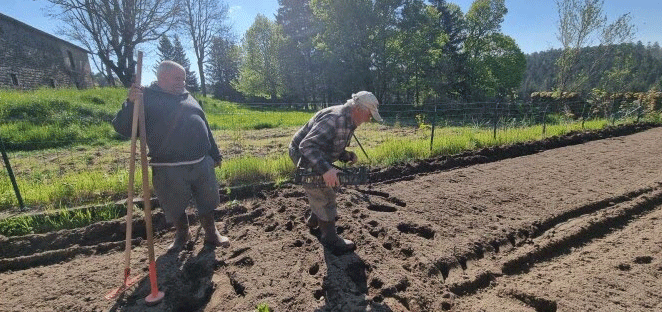
Nestled in the rugged terrain of Saint-Pierre-sur-Soux in France’s Ardèche region, brothers Marcel and Joseph Vallon, both 63, grow around 20 tons of potatoes annually on their family farm at 1,200 meters above sea level. Unlike the heavy, clay-rich potatoes from valley farms, their tubers thrive in the well-drained, nutrient-poor heathland soil—producing a firmer, tastier crop.
“These are good potatoes, not the greasy, clay-heavy ones you find down in the valley,” says Le Rouvi, a local admirer of their harvest. The Vallon brothers cultivate traditional varieties like Jeannette, Blanche, Memphise, and Désirée, prized for their texture and flavor. Their potatoes are in high demand across Ardèche, Drôme, Lyon, and Grenoble, often sold directly from their farm.
Why High-Altitude Farming Works
- Soil & Climate Advantages
- The heathland’s sandy, acidic soil prevents waterlogging, reducing rot risks.
- Cooler temperatures at altitude slow growth, enhancing flavor concentration—similar to highland coffee or wine grapes.
- Niche Market Appeal
- Consumers increasingly seek terroir-driven produce, and the Vallons’ potatoes benefit from their unique growing conditions.
- Direct sales (farm-gate and local markets) ensure better margins than bulk commodity farming.
- Sustainability & Tradition
- Unlike intensive lowland farms, their small-scale approach minimizes chemical inputs, aligning with organic principles.
- Their retirement marks a challenge: Who will continue this legacy? Few young farmers are willing to take on such labor-intensive, low-mechanized work.
Lessons from a Disappearing Farming Model
The Vallon brothers’ success proves that small-scale, elevation-based farming can thrive—if market demand and fair pricing support it. However, their impending retirement highlights a broader issue: generational renewal in niche agriculture.
For farmers and agronomists, their story underscores:
- The value of terroir specialization in competitive markets.
- The need for policy support to preserve such heritage farming.
- Opportunities in agrotourism or premium branding to sustain high-altitude farms.
As industrial potato farming dominates, the Vallons’ heathland spuds remind us that quality often grows where convenience doesn’t.