By the International Potato Tour Team
Location: Sharjah/Dubai, UAE
Date: February 2026
The United Arab Emirates has long been a crossroads of global trade, but nowhere is this more evident today than in the fresh produce aisle. During our recent retail monitoring visit in Sharjah, part of the International Potato Tour, we uncovered a fascinating case study in category management. The humble potato has been transformed here from a basic staple into a highly segmented, tiered, and branded luxury product.
Here is our analysis of the current market situation in the UAE premium retail sector.
1. The “United Nations” of Potatoes
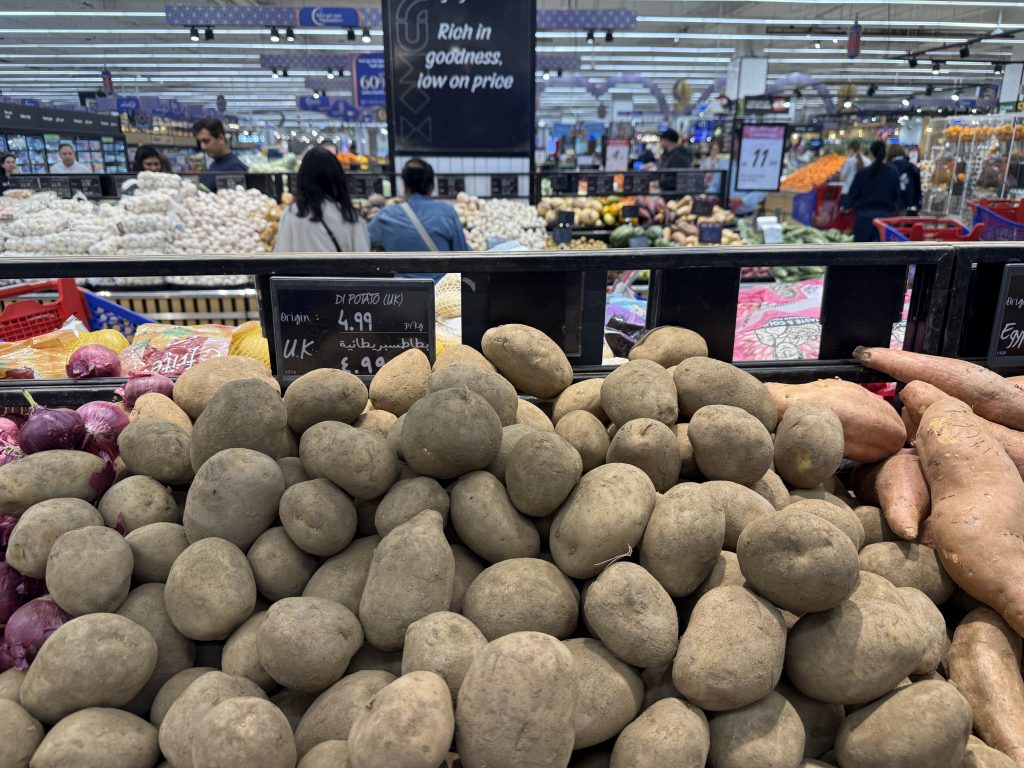
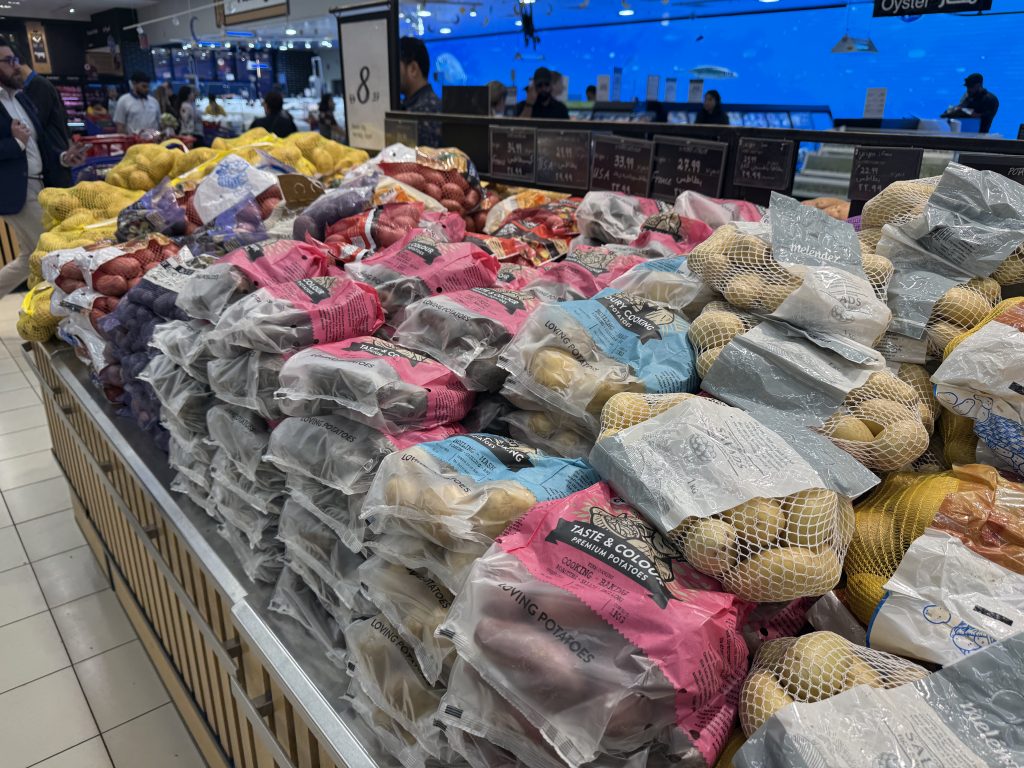
The first thing that strikes the observer is the sheer geographical diversity. On a single aisle, we identified origins from five different continents. The supply chain logistics required to maintain fresh stock from the USA, Australia, France, Spain, the Netherlands, the UK, and Egypt simultaneously are a testament to the UAE’s status as a global logistics hub.
2. The Price Gap: A 1,000% Differential
The most shocking metric for industry professionals is the price elasticity within the category.
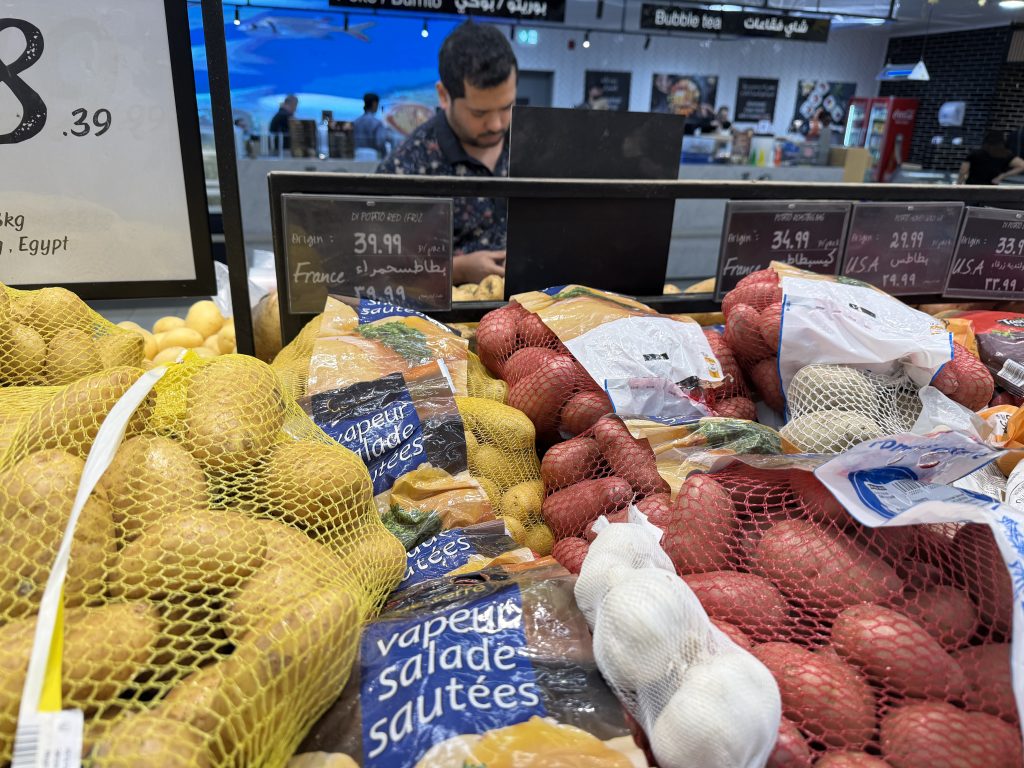
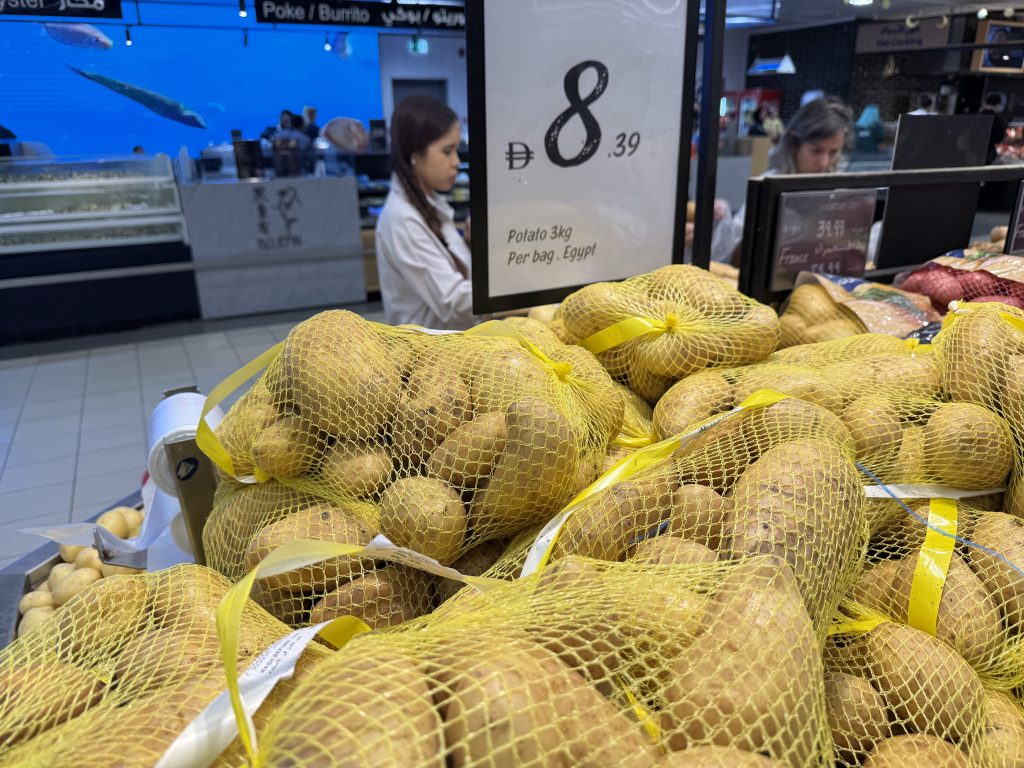
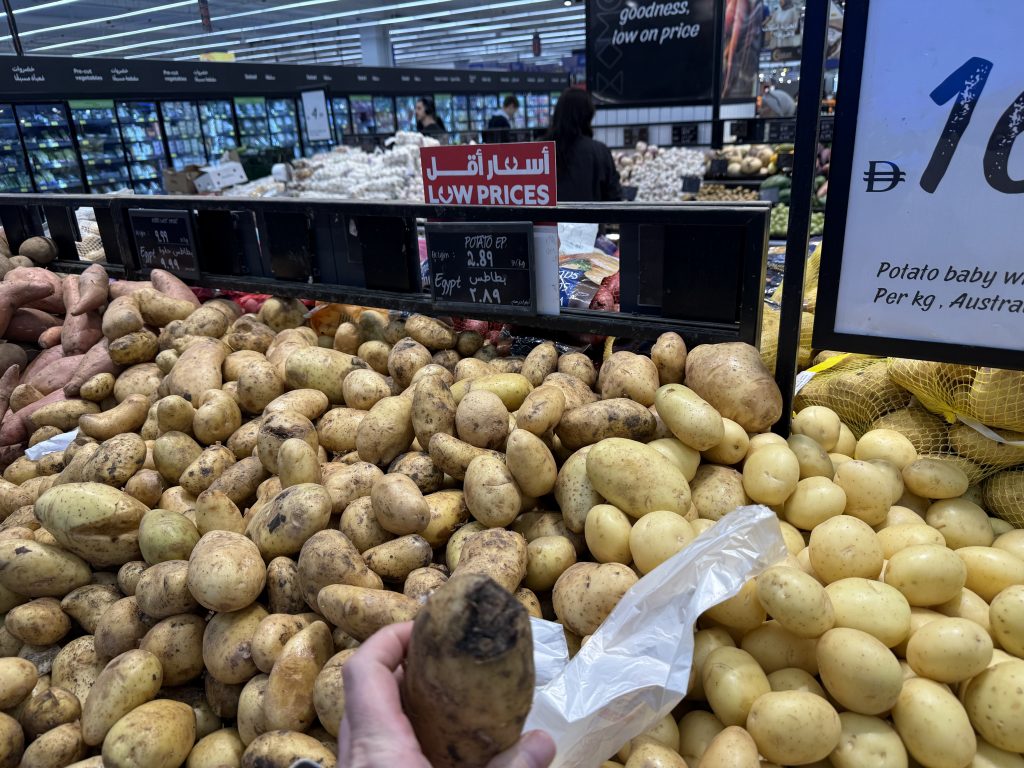
- The Value Anchor: Egyptian potatoes dominate the entry-level segment. A 3kg bag retails for just 8.39 AED (approx. $2.28 USD), making the price per kilo roughly $0.76 USD. This serves as the volume driver for the market.
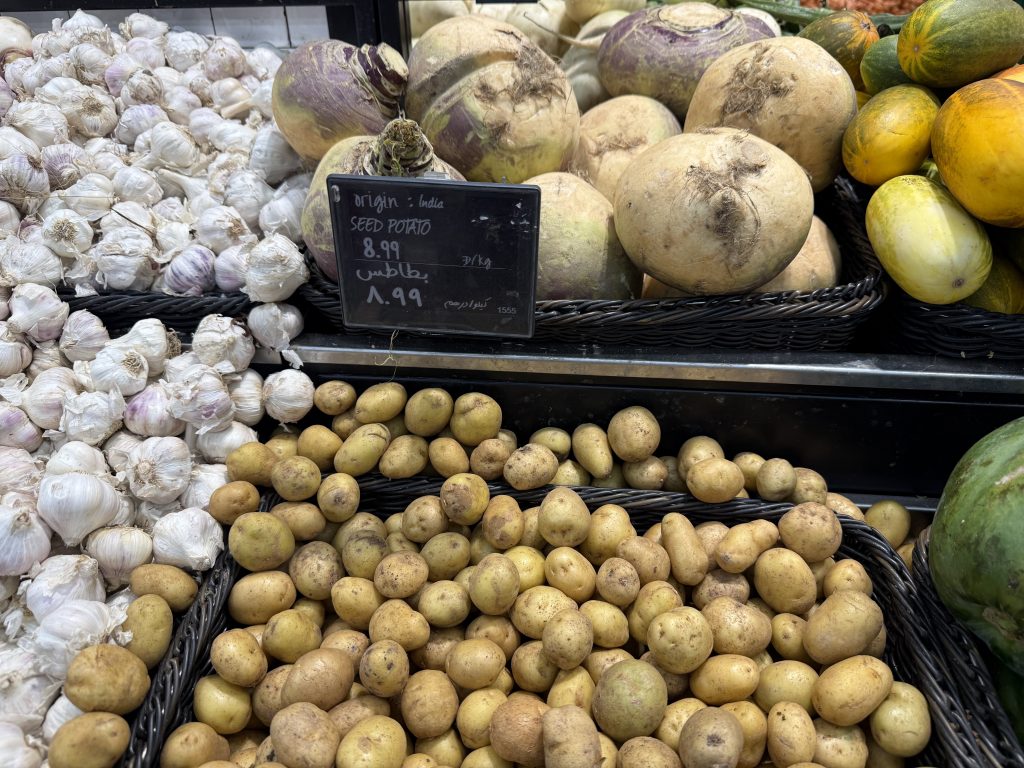
- The Mid-Range: UK imports bridge the gap, selling loose at 4.99 AED/kg.
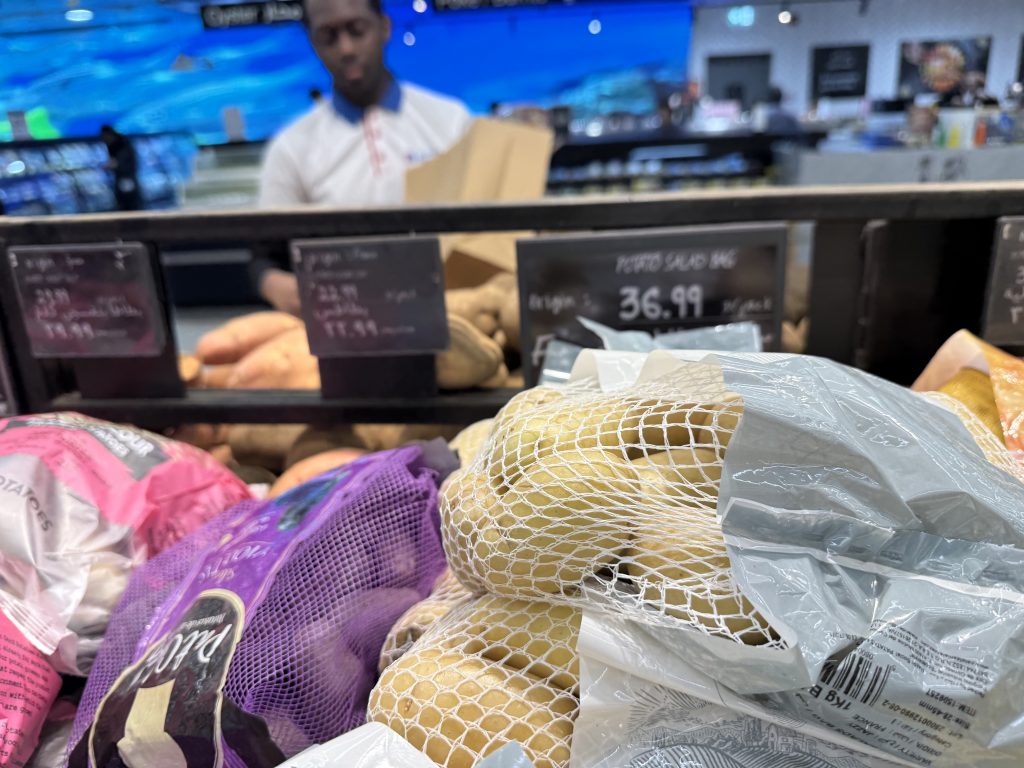
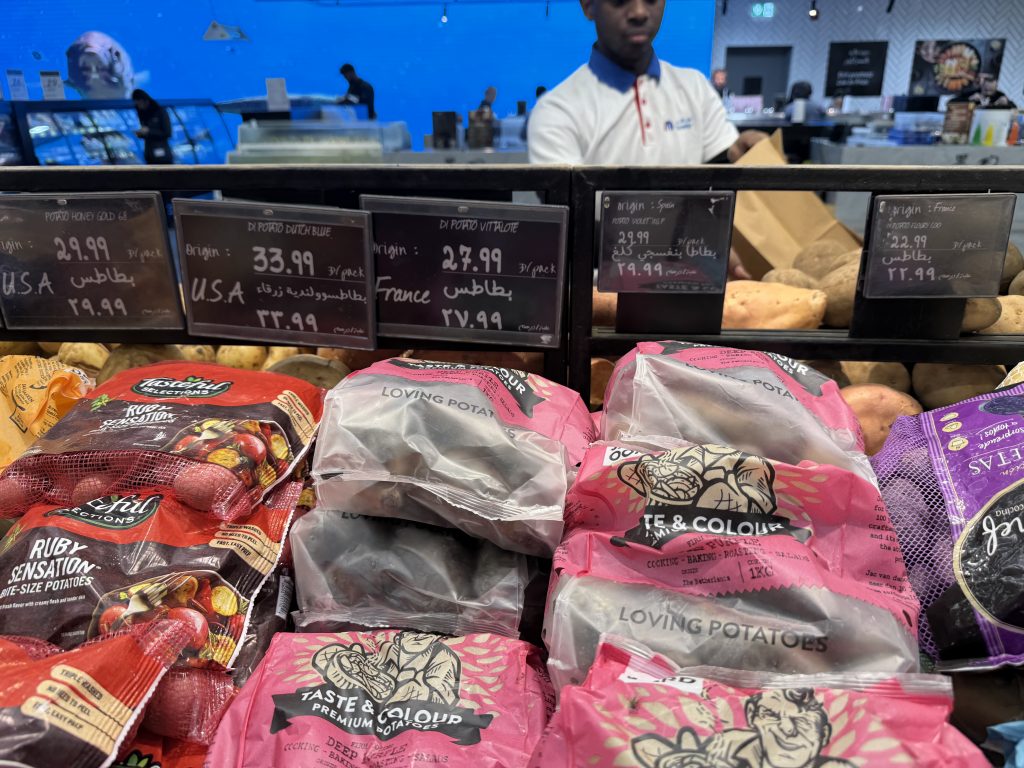
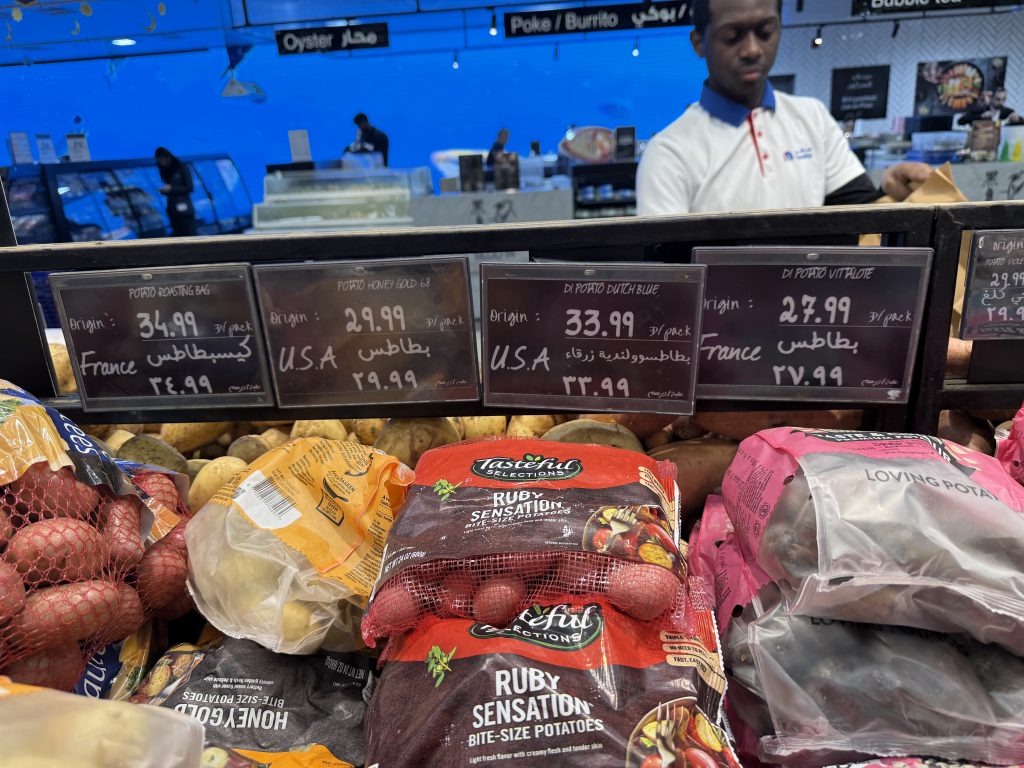
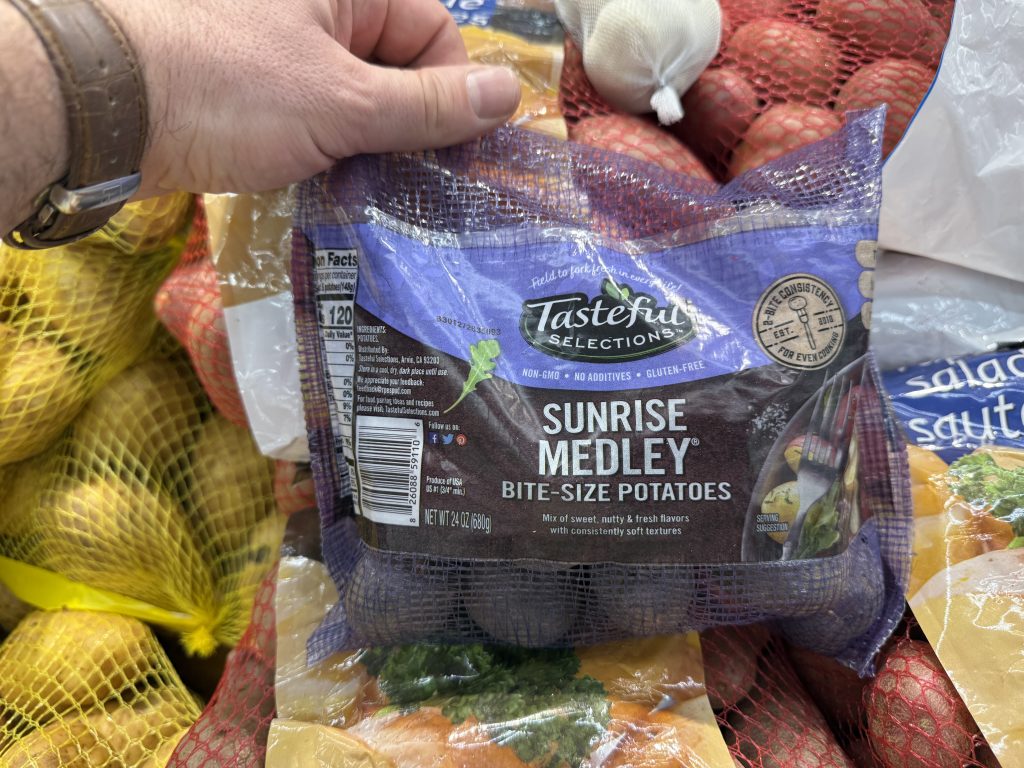
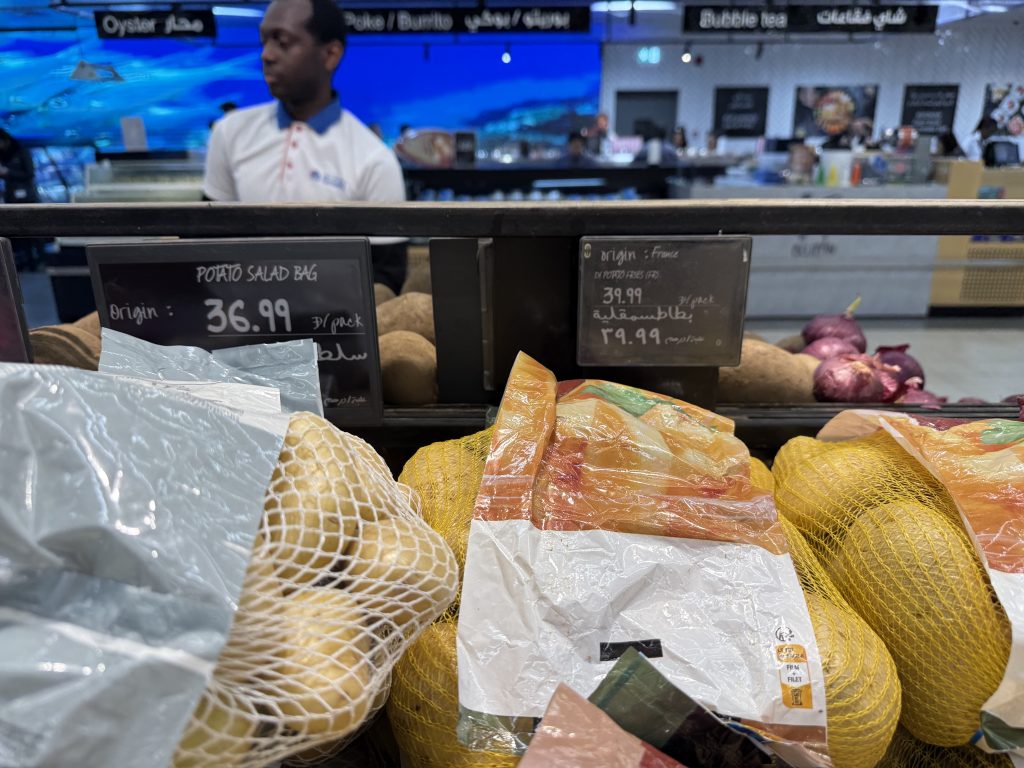
- The Ultra-Premium: At the top end, we see US and French imports (such as Tasteful Selections and specialized French varieties) selling for 30.00 – 40.00 AED per pack.
The Insight: Consumers in this market are willing to pay up to 10-15 times more for specific varieties, branding, and perceived quality compared to the base commodity product.
3. Marketing: Selling Solutions, Not Just Tubers
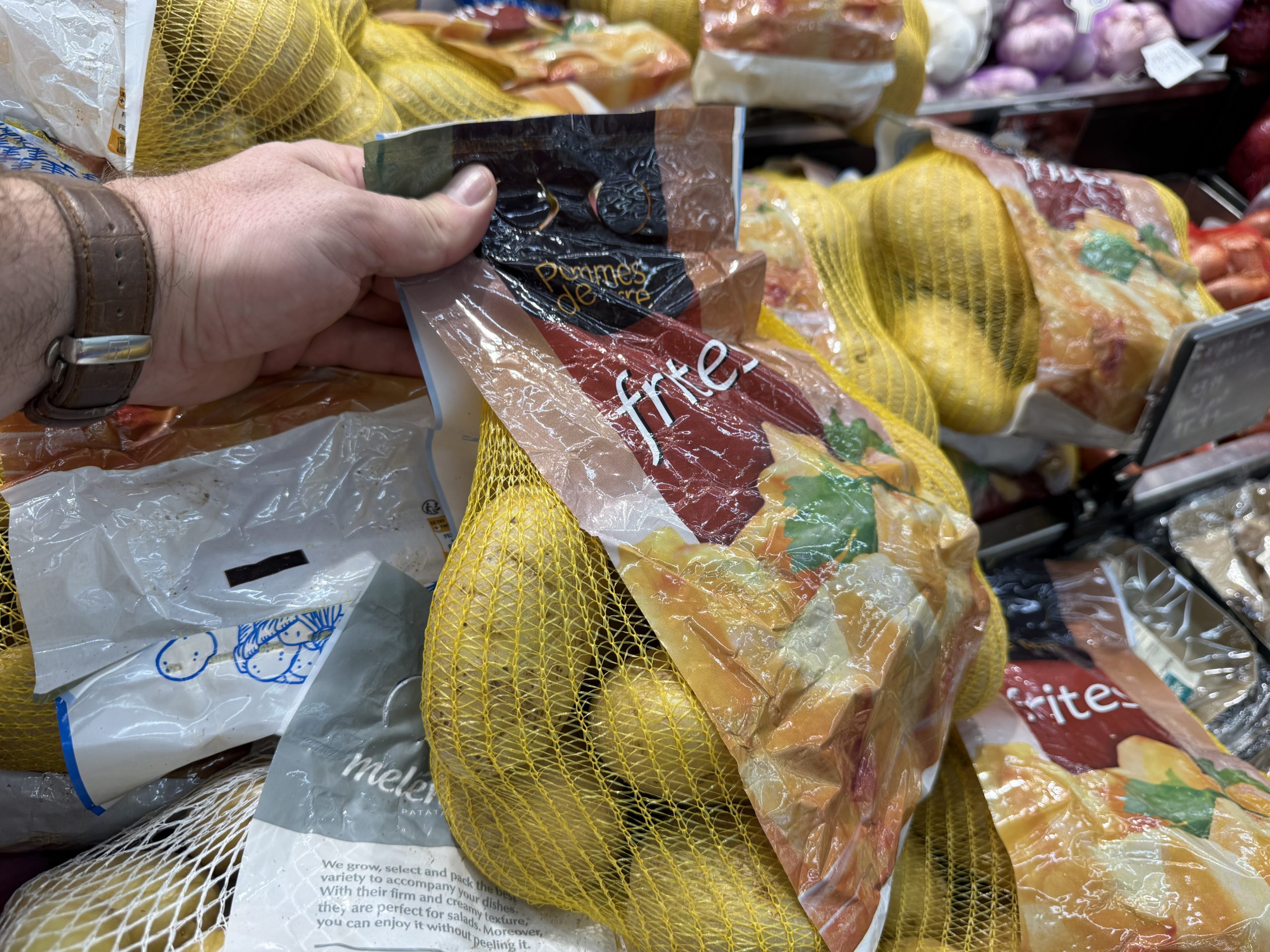
The days of selling generic “potatoes” are over in the premium sector. The packaging analysis reveals a shift toward usage-based marketing.
- Convenience is King: We observed the Spanish brand Meléndez explicitly labeling bags with “Proper potatoes for ROASTING: Crispy & Fluffy.” This removes the guesswork for the consumer.
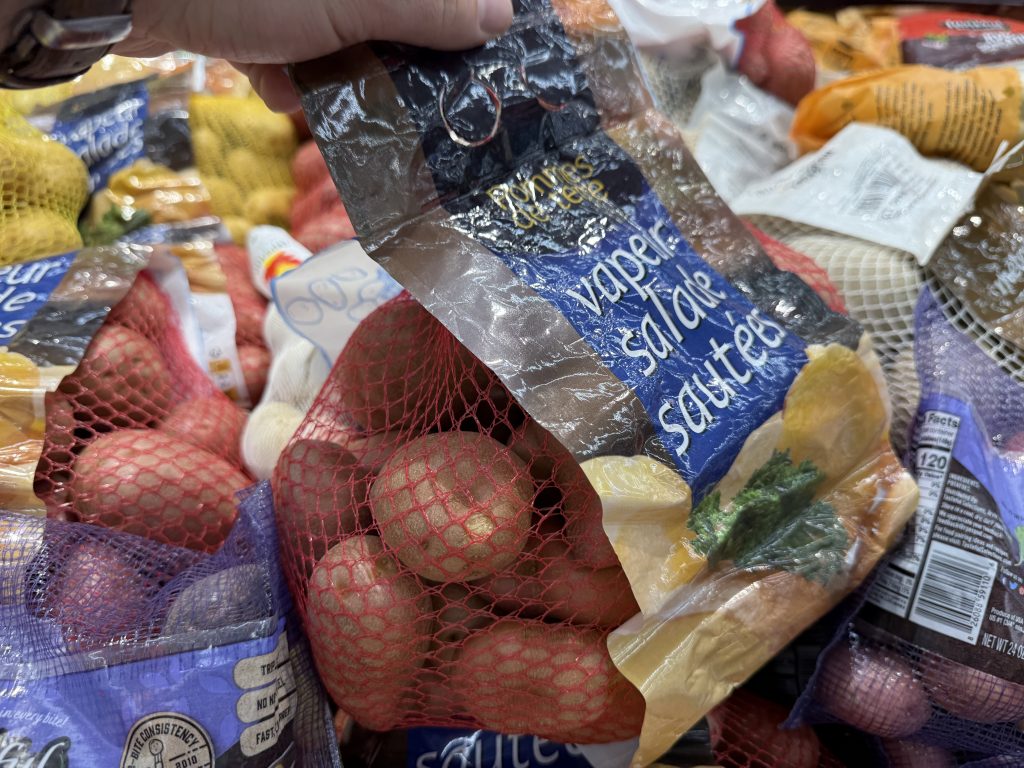
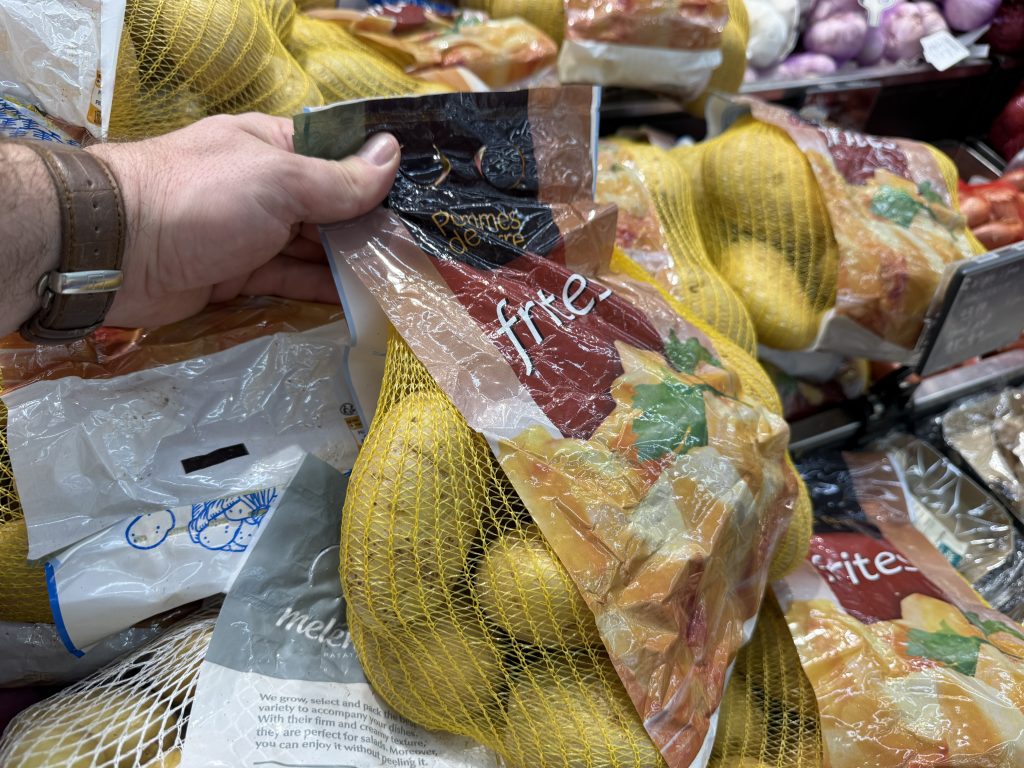
- Culinary Segmentation: French products are segmented by cooking method: Vapeur (Steam), Salade (Salad), and Sautées.
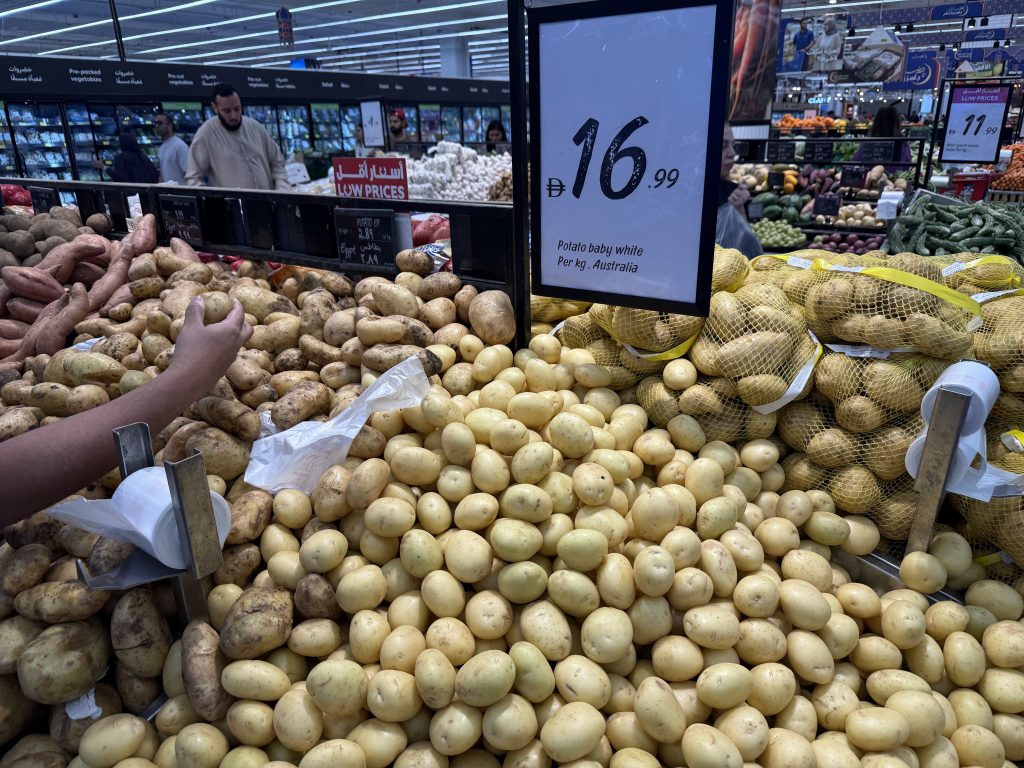
- Format: “Baby” potatoes and pre-washed options (like the Australian “Baby White” at 16.99 AED/kg) are capturing the convenience-seeking demographic who want to skip peeling and chopping.
4. The Rise of “Colored” Superfoods
Visual appeal is driving sales. The shelves are not just yellow and white; they are purple, red, and blue.
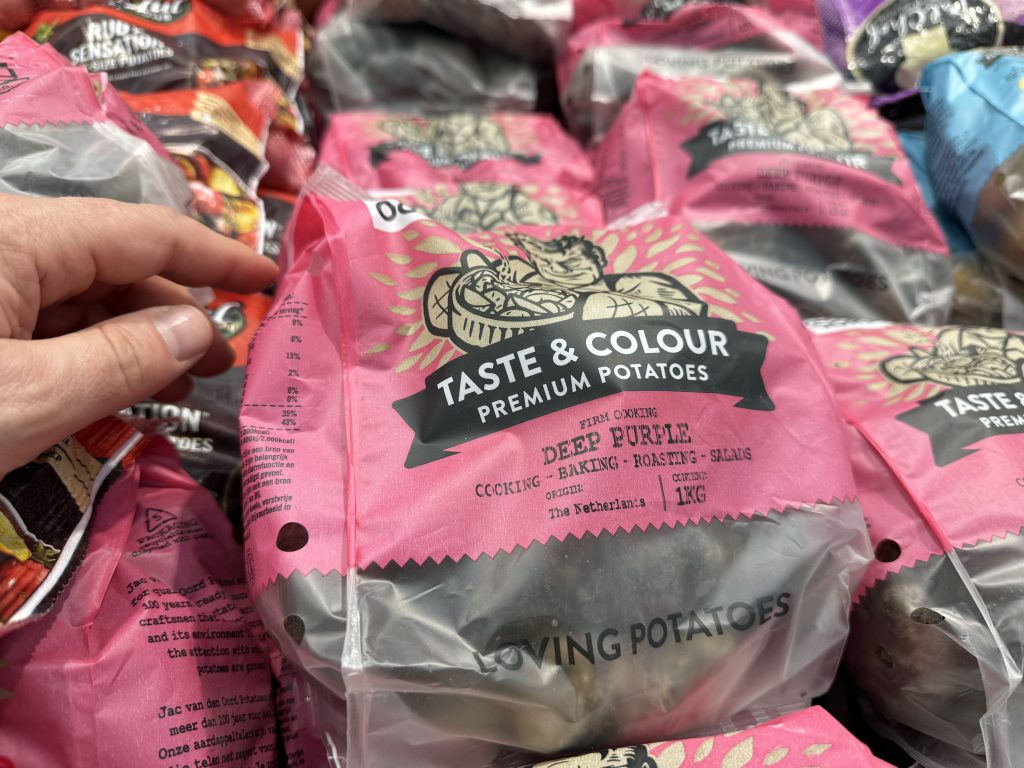
- Purple/Blue Varieties: We noted specific SKUs like Vittelotte (France) and Dutch Blue (USA/Netherlands).
- Positioning: These are merchandised not just as vegetables, but as gastronomic experiences and antioxidant-rich superfoods. They command the highest price points on the shelf, targeting affluent expats and foodies.
Conclusion
The UAE retail market offers a glimpse into the future of the global potato industry. It demonstrates that with the right branding, packaging, and supply chain, the potato can shed its image as a “cheap commodity.” For exporters looking at the Middle East, the message is clear: differentiation pays.
If you can offer a specific culinary result (e.g., “perfect fries”) or a unique visual characteristic (e.g., purple flesh), the market is ready to reward you with premium margins.
Quick Market Snapshot (UAE Retail)
| Segment | Origin | Product Type | Approx. Price (AED) |
| Economy | Egypt | Standard White (3kg Mesh) | ~2.80 / kg |
| Standard | UK | Loose White | 4.99 / kg |
| Premium | Australia | Baby White | 16.99 / kg |
| Luxury | USA / France | Honey Gold, Vittelotte, Truffle | 30.00+ / pack |