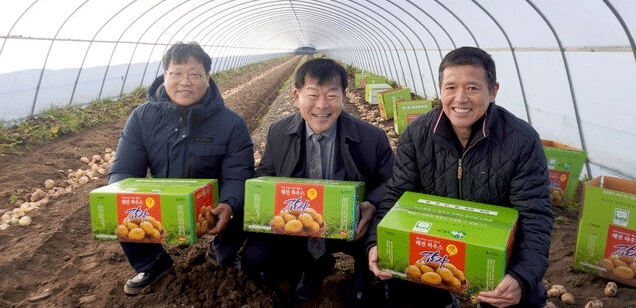
In the Samrye region of South Korea, watermelon farmers grappled with a common post-harvest dilemma: selecting a second crop that offered stable returns. Crops like Napa cabbage and Welsh onion, while viable, were subject to severe price fluctuations, leaving incomes uncertain. The Samrye Agricultural Cooperative identified a strategic alternative: winter potatoes. This decision was agronomically sound, leveraging the area’s unique “sandy soil mixed with sea salt,” rich in minerals and deemed ideal for potato cultivation. More critically, it was a market-driven move to fill a supply gap, with harvests from late December to early February, ahead of other regions.
The cooperative’s role transcended mere advice. In 2019, it established a Joint Sorting and Shipping Association, providing farmers with a critical guarantee: responsibility for sales. This allowed producers to focus entirely on optimizing quality and yield within their greenhouse facilities (now numbering 370 structures of ~660 m² each, managed by 26 member households). The model’s resilience was tested in September 2023, when torrential rains flooded approximately half of the greenhouses. The cooperative’s swift intervention to secure and distribute seed potatoes was instrumental in salvaging the season. Furthermore, to strengthen market power, the local potato growers’ association recently merged its marketing efforts with the cooperative’s, enabling better volume control and staggered shipping to support prices—a move supported by global research highlighting the price premiums achievable through coordinated, quality-focused marketing in niche windows.
The Samrye winter potato case is a potent study in systemic risk management and value chain innovation. It demonstrates that profitability in smallholder systems often depends less on simply growing a crop and more on the institutional architecture that supports it. The cooperative provided the essential pillars: agronomic suitability analysis, market timing strategy, price risk mitigation through guaranteed marketing, and crisis response capacity. This holistic approach transformed a rotational afterthought into a premium, climate-adaptive niche product. For agronomists and farm owners globally, it underscores that building farm resilience requires co-investment in both on-farm practices and the off-farm support systems that ensure stability from seed to sale.