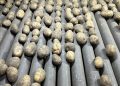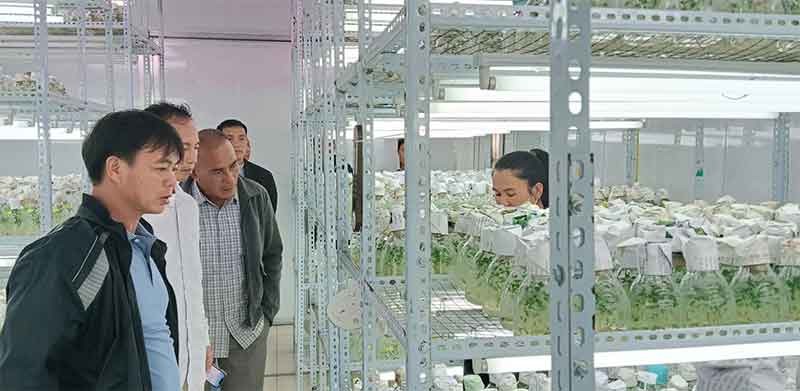
For agricultural professionals witnessing the transformation of formerly war-torn landscapes, the potato development initiative in Vietnam’s Quang Tri province offers compelling evidence of how strategic crop selection and value chain integration can rebuild rural economies. The KOICA-QB-21 project, implemented by the Korea International Cooperation Agency in partnership with the Institute of Agricultural Biology (IBAT) and An Nong Agricultural Cooperative, deliberately selected potatoes as a catalyst crop based on rigorous market analysis . The strategic logic is compelling: Orion Vina Food Company requires approximately 45,000 tons of processing potatoes annually, yet domestic supply currently meets less than half this demand, creating a structural market opportunity for contract growers . By utilizing winter cropping on land previously lying fallow, farmers can generate significant additional income without displacing primary rice cultivation .
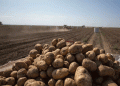
The pilot results demonstrate exceptional economic performance that merits attention from agricultural economists and development specialists. On 1.5 hectares of sandy soil in Ly Nam commune—terrain traditionally considered marginal for potato cultivation—the 2024-2025 winter-spring season yielded over 25.5 tons, averaging 17 tons per hectare with net profits exceeding 46 million VND per hectare (approximately $1,800) over just three months . This represents 3-5 times the profitability of traditional crops like cassava and maize. Individual farmer outcomes are equally striking: one participant reported net profits of nearly 20 million VND from 2,500 square meters, while another achieved approximately 80 million VND profit from one hectare—comparable to cassava income from ten times the land area . The model’s governance structure, with An Nong Cooperative serving as the institutional bridge between smallholders and corporate buyers, addresses the classic coordination failures that plague agricultural development. Farmers receive technical training in VietGAP standards, quality-controlled inputs, and guaranteed offtake contracts, while a portion of revenues is reinvested in community seed funds, creating a self-sustaining mechanism for long-term viability . With Quang Binh province alone identifying 1,200 hectares of suitable sandy soil for potential expansion, this South Korean ODA-funded initiative offers a replicable template for post-conflict agricultural reconstruction that transforms “sunny and windy” marginal lands into productive assets through market-linked, science-backed, farmer-centered development .