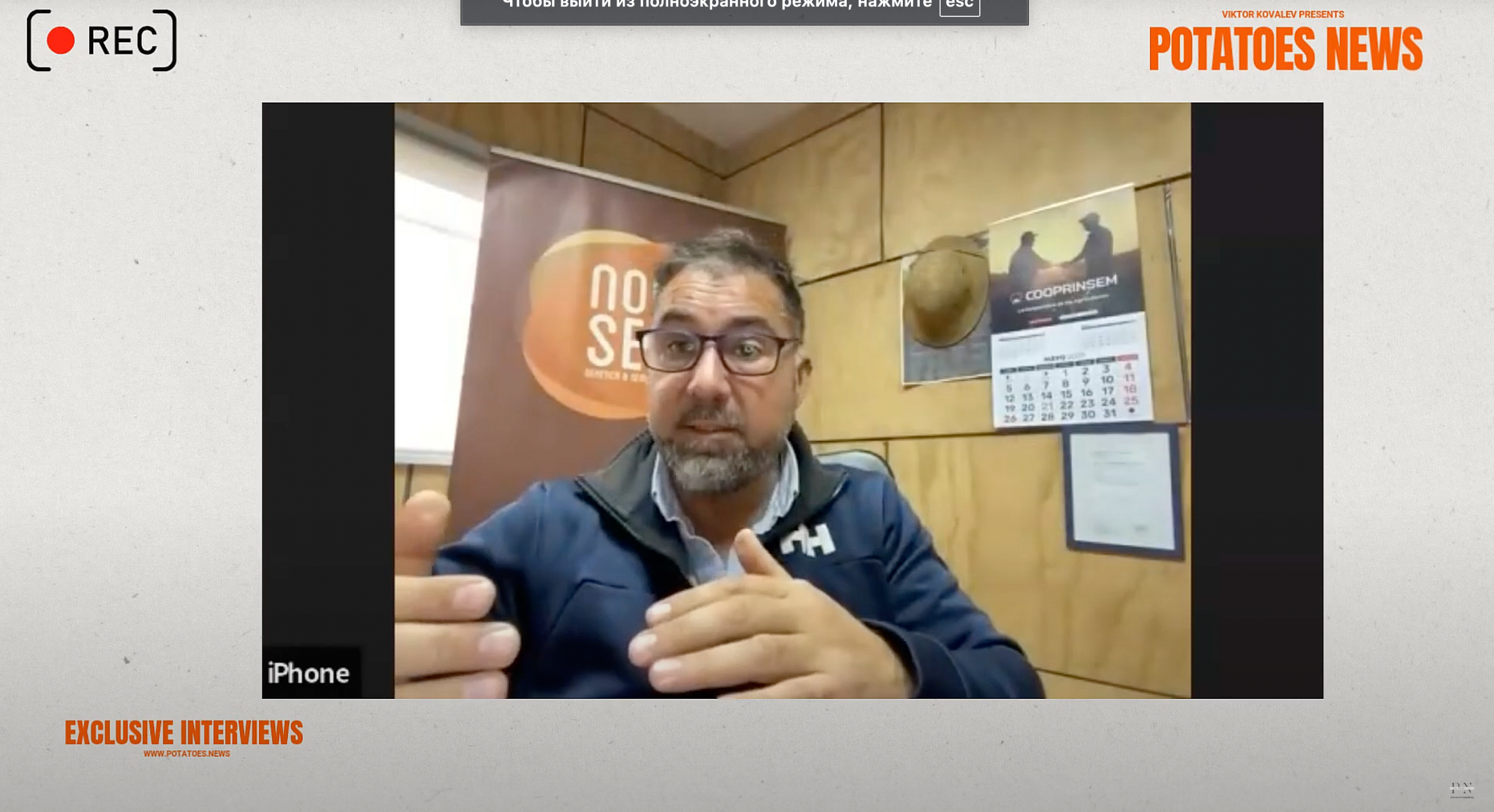
Breeder Boris Contreras grew up chasing native potatoes across Chile’s islands with his father, a university researcher. Today he leads Novaseed, a family-run program that blends that wild diversity with modern breeding—producing rainbow-fleshed, bite-size and climate-smart potatoes built for a changing world.
“Color shouldn’t just be beautiful—it should do something,” says Contreras. “We’re concentrating pigments and traits so potatoes bring taste, speed in the kitchen, and real functional benefits.”
Roots: a family legacy with global relevance
Contreras’ father helped catalog Chile’s native potatoes and showed how Chiloé germplasm—naturally selected under long days—aligns with the European/Russian photoperiod, making it directly useful for temperate markets. That insight set the family on a mission: stop only importing varieties; export new Chilean genetics the world can actually use.
The “baby potato” revolution
Novaseed’s first big commercial break came when a North American partner asked for tiny, uniform table potatoes—the opposite of conventional selection. After nearly a decade of retooling, the team now delivers plants that set 50–100 mini tubers each and still hit ~50 t/ha. Result: faster prep, shorter cook times, and a format consumers now expect in produce aisles.
Making color useful (and scalable)
Working with functional-food researchers, Novaseed identified lines where anthocyanins and other compounds mirror the antioxidant profiles associated with tomatoes and red wine; some selections also showed reduced starch–to–sugar conversion in tests—relevant to glycemic response. Rather than chase niche novelty, Contreras pushed color into formats people already love—notably chips—and bred storage and processing stability so colored lots can hold up to ~10 months and fry reliably at scale.
Climate-smart by design
Climate volatility in Chile (and far beyond) is forcing new priorities: erratic rainfall, longer hot spells, and shifting disease pressure (e.g., Spongospora subterranea, Pectobacterium, Verticillium). Novaseed’s brief: deliver resilient, lower-input varieties with stronger roots, adaptable maturity, and resistance packages so small and mid-size growers can compete without matching big-farmer inputs.
Seeds, sovereignty, and scale
Because many countries restrict underground planting material, Chile’s seed-potato exports are limited. Contreras’ workaround: co-develop labs and selection pipelines in partner countries, then multiply seed locally under each nation’s rules. Custom breeding programs (traits, maturity class, processing specs) are built for specific customers and climates, from North America to Africa.
What he sees abroad
- Europe: robotics and field automation setting the technical pace.
- Russia: the scale is there; processing and exports to Asia/MENA could double or triple the sector’s impact.
- North America: a masterclass in format innovation (small, colorful, convenient).
Five consumer trends that will shape potatoes through 2030
- Processed & semi-processed rise (fries, chips, chilled/ready-to-cook) as fresh declines in share.
- Diversity on the plate: color, texture, and novel shapes move from niche to normal.
- Health halo matters: antioxidants, lower sugar spikes, higher dry matter for better frying—claims backed by data will win.
- Convenience first: bite-size, fast-cooking formats dominate weeknight decisions.
- Climate-smart choice: varieties marketed for drought/heat tolerance and lower inputs gain shelf and menu space.
Inside the Chiloé gene bank (rarities with a purpose)
Contreras credits Chile’s native collection—particularly Chiloé Island—as a living library for pigments, disease resistance, and day-length adaptation. The trick isn’t just conserving it; it’s breeding those traits into farmer-ready, storable, process-stable varieties the whole chain can use.
Quick hits
- Baby output: 50–100 tubers/plant; ~50 t/ha.
- Color, but practical: selections bred to store ~10 months and fry cleanly.
- Smallholder focus: low-input performance to widen grower participation.
- Go-to-market lesson: acceptance takes time—year-round supply is what turns novelty into habit.
Join the debate
What matters more for the potato’s future—breakthrough genetics or preserving family breeding traditions? Drop your view in the comments.
If this opened your eyes to where potatoes are headed, like & subscribe for more future-of-food stories.
Source: Exclusive interview with breeder Boris Contreras (Novaseed, Chile).