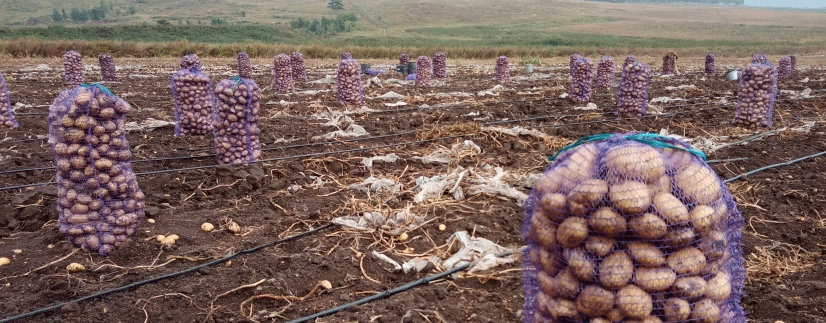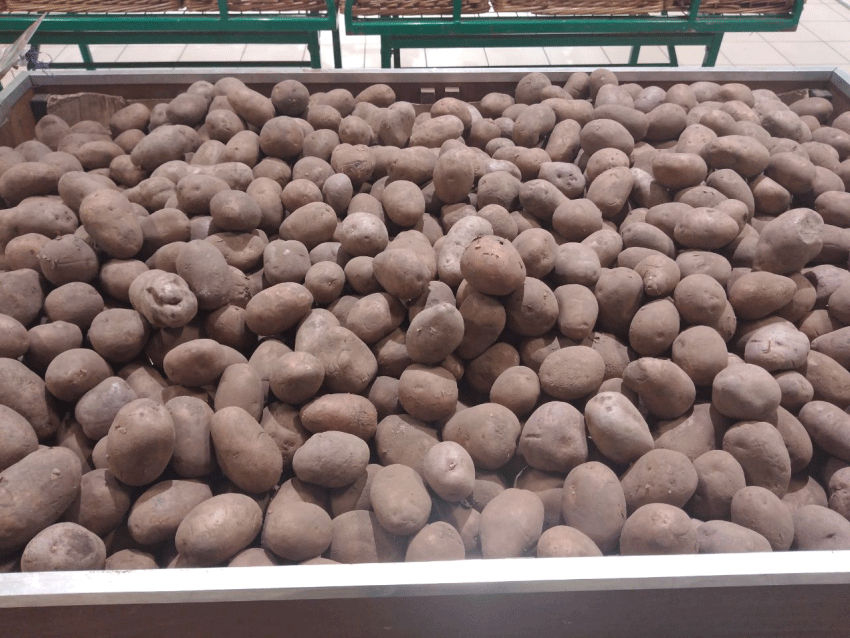
In the Astrakhan region, particularly in the Enotaevsky District, farmers are increasingly abandoning potatoes in favor of higher-value crops. Larisa Khatueva’s family farm, operating since 2019, exemplifies this trend. This season, they plan to harvest 350 tons of “Yuliya-F1” watermelons (weighing 4–12 kg each) from 5 hectares, alongside tomatoes (5 ha) and onions (8 ha). The farm’s produce, branded “Rodom iz Astrakhani” (“From Astrakhan”), supplies major retail chains across Russia, including Moscow, St. Petersburg, and Krasnodar.
Drivers of Change
- Market Demand: Potatoes were phased out due to low profitability, while watermelons and tomatoes offer better margins and stable demand.
- Government Support: The farm received 475,000 RUB for a лукоуборочный комплекс (onion harvester) and 200,000 RUB in per-hectare subsidies, critical for scaling operations.
- Agroinnovation: Drip irrigation, pest management (targeting Spodoptera moths and mites), and optimized fertilization boost yields.
Challenges and Solutions
- Labor Intensity: Harvesting requires 20 seasonal workers, collecting 50+ tons daily.
- Logistics: Supplying distant markets (e.g., Krasnoyarsk, Stavropol) demands efficient cold-chain management.
- Climate Adaptation: Astrakhan’s arid climate necessitates precise water use—drip irrigation cuts waste by 30–40% compared to flood methods (FAO data).
Broader Implications
Astrakhan’s shift mirrors a national trend of diversifying away from staple crops. Russia’s watermelon production grew by 12% in 2024 (Rosstat), while potato acreage fell 8% due to price volatility. However, reliance on subsidies raises questions about long-term sustainability.
The Khatueva farm’s success highlights how adaptability, technology, and policy support can revitalize regional agriculture. For farmers nationwide, the lesson is clear: track market trends, leverage innovations, and secure state aid to thrive in a changing landscape.