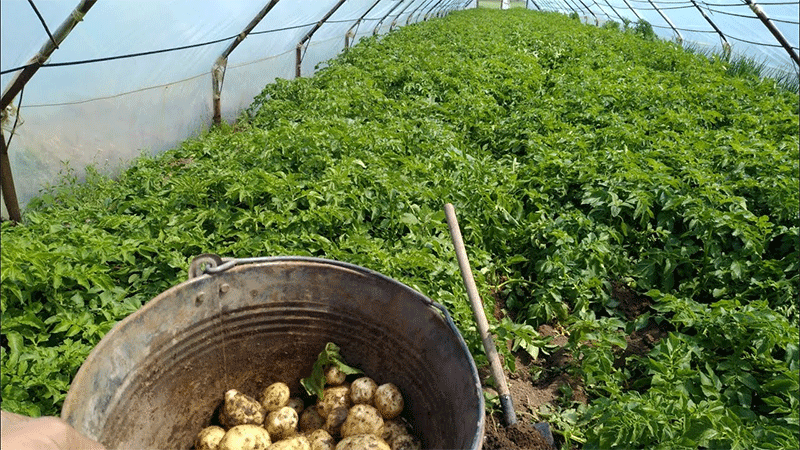
The expansion of protected winter potato cultivation represents a significant opportunity for farm income diversification, leveraging the crop’s preference for cooler temperatures (14–23°C). However, this promising niche is inherently vulnerable. Growers face a complex interplay of abiotic stresses, including chilling injury, frost damage, and insufficient light and moisture during the critical winter months. These challenges are exacerbated by increasing climate variability, which leads to greater yield fluctuations even in established varieties. In response, the Jeonbuk Agricultural Research and Extension Services has launched a targeted research program focused on stabilizing and enhancing this production system. Their mission is clear: to develop practical, field-applicable solutions that directly address grower pain points, moving from generalized advice to precision protocols.
The research strategy is wisely built on two foundational pillars: environment-specific variety selection and precision cultivation technology. Rather than seeking a single universal variety, the program will annually evaluate cultivars for their suitability to different facility types and local micro-conditions—a necessity highlighted by global research. For instance, studies in Scientia Horticulturae emphasize that cultivar performance in protected environments can vary dramatically based on light transmission, humidity control, and root-zone temperature. Concurrently, the initiative will refine management techniques for temperature and soil moisture, key factors where minor deviations can impact tuber set, size, and quality. This empirical, step-by-step approach is critical. As noted in a 2023 review in Agronomy, the integration of real-time sensor data with cultivar-specific growth models is becoming a cornerstone for optimizing protected cultivation, maximizing both resource efficiency and yield potential.
The move by Jeonbuk’s research institution is a proactive and essential step in transitioning winter potato production from a promising but risky venture into a reliable, high-income agricultural enterprise. By focusing on the synergy between tailored genetics and precision environmental management, the program addresses the core instability of the system. For farmers and agronomists worldwide engaged in protected cultivation of high-value crops, this underscores a universal principle: sustainable intensification and risk mitigation increasingly depend on hyper-localized, data-informed strategies. The success of such research will not only secure a vital income stream for local growers but also contribute valuable knowledge to the global community on building climate-resilient food systems within controlled environments.